Blog Archives
The best part of the trip
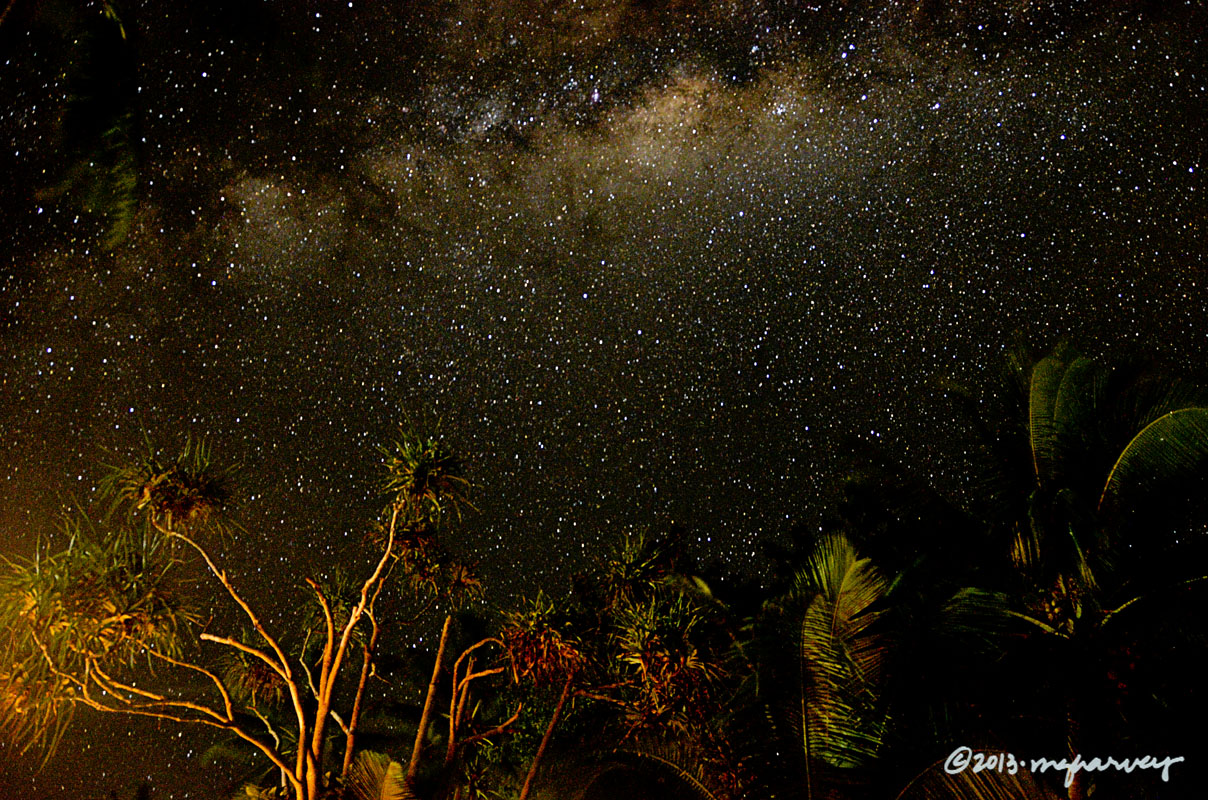
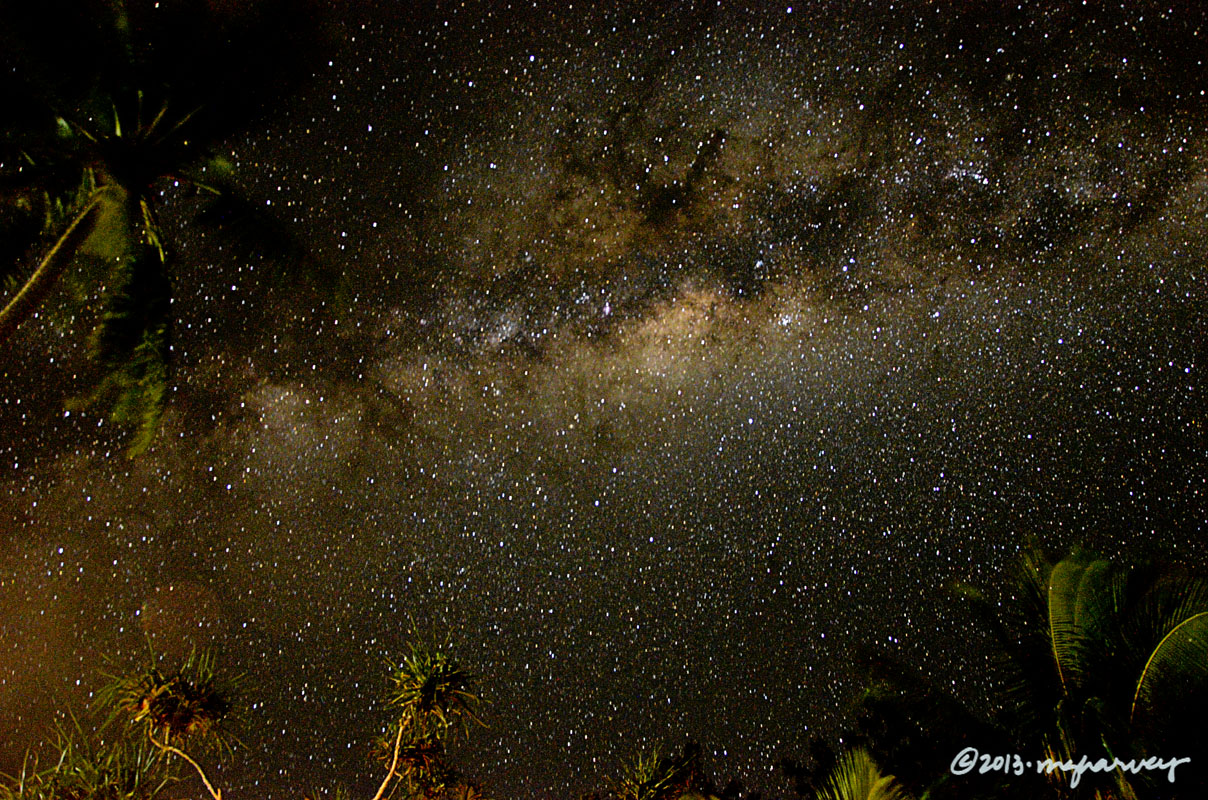
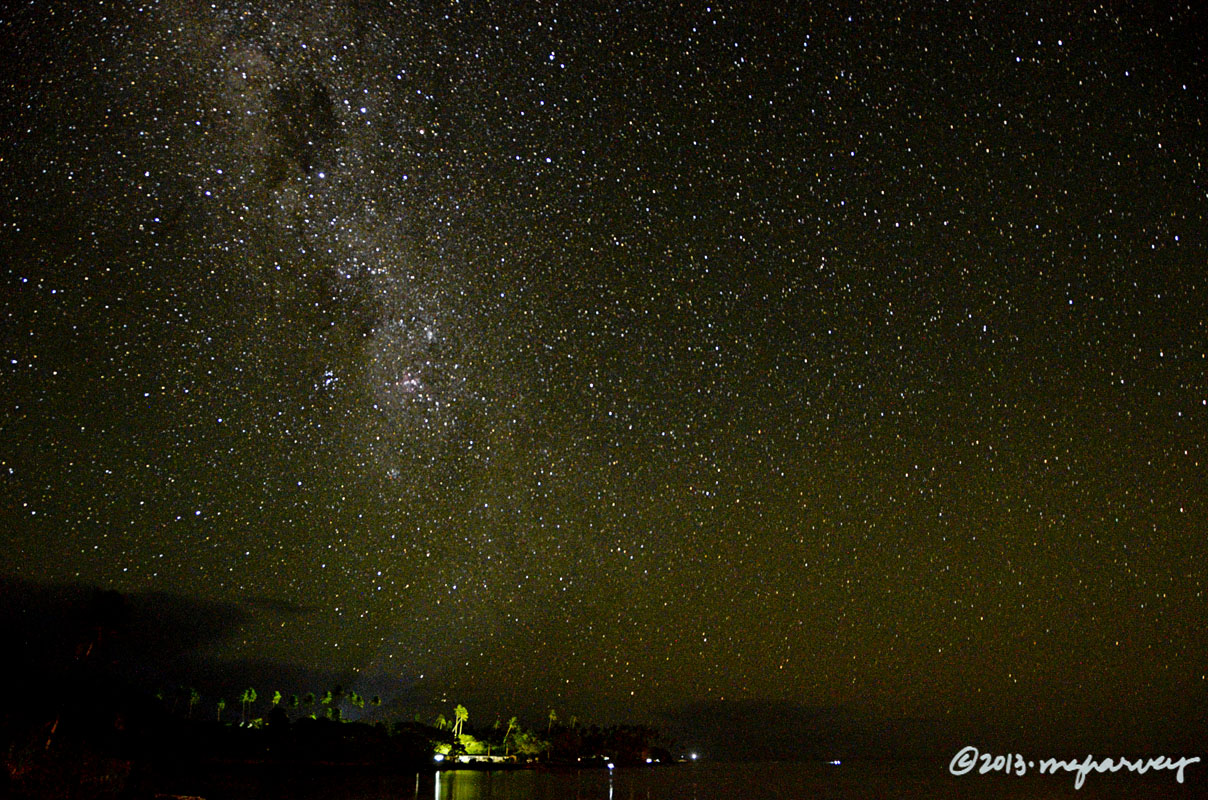
No words. Really. Just none.
the night skies
Taveuni Island, Fiji
photographed 7.5.2013
Roofline and eaves
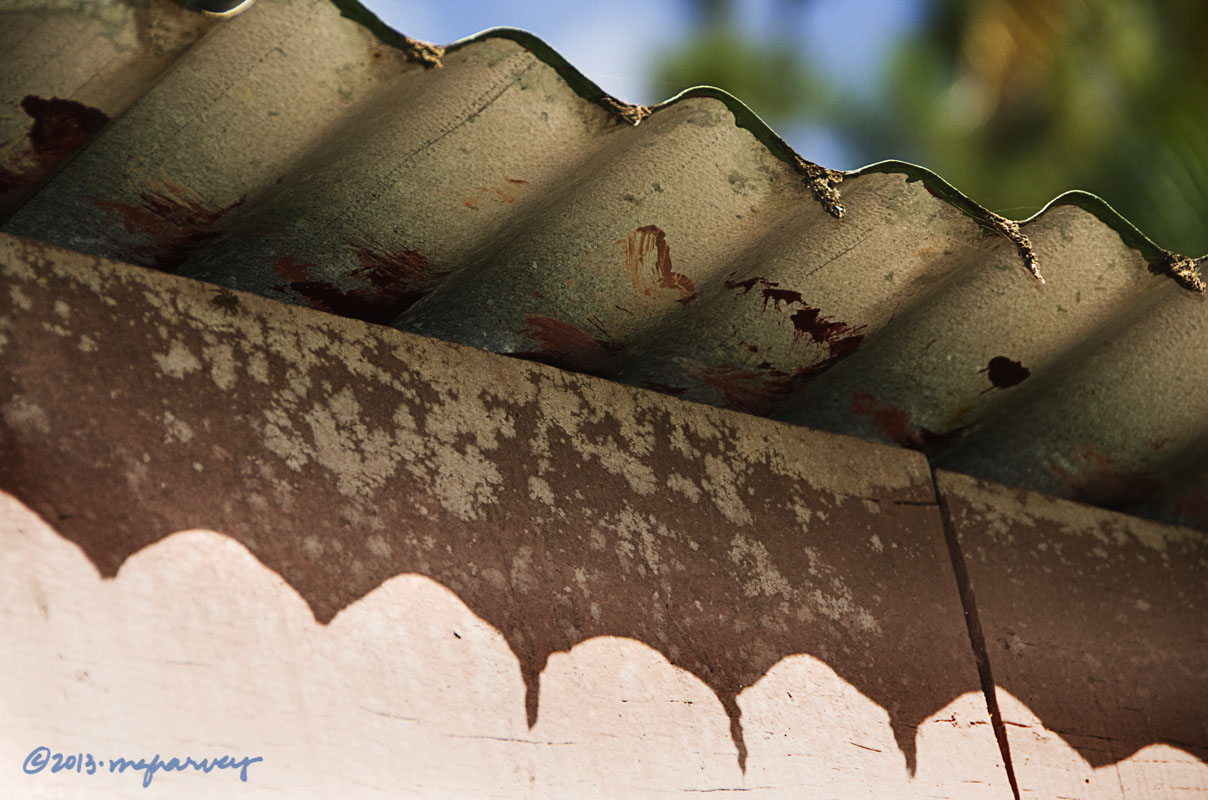
After I took a picture of the restroom and the park headquarters, I saw this marvelous bit of architectural detailing. I liked the corrugated metal roof and the shadow it made on the eaves. Look closely and maybe you can see the bit of a spider web on the roof.
That reminds me – elsewhere on the island, I saw a spider in a web. That’s not too remarkable, except that I was IN A BUS when I saw it. And it was on the opposite side of the road. And it was so gigantic that I easily spotted it from across the road. I’m not that person that gets all freaked out over a spider. Except maybe that one, the one that was a big as a house cat. (OK. So maybe it wasn’t quite THAT big. But it was at least as big as, well, a really big spider.)
Bouma National Park
Taveuni Island, Fiji
photographed 7.5.2013
The social implications of recharge stations
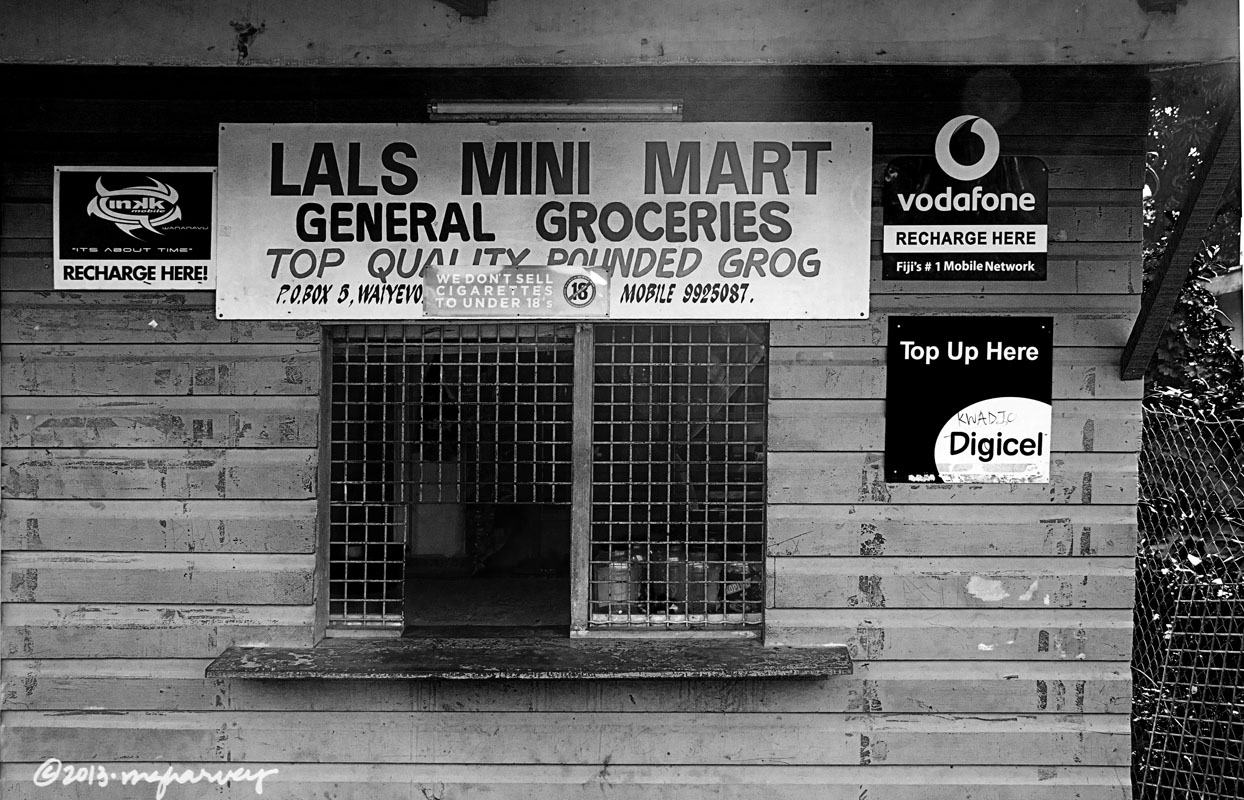
Every village we went to had a store that advertised cell phone charging locations.
All of the electricity on the island is produced either via generators or solar panels.
Many of the houses that are away from the towns or villages didn’t appear to have power.
Hence: charging stations.
It made me think about the way technology has impacted the ability of island residents to communicate with each other, even if they DO have to get into town to charge their phones. Does it make their worlds seem smaller, though, or larger? Or, just different?
Wairiki Village
Taveuni Island, Fiji
photographed 7.5.2013
Coconuts: lesson 1
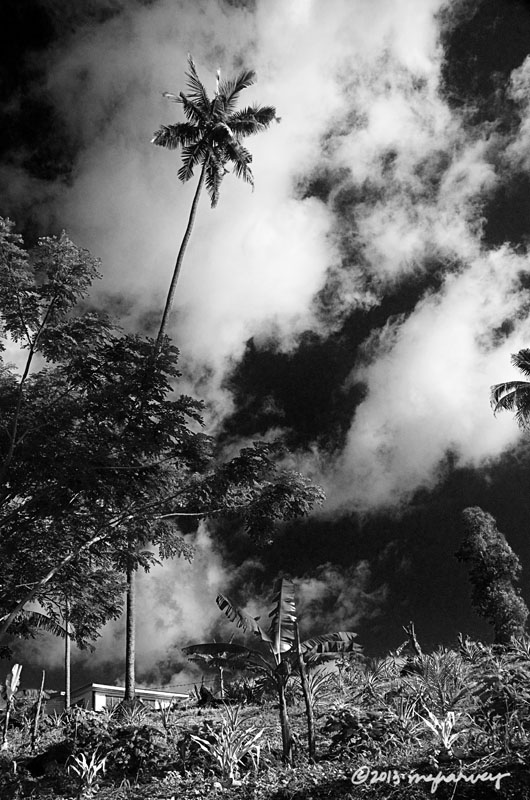
One of my blogging friends mentioned to me, before the trip, the possibility of getting some nice, black skies. So this shot is for Ehpem, whose wish is, apparently, my command.
But aside from that, check out that very tall coconut tree!
Most houses, especially ones that are away from the villages, have their own coconut trees: coconut is a dietary staple on the island. The trees begin to produce fruit about 5 years after planting; a tree can live for 90 years. On our culture walk, we found out that coconut milk is used for baking, in place of cow’s milk. (The only cow’s milk we saw in the grocery stores we went into was shelf-stable, non-refrigerated milk imported from New Zealand. I don’t have concept of how much things cost, but my feeling was that imported milk was probably a bit on the costly side.)
The scuba divers on our trip got slices of fresh coconut as post-dive snacks. That’s almost a compelling enough reason to take up diving.
Our cabin, or bure, was named Niu, or “coconut.”
And, coconuts are harvested by picking them up from the ground after they fall out of the trees. Except when you want a green coconut; you’ve got to scale a tree for those.
In the foreground, you can see a banana tree. Fijian bananas are very small, with thin skins, and are very sweet. A good start to the day was a banana, a hunk of papaya, and a slice of coconut. Yum.
Taveuni Island, Fiji
photographed 7.5.2013
Voting is your right

This is the office at the Bouma National Park; no one was around so I just made myself at home. The Fijians we met were all very friendly, so I like to think the park employee wouldn’t have minded my little tour.
Here’s what I saw:
– A very low ceiling. I’m not particularly tall, and I could easily touch touch the ceiling.
– Some nice curtains that were open to let the breeze through. The fabric was stuffed into the wire grid that guarded the windows.
– A piece of silvery Christmas tinsel hanging from the column.
– A sticker on the refrigerator reminding us that VOTING IS YOUR RIGHT.
– An oilcloth covering on the desk.
(Women and ethnic Fijians were first permitted to vote in 1963. In case you wondered.)
Bouma National Park headquarters
Taveuni Island, Fiji
photographed 7.5.2013


 One Day | One Image