Blog Archives
The opposite fence

This solitary iron knob is the opposite of these fences, even though they are cemetery neighbors.
Burnet Cemetery
Burnet, Texas
photographed 11.28.2014
Crowded fences
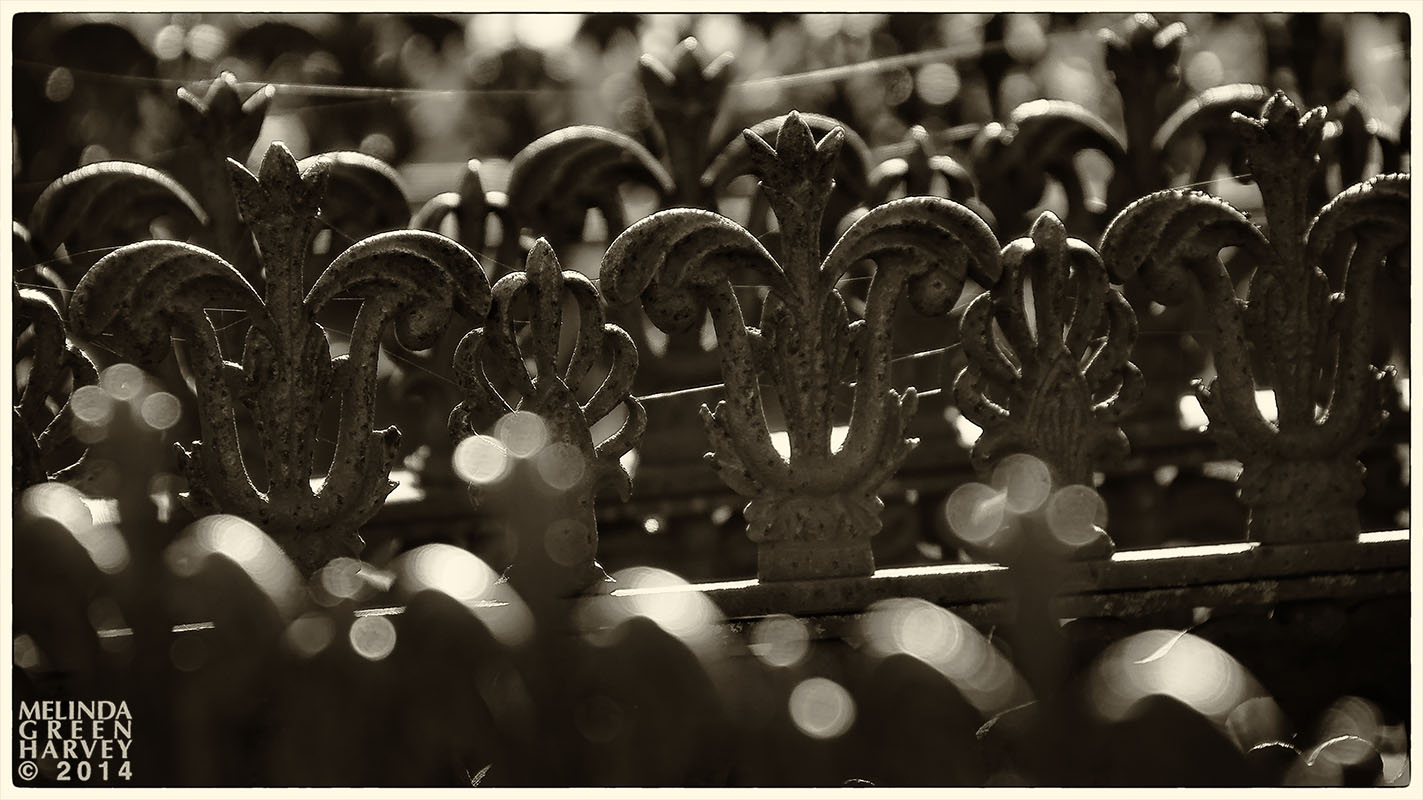
I found these cast iron fences around graves in a crowded part of the town cemetery. I guess it’s like the high-density, urban section of the place…
Burnet Cemetery
Burnet, Texas
photographed 11.28.2014
Angel
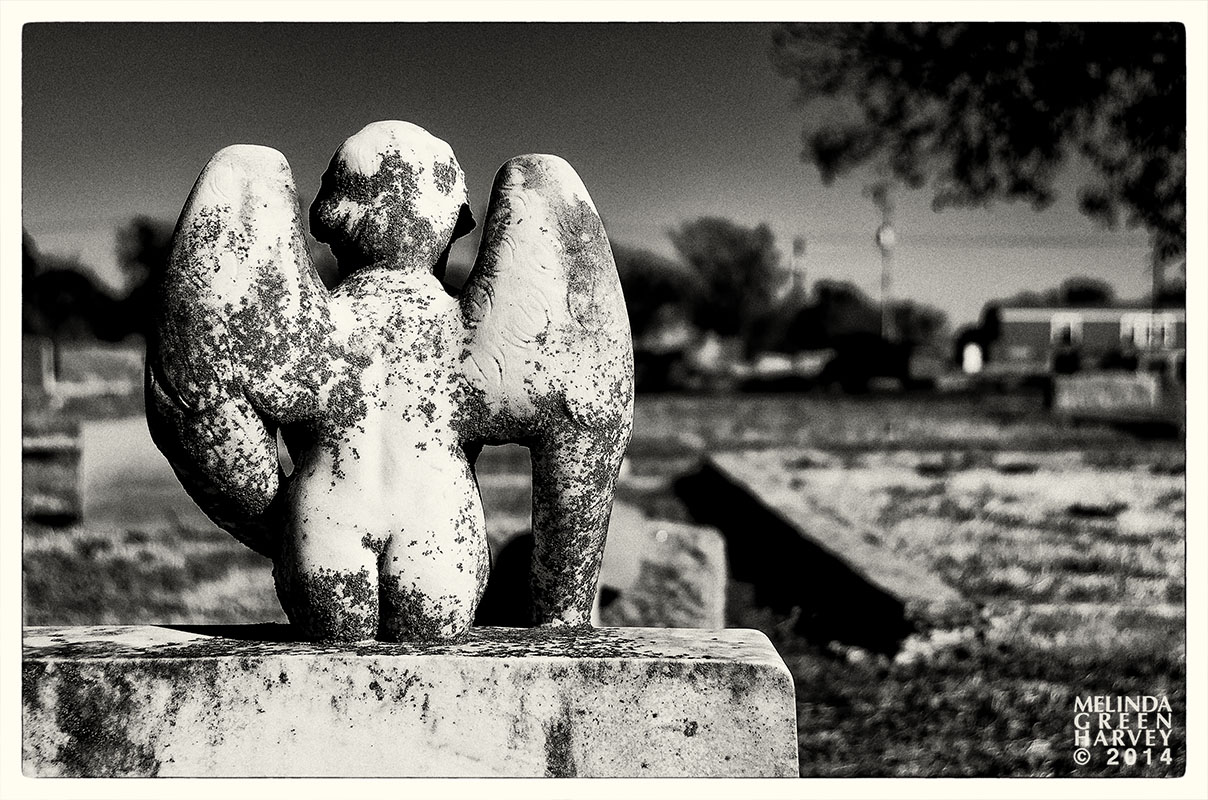
That poor angel seems to have some sort of skin condition (or, stone condition?), doesn’t she? It looks itchy to me, and I hope it doesn’t distract her too much from her important job there at the cemetery.
Burnet Cemetery
Burnet, Texas
photographed 11.28.2014
Cactus: it’s what’s for dinner
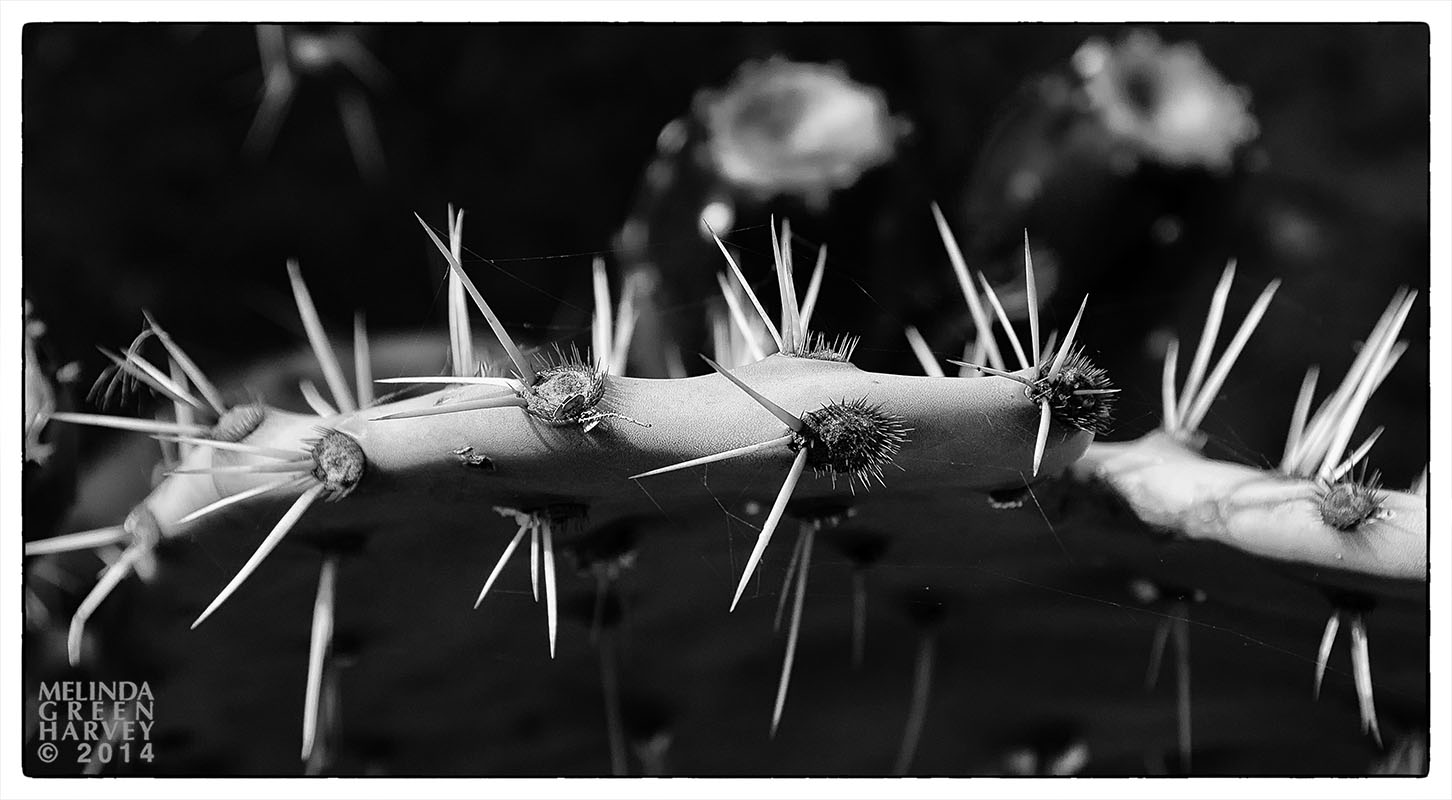
I just got back from spending a few days at the Canyon of the Eagles resort, near Burnet, Texas. It’s remote and relaxing and quite enjoyable. It’s been there since 1999, which means that the buildings were far too nice for my photographer’s eye to be interested. Instead, I broke out my rarely-used macro lens and took some close looks at the plants. It’s quite a change, but not likely a permanent one.
Today’s post, the first in the short botanical series, is of the top edge of a prickly pear cactus. The pair of circular shapes at the top are part of the same plant; I’ve most often heard them called “tunas,” but in English they are also called “prickly pears” or “pears.” In spite of how this plant looks, it’s edible. The pads, also called “nopales,” can be cooked (after the spines are gone, of course) and added to salads or other dishes. The tunas can also be cooked, though the recipe says to “Get them when they are bright purple and look like rat food.” which doesn’t make it sound all that much like dinner.
Also, note that the writer of the recipe assumed his/her readers would know what rat food looks like, which is sort of…interesting.
(If you want to whip up a cactus-y dinner, the recipes are here.)
Canyon of the Eagles Resort
Lake Buchanan, Texas
photographed 11.28.2014


 One Day | One Image