Blog Archives
In a dry and barren place
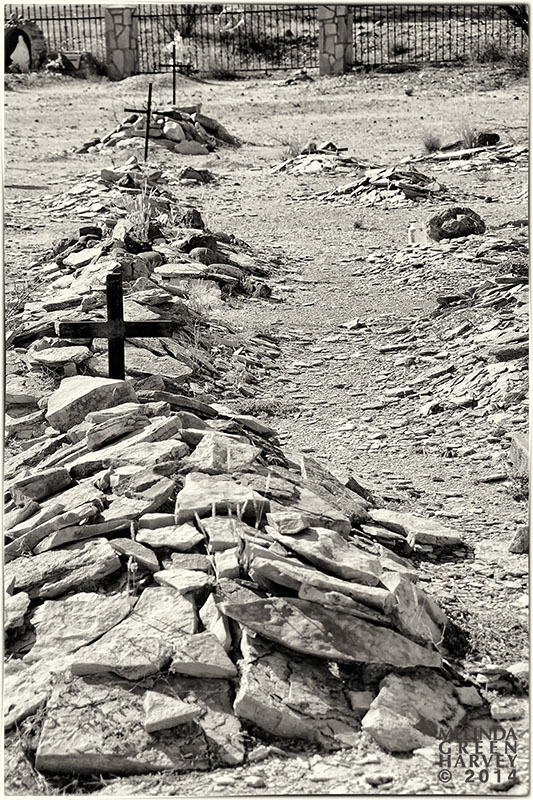
Out here in the desert, cemeteries aren’t the pastoral sites they are in other parts of the country. There’s no grassy paths to soften the scene, no trees to provide shade to mourners.
But there are uneven piles of rocks, topped by simple crosses. And, way in the back, the Virgin stands in her tiny grotto.
Lajitas Cemetery
Lajitas, Texas
photographed 1.20.2013
(I am gone for a while, and will not be responding to comments right away. But make some anyway, if you feel inclined, and I’ll get back to you – it just won’t be right away.)
There are many mysteries
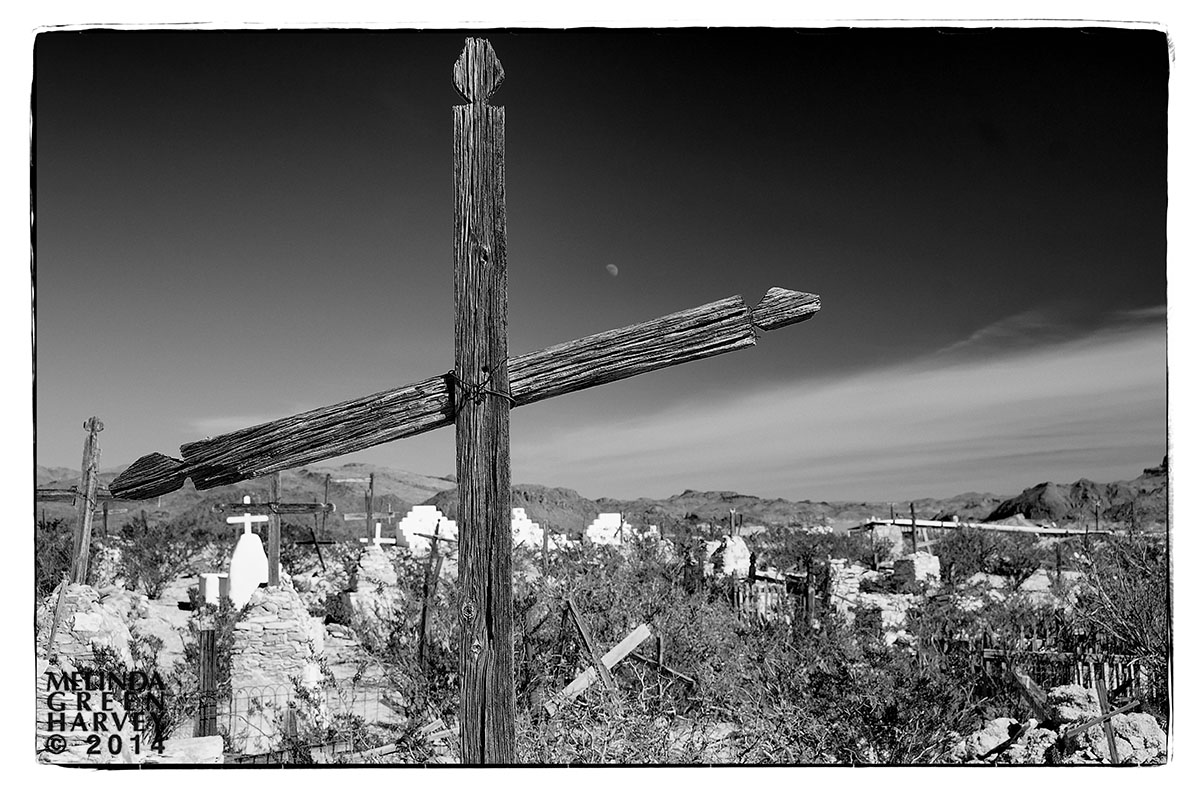
This cemetery is especially stark, with that jumble of mostly unmarked wooden crosses and piles of rock marking gravesites. It’s hot – so hot that candles melt, leaving greasy marks on the rocks. Many of the graves are those of miners, who succumbed to the occupational hazards in nearby mercury mines, which began production in 1903. Other graves are from the influenza epidemic of 1918-19. And still others are recent. They are crowded together (the complete site is only about an acre) and it’s easy to get scratches from mesquite trees or poked by cactus thorns.
But it is also especially beautiful, with a view across to the Chisos Mountains and Big Bend National Park and that half moon, one week away from the first full moon of the year, hanging in the sky.
Terlingua Cemetery
Terlingua, Texas
photographed 1.20.2013
(I am gone for a while, and will not be responding to comments right away. But make some anyway, if you feel inclined, and I’ll get back to you – it just won’t be right away.)
Rosary, as belt
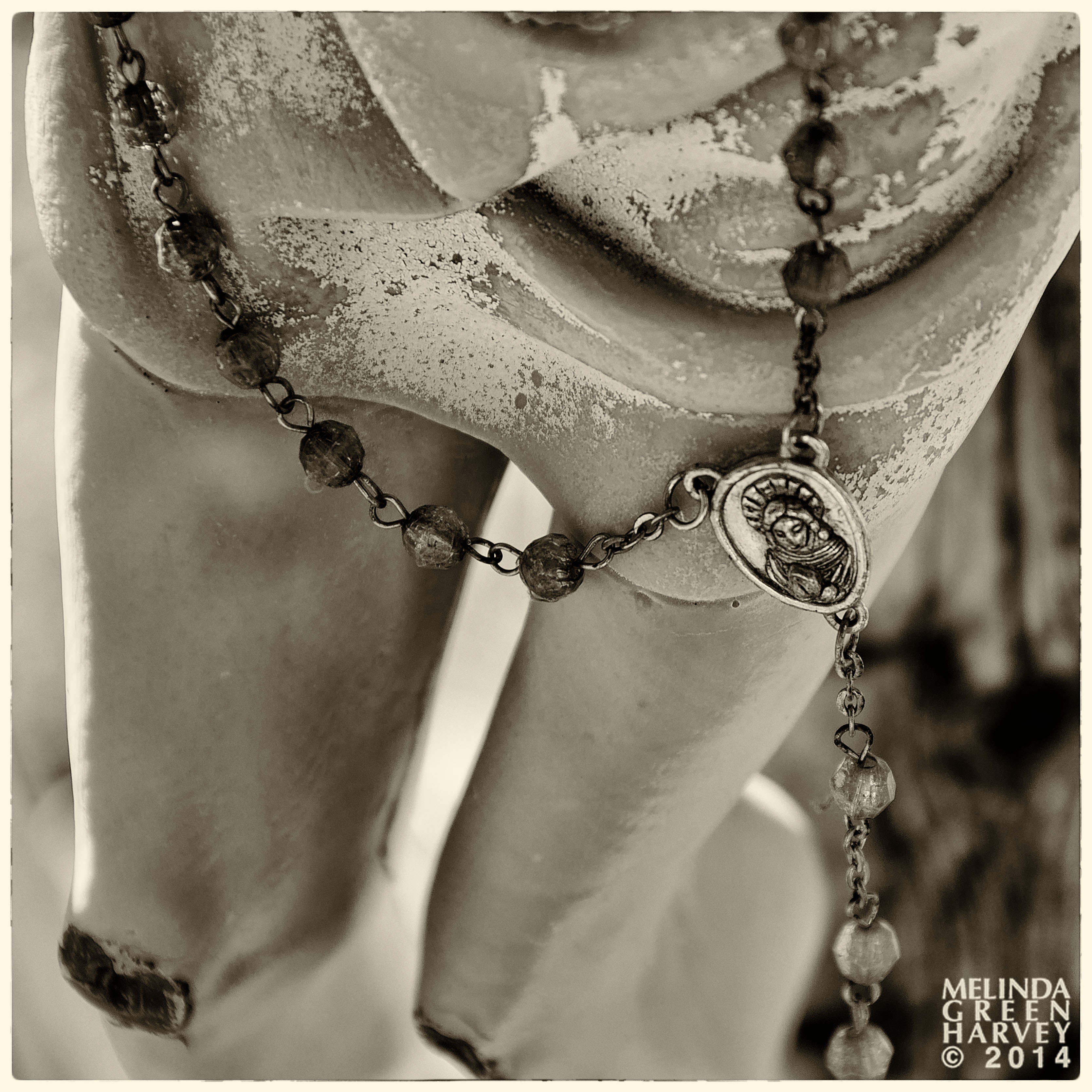
That rosary, as a belt. Those worn-out knees.
There’s nothing more to say.
Elm Grove Cemetery
Alpine, Texas
photographed 1.19.2013
(I am gone for a while, and will not be responding to comments right away. But make some anyway, if you feel inclined, and I’ll get back to you – it just won’t be right away.)
Two traditions
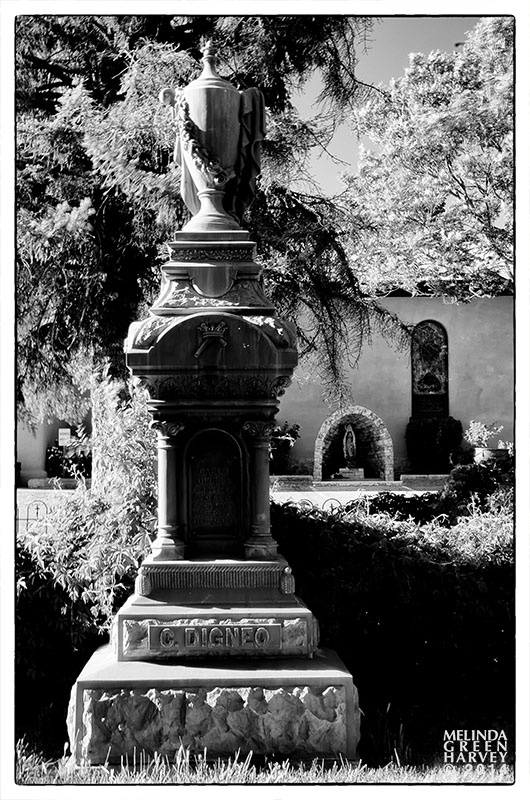
The very formal stone marker in the foreground and the Virgin of Guadalupe in her niche behind it are a fairly accurate representation of the way cultures in New Mexico co-exist.
Rosario Cemetery
Santa Fe, New Mexico
photographed 6.28.2014
Another one of life’s cycles
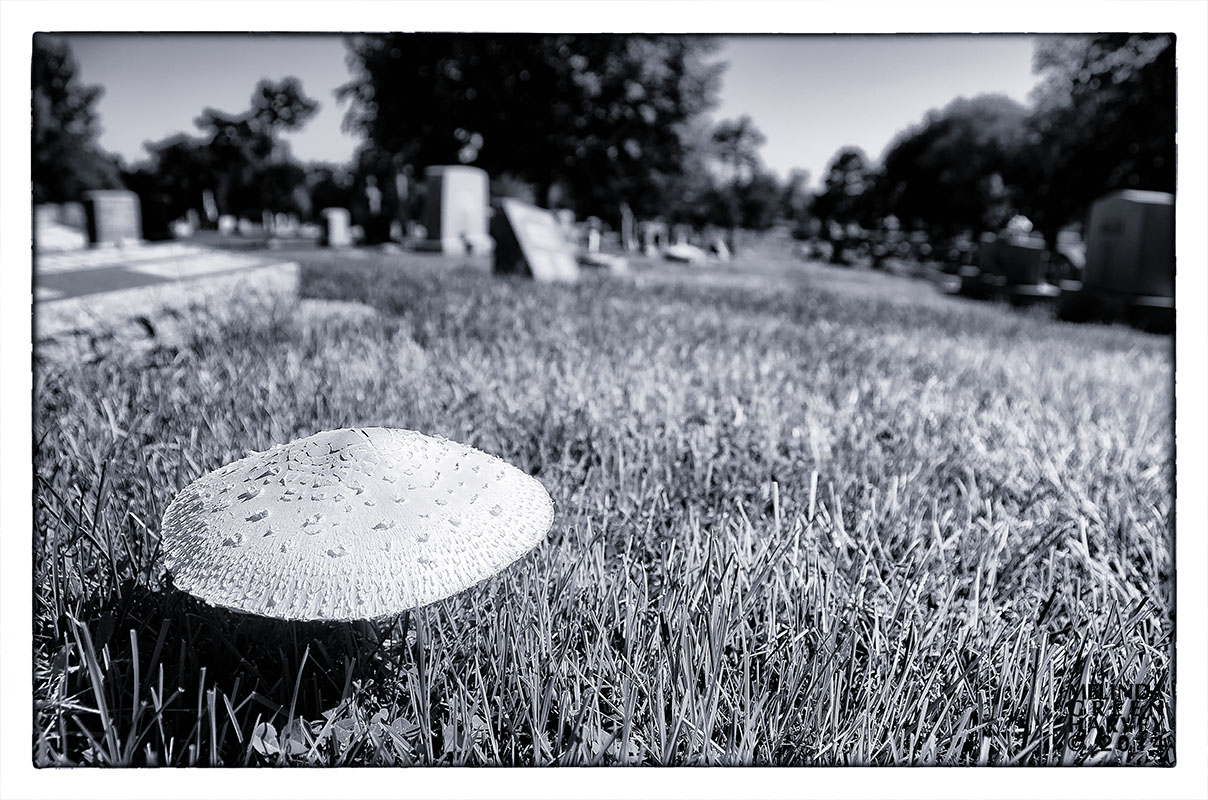
(This is probably self-explanatory.)
Kearney Cemetery
Kearney, Nebraska
photographed 8.30.2014


 One Day | One Image