Blog Archives
After the Methodists Left
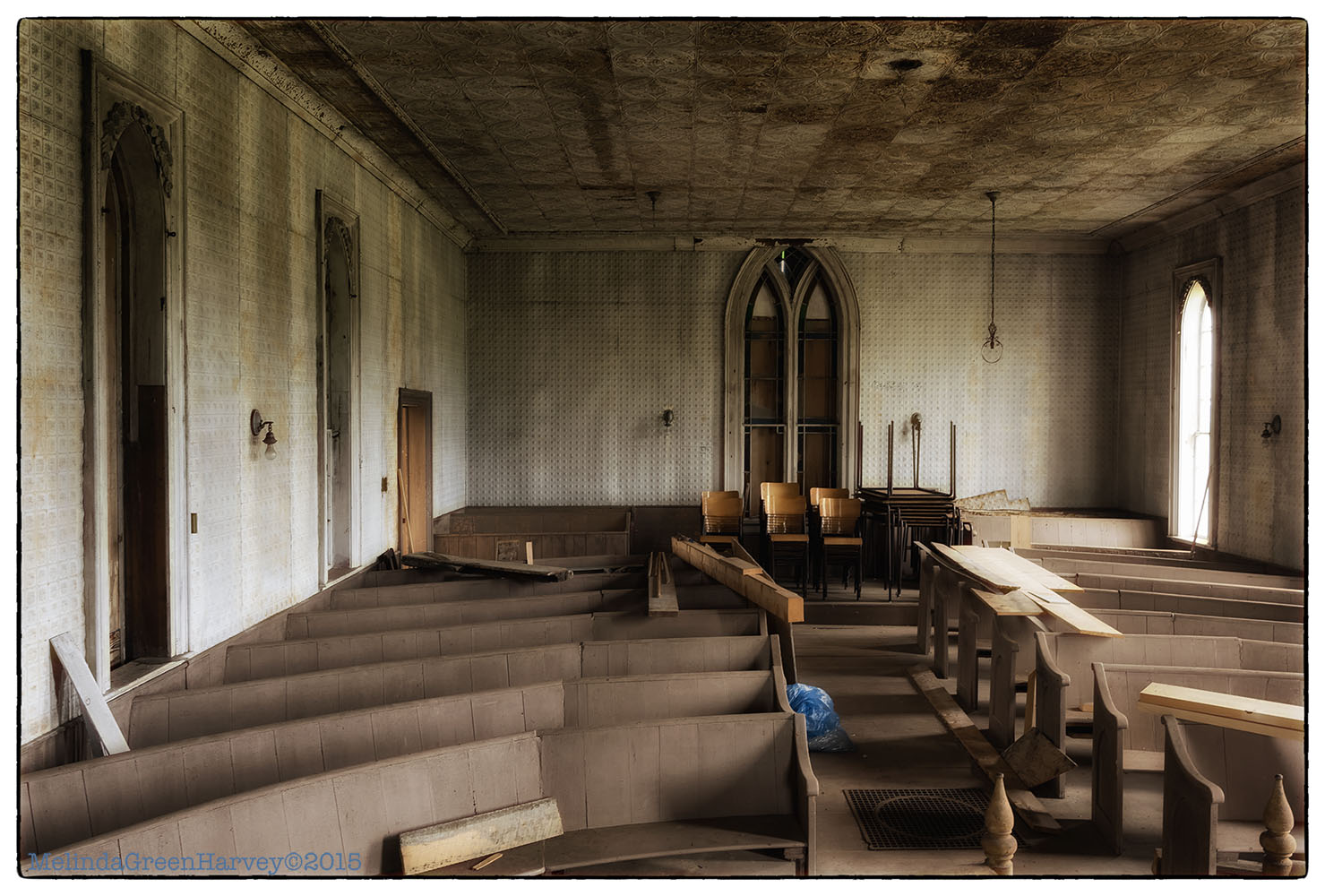
Maybe you recall my experience with the Rude Canadian, where Ehpem and I were “invited” to leave a parking garage we were photographing?
It’s still pretty clear in my mind, so it made me nervous when I made my first images of this old church and heard someone shouting at me from across a field. Turns out, it was the church’s owner, a very friendly man named Patrick. And he was asking me if I’d like to see the interior of the building, which was a decommissioned Methodist church. Naturally, I said yes, and Patrick showed me all around, told me about their plans for renovation, and their newer plans to sell the place and move back to British Columbia. And – this was the best part! – he let me ring the church bells. That reminded me of the Dorothy Sayers mystery The Nine Tailors (that’s logical, I promise – read the book and you’ll see what I mean) and I hoped no one was up there in the belfry.
After that, I settled down and got on with the business at hand, which was making a few dozen images of Patrick’s church.
near Trout Cove, Nova Scotia
photographed 7.28.2015
High Tide, Minas Basin
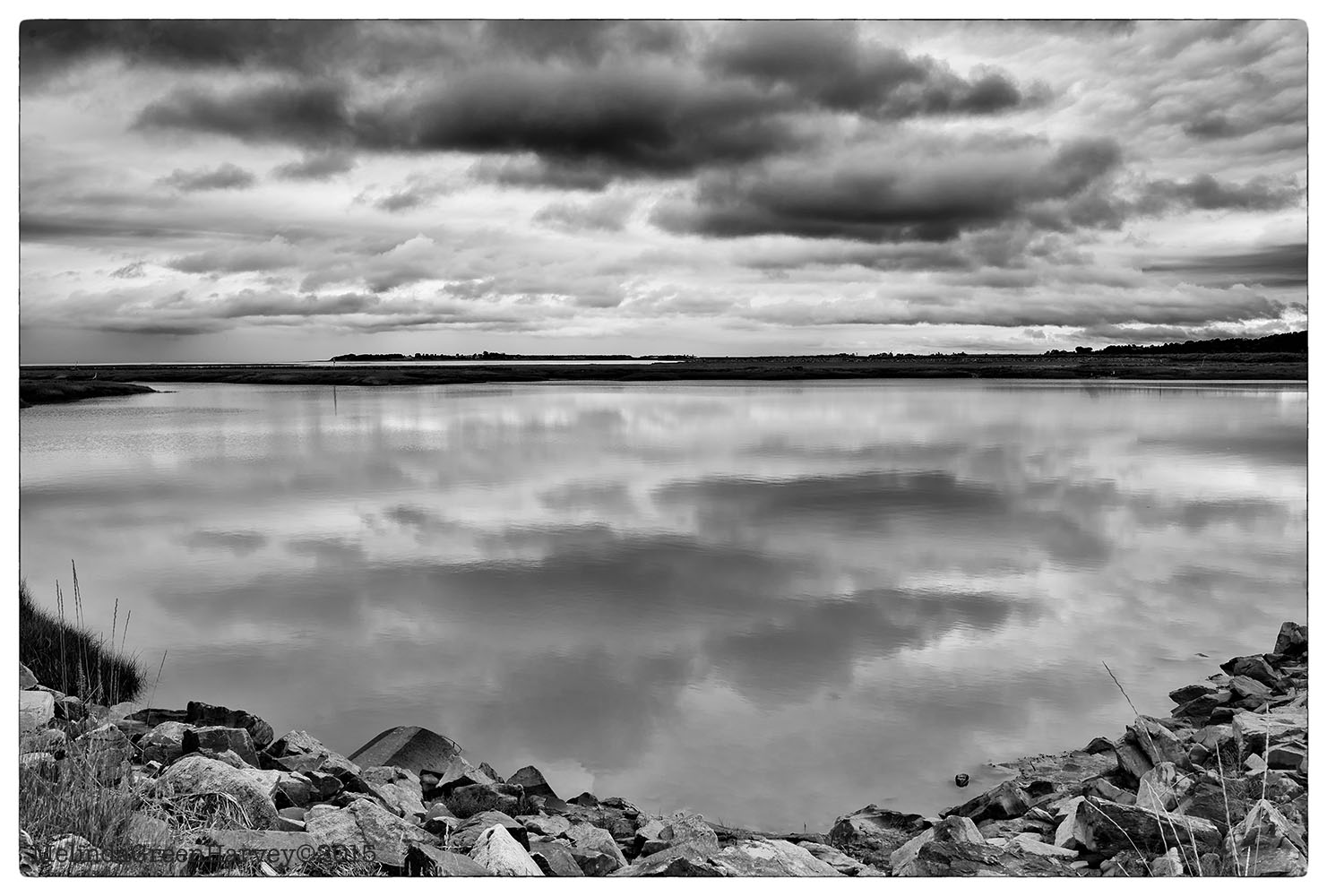
The only thing I remembered from my college geology class was that the Bay of Fundy has the largest tidal range in the world.
And so, because I knew you’d want to know, here’s what high tide looks like in Wolfville, Nova Scotia. (Although I realize that without the reference of what low tide looks like, this photo is relative useless.)
along the Bay of Fundy
Wolfville, Nova Scotia
photographed 7.27.2015
Someone Cared Enough
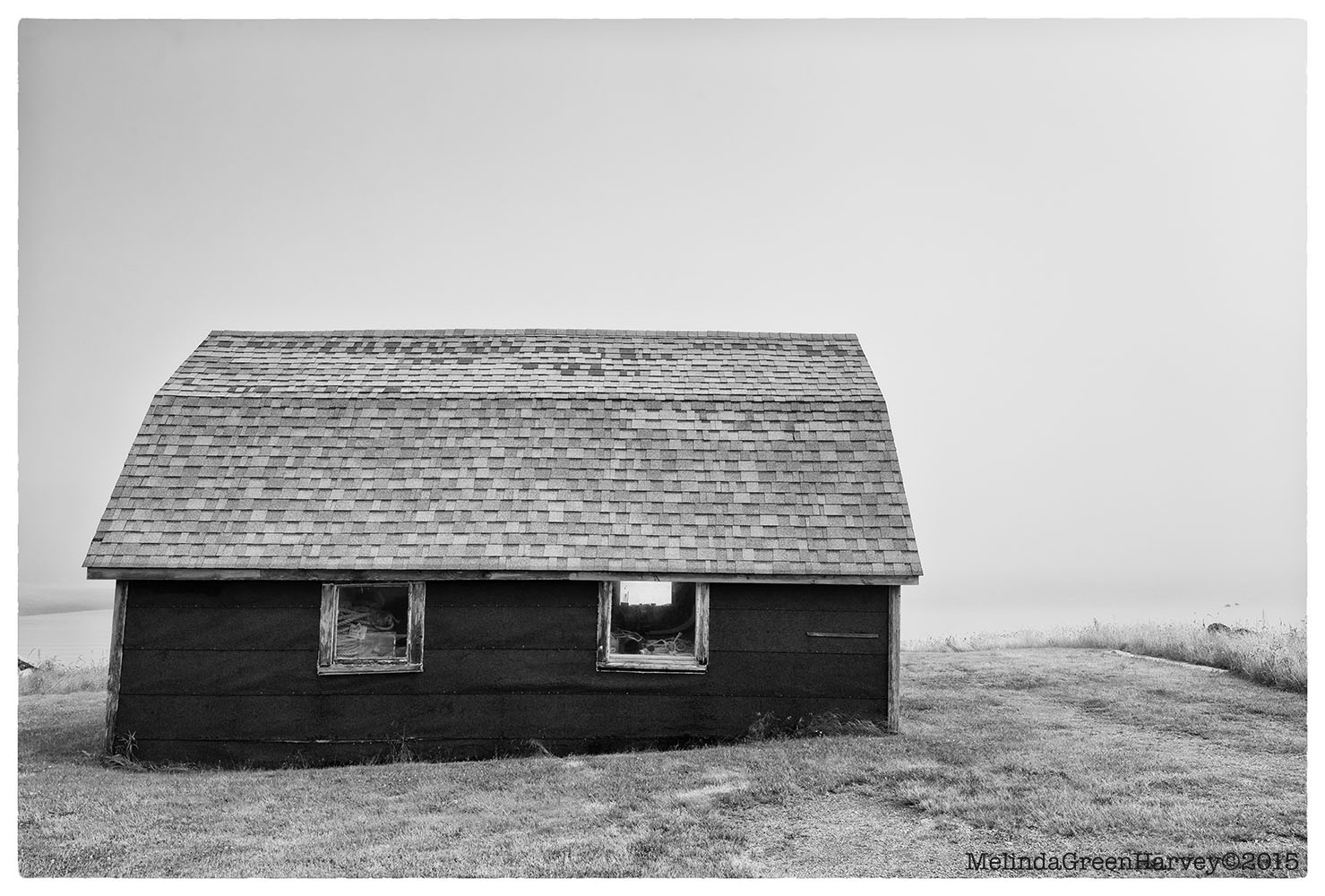
Shooting in the fog was a new experience for me. Literally shooting in the fog, I mean. I am often shooting in metaphorical fog.
Anyway, I was captivated by knowing there were things that were just right there, but that were completely hidden. I like how, even though this place is leaning to one side and clearly needs some work, someone care enough to cut the grass around it.
And, as I’ve mentioned before, I have a strong attachment to old buildings that I can see all the way through.
But even double windows don’t help clear the fog.
Cape Forchu, Nova Scotia
photographed 8.1.2015
Aground
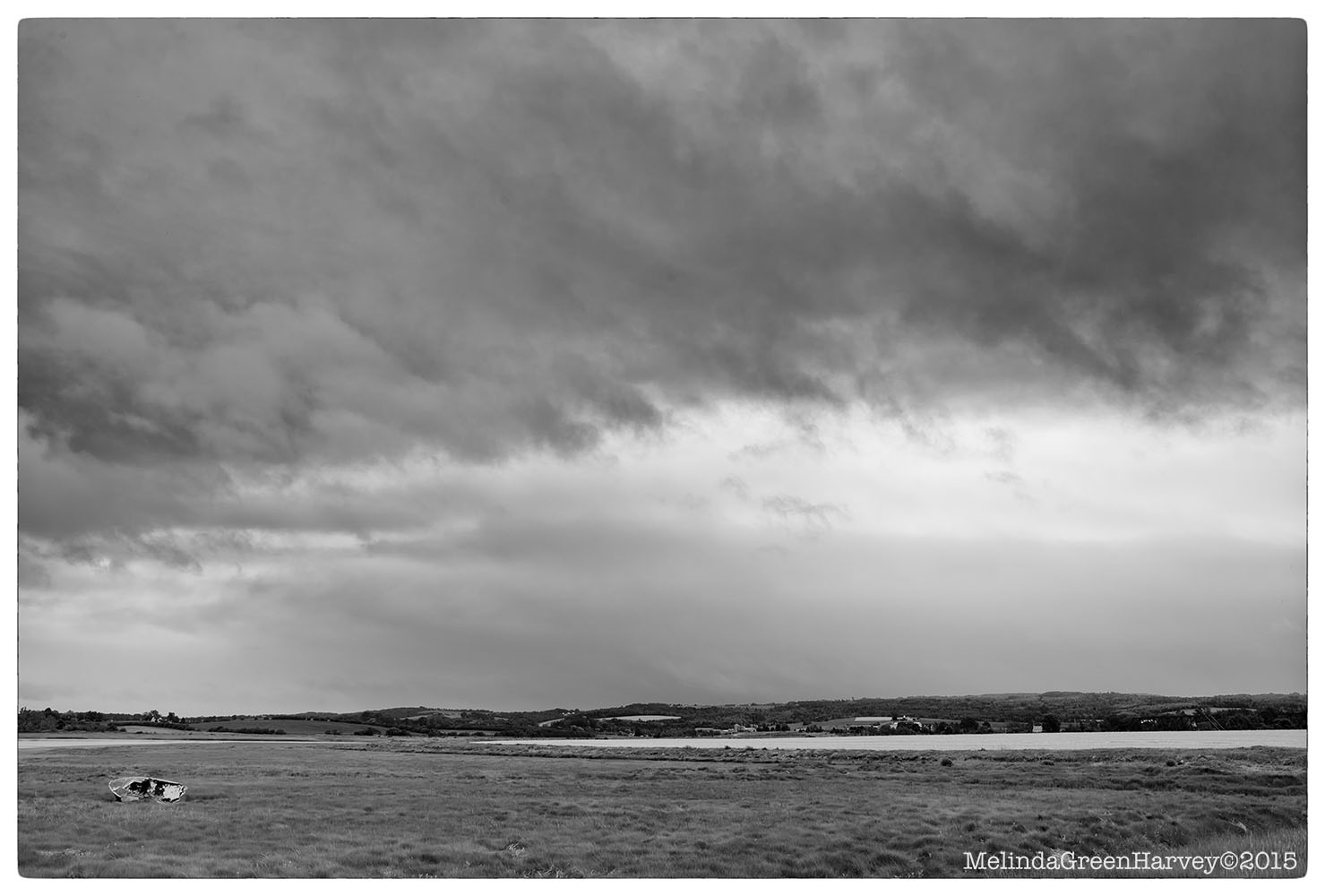
This is only steps away from the location that has been determined to be the actual site where the ships took the first French deportees away from Nova Scotia, in 1755. There’s a large metal cross to mark the place, but I like the grounded boat as a marker, too.
Horton Landing, Nova Scotia
photographed 7.27.2015
He watches all
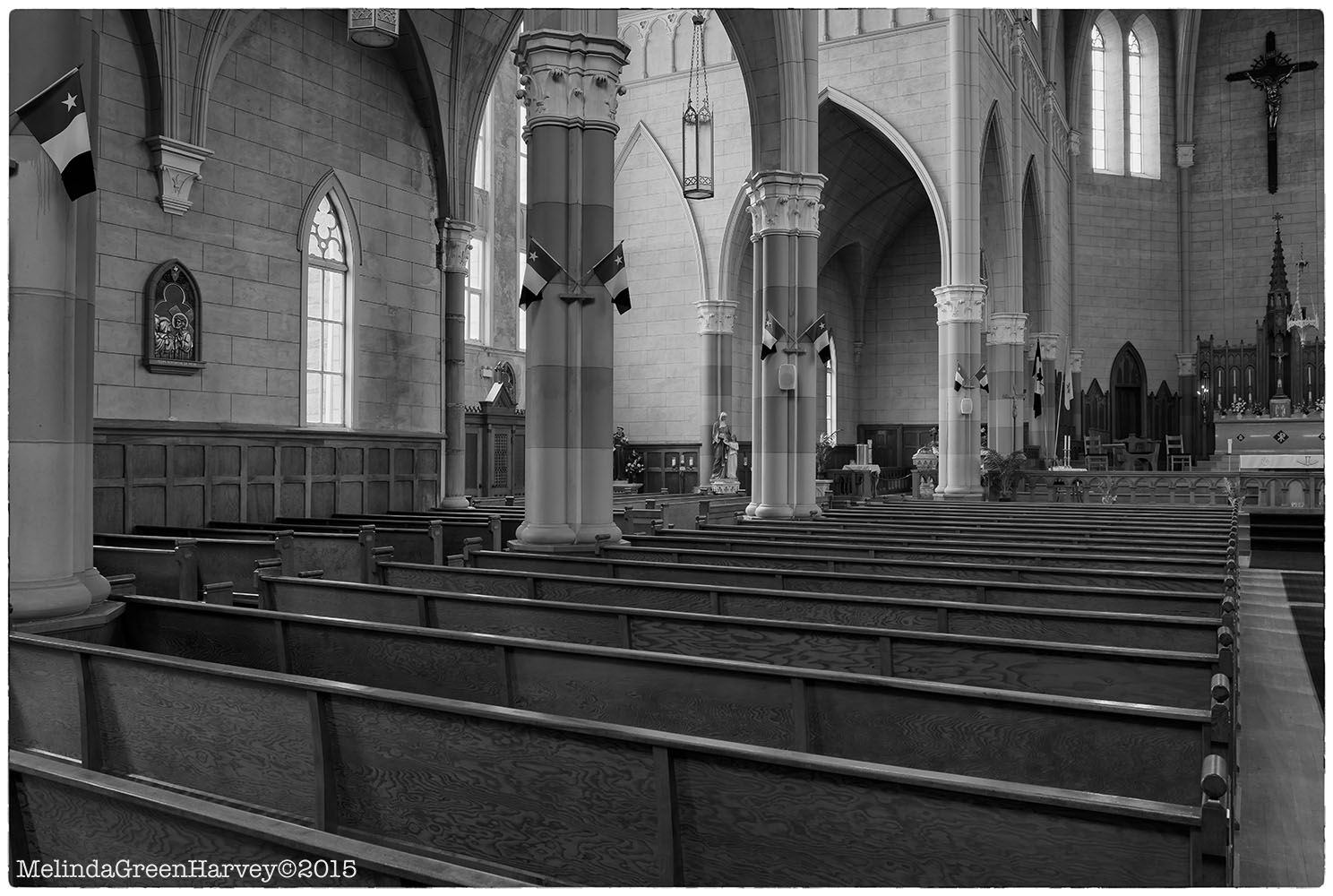
I guess this is the opposite of yesterday’s out-of-business church. This huge church took 42 years to build, and it’s still an active parish in heart of the Acadian area known as the French Shore.
The French Shore is one of the areas that the Acadians were permitted to live when the British had second thoughts about their earlier deportation. (The British had taken over, and weren’t interested in giving up, the rich farmland of their original homeland.) As a result, upon the Acadians’ return to Nova Scotia, they were in a new area and had to find new ways to earn a living, to make a life. And so it is now, over 250 years since their return, the Acadian culture is still strong. French is still the dominate language. The Acadian flag, the Stella Maris, is visible everywhere. The food has long associations with those early, thin days after the return. The music is still heavily influenced by ancient tunes.
And each community has an active Catholic church, with Jesus on His cross watching over it all.
Église Saint-Bernard
St. Bernard, Nova Scotia
photographed 7.28.2015


 One Day | One Image