Blog Archives
Aground
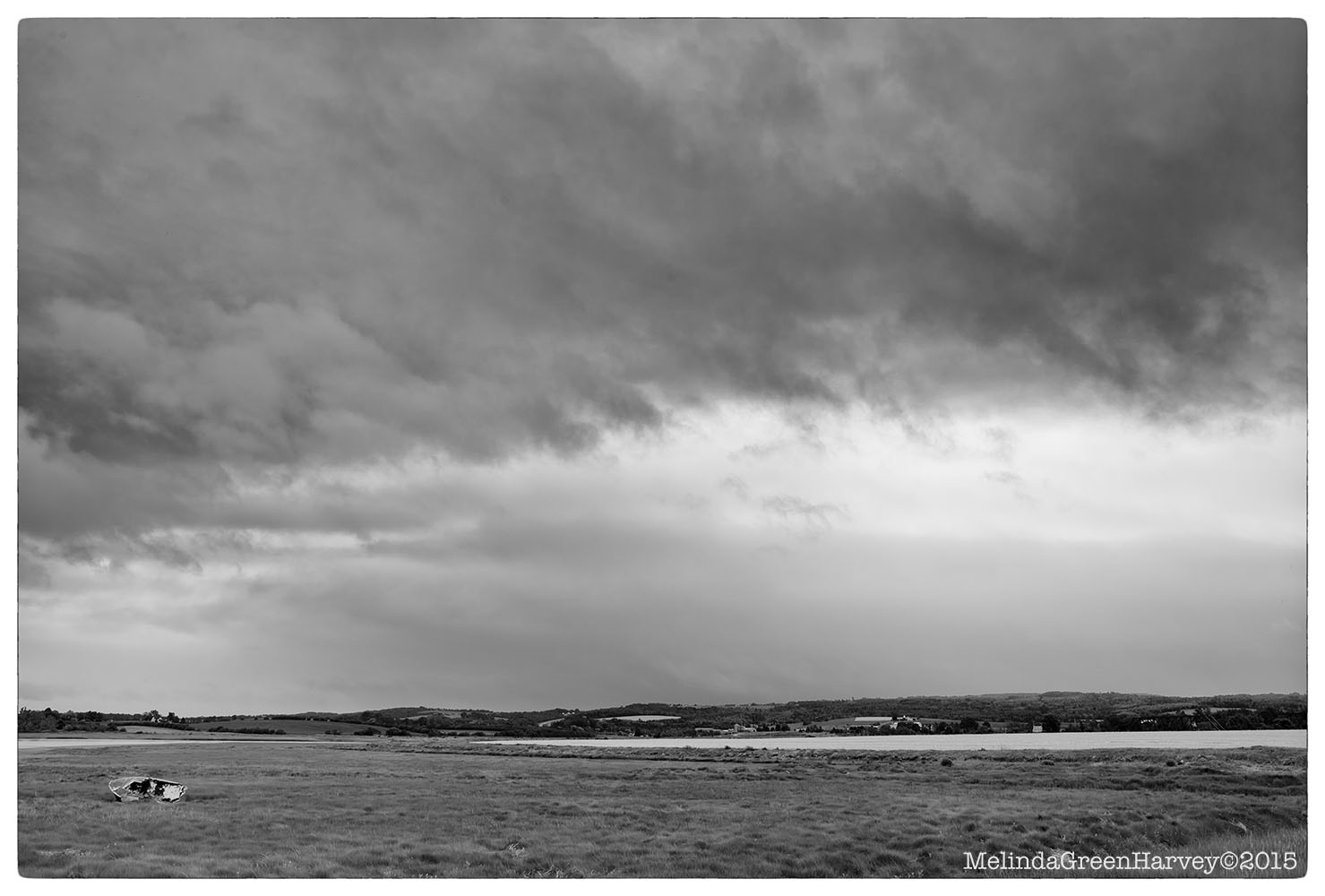
This is only steps away from the location that has been determined to be the actual site where the ships took the first French deportees away from Nova Scotia, in 1755. There’s a large metal cross to mark the place, but I like the grounded boat as a marker, too.
Horton Landing, Nova Scotia
photographed 7.27.2015
He watches all
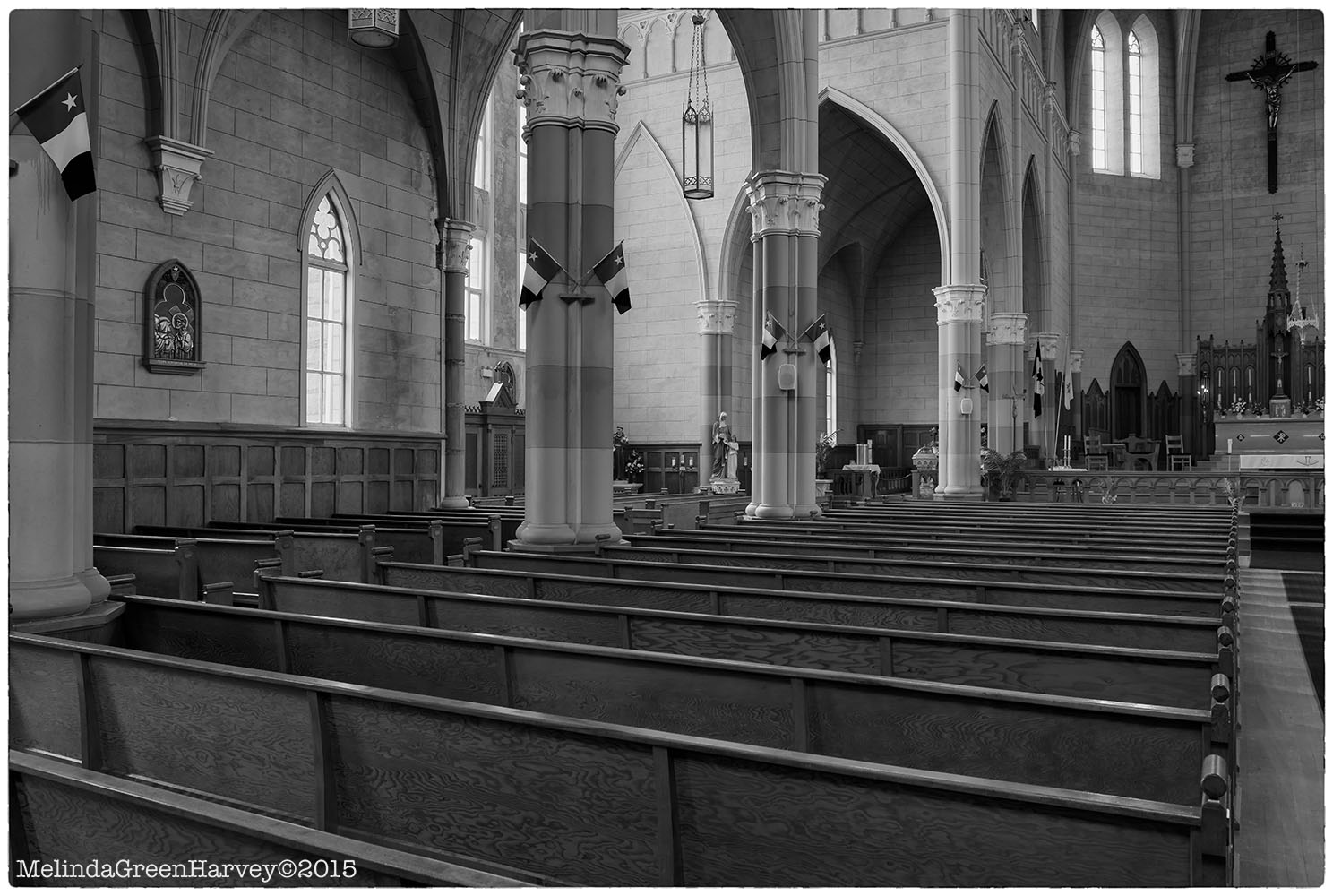
I guess this is the opposite of yesterday’s out-of-business church. This huge church took 42 years to build, and it’s still an active parish in heart of the Acadian area known as the French Shore.
The French Shore is one of the areas that the Acadians were permitted to live when the British had second thoughts about their earlier deportation. (The British had taken over, and weren’t interested in giving up, the rich farmland of their original homeland.) As a result, upon the Acadians’ return to Nova Scotia, they were in a new area and had to find new ways to earn a living, to make a life. And so it is now, over 250 years since their return, the Acadian culture is still strong. French is still the dominate language. The Acadian flag, the Stella Maris, is visible everywhere. The food has long associations with those early, thin days after the return. The music is still heavily influenced by ancient tunes.
And each community has an active Catholic church, with Jesus on His cross watching over it all.
Église Saint-Bernard
St. Bernard, Nova Scotia
photographed 7.28.2015
Out-of-Business Church

There wasn’t any signage indicating theological affiliation (or any affiliation, for that matter) outside this church, so I assume it’s out of business.
Naturally, that did not discourage me from having a look around.
Canning, Nova Scotia
photographed 7.26.2015
Flag Shadow

I like knowing that, while a lighthouse’s job is to warn of danger, they can still look so friendly. This one is particularly nice, with the white wooden shingles and the flag shadows.
Fort Point Lighthouse
Liverpool, Nova Scotia
photographed 8.1.2015
Memorial

At 10:25 pm on September 2, 1998, Swissair flight 111 plunged into the Atlantic at St. Margaret’s Bay, Nova Scotia. The crash site was 8 kilometers from shore, approximately equidistant from the tiny towns of Peggy’s Cove and Bayswater. All 229 people on board perished.
This memorial to the crash is near Peggy’s Cove; the slots in the granite boulder line up with the crash site on the horizon. There is another memorial, on the other side of the bay, and it, too, has sight lines toward the crash location.
We visited this memorial twice on the same day; the first visit was part of the obligatory stop at Peggy’s Cove. The second one, late in the afternoon, was to take advantage of the light. On the first visit there were four or five yellow long-stemmed roses the slots on the boulder. While we were gone, someone had added six more roses, red ones, to the others.
Swissair Flight 111 Memorial
near Whale’s Bay, Nova Scotia
photographed 8.6.2015
(You can read about the crash here.)


