Blog Archives
jesus needed a.c.
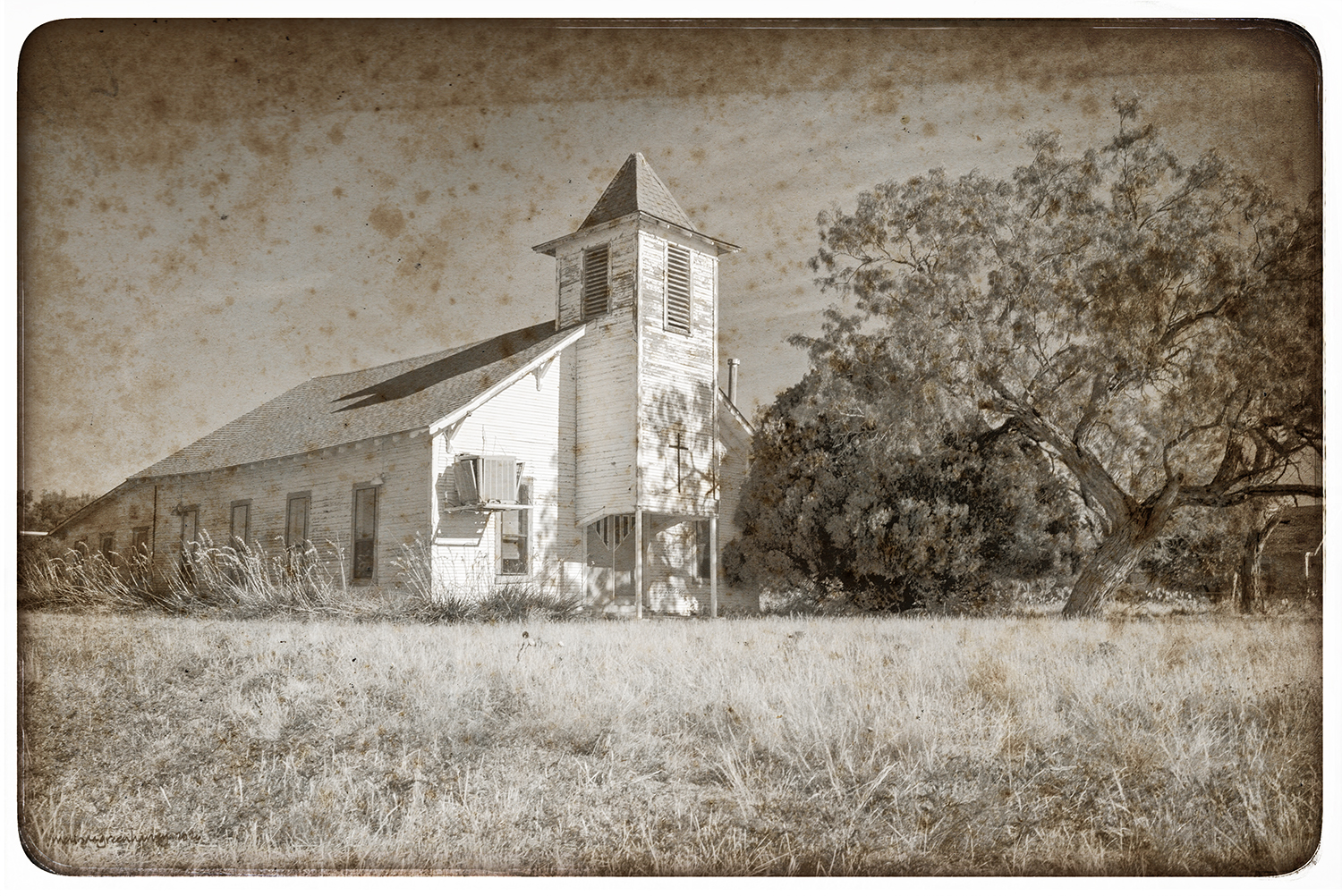
I was looking back through some older photos when I spotted this one. I barely remember stopping to make the photo except for this part: the door was open but as I was about to go in, I got A Feeling. And not in a good way, either, so I headed back to my car to escape whatever was in there waiting for me.
It was probably a rodent, although it could have been a murderer.
We’ll never know for sure.
Doole, Texas
photographed 6.5.2020*
*I know 2020 isn’t THAT long ago and doesn’t qualify this as an “older” photo. I probably should have started this post by saying “I was looking back through some photos where I may have barely escaped with my life.” Sorry for the confusion.
the gloom of twilight gathers fast
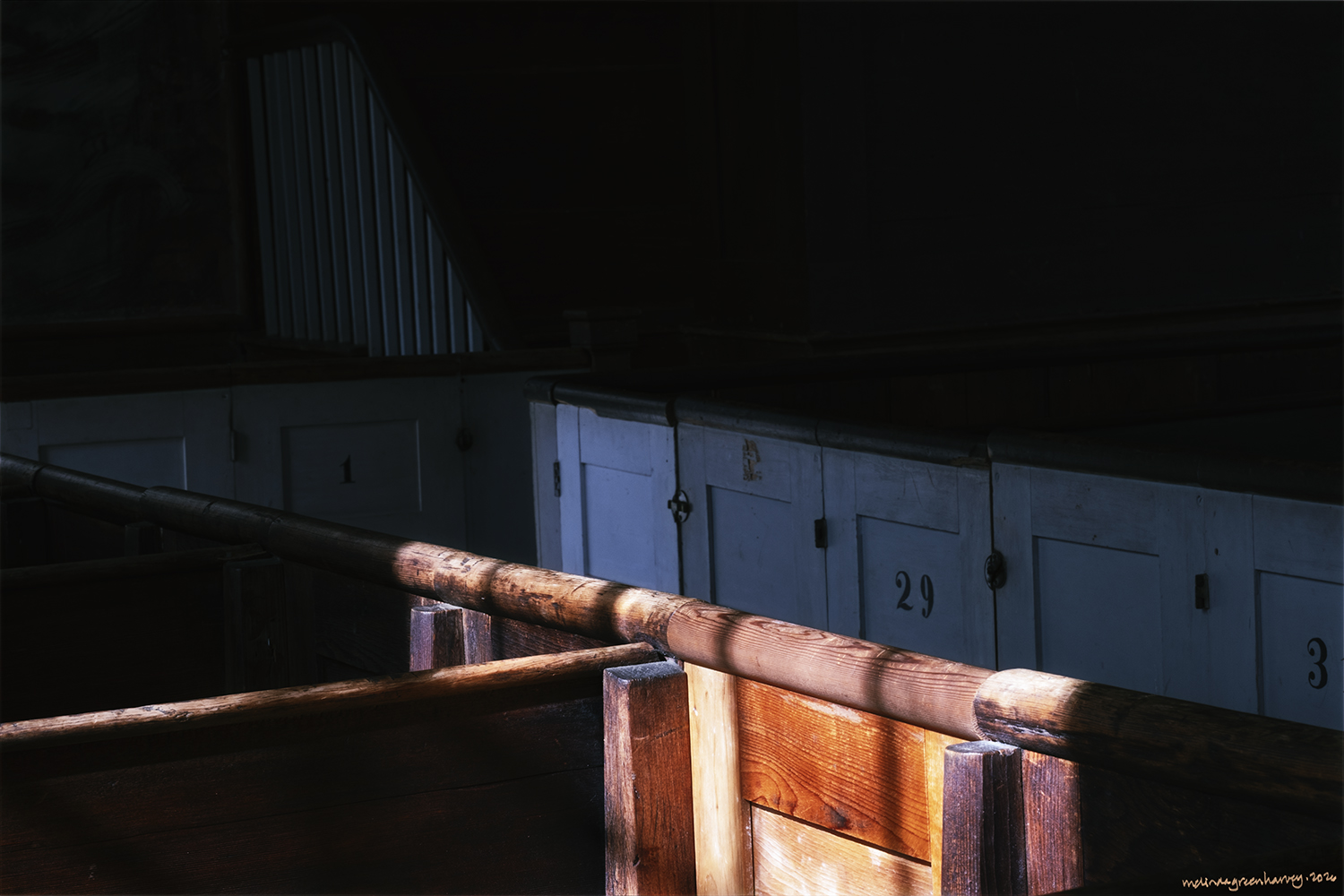
Here’s the last one – for now – from the South Solon Meetinghouse. It was a transformative few days and I am grateful that I was able to attend the workshop.
One afternoon while we were in the meetinghouse, I sat in a pew and looked through one of the hymnals. I was looking for words, for phrases that caught my eye. By the time I was done, I had filled two pages in my journal with pieces of songs that appealed to me. I often title my images with a few words from a song and my intent that afternoon was to mine the words for future photo titles.
And from that list, I drew the following list of titles:
- thanks + love + faith + grace
- our strength proved false
- since happier light
- of unseen things above
- wondrous grace
- the gloom of twilight gathers fast
So, l will gently leave my meetinghouse photos here. They are filled with thought, with intention, and with the unrelenting joy of seeing. It is my hope that you found something in them that was meaningful.
South Solon Meetinghouse
Solon, Maine
photographed 3.19.2026
wondrous grace
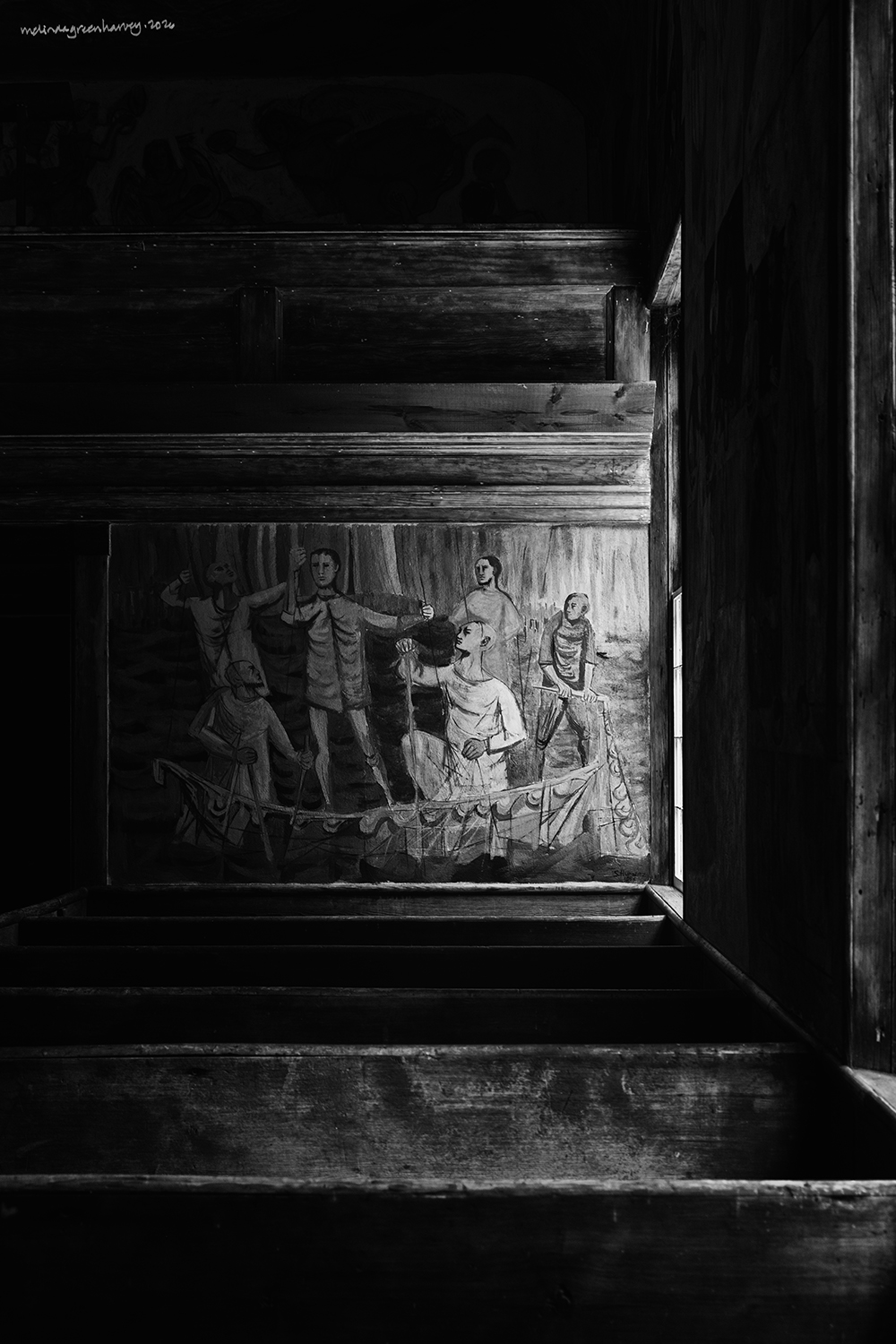
The afternoon sun through the windows gave a nice sideways light to the mural on the wall, which is why I made the photo. (Of course.)
I am often realizing things about my photographic style seem new to me. That’s sort of silly, right? I mean, I take a LOT of photos. I try to be purposeful with them. I think I carefully compose and understand what I’m seeing in the viewfinder before I press the shutter. So it seems like my style would be established by now, and further, that I would know why I do things the way I do.
These series of images from the meetinghouse has reminded me anew how much I depend on the darkness in the images – the darkness that is complete black. The darkness that is, technically speaking, “too” dark. But in my mind, what good is the light unless it’s balanced with the dark? How much less value does the known and clearly visible parts of an image have if it’s not offset by parts you can’t see?
Which leads me to wonder how much more joyous the bright parts of life are when they are balanced against life’s darknesses. It’s the balance that makes it work. In photography. In life.
South Solon Meetinghouse
Solon, Maine
photographed 3.19.2026
of unseen things above
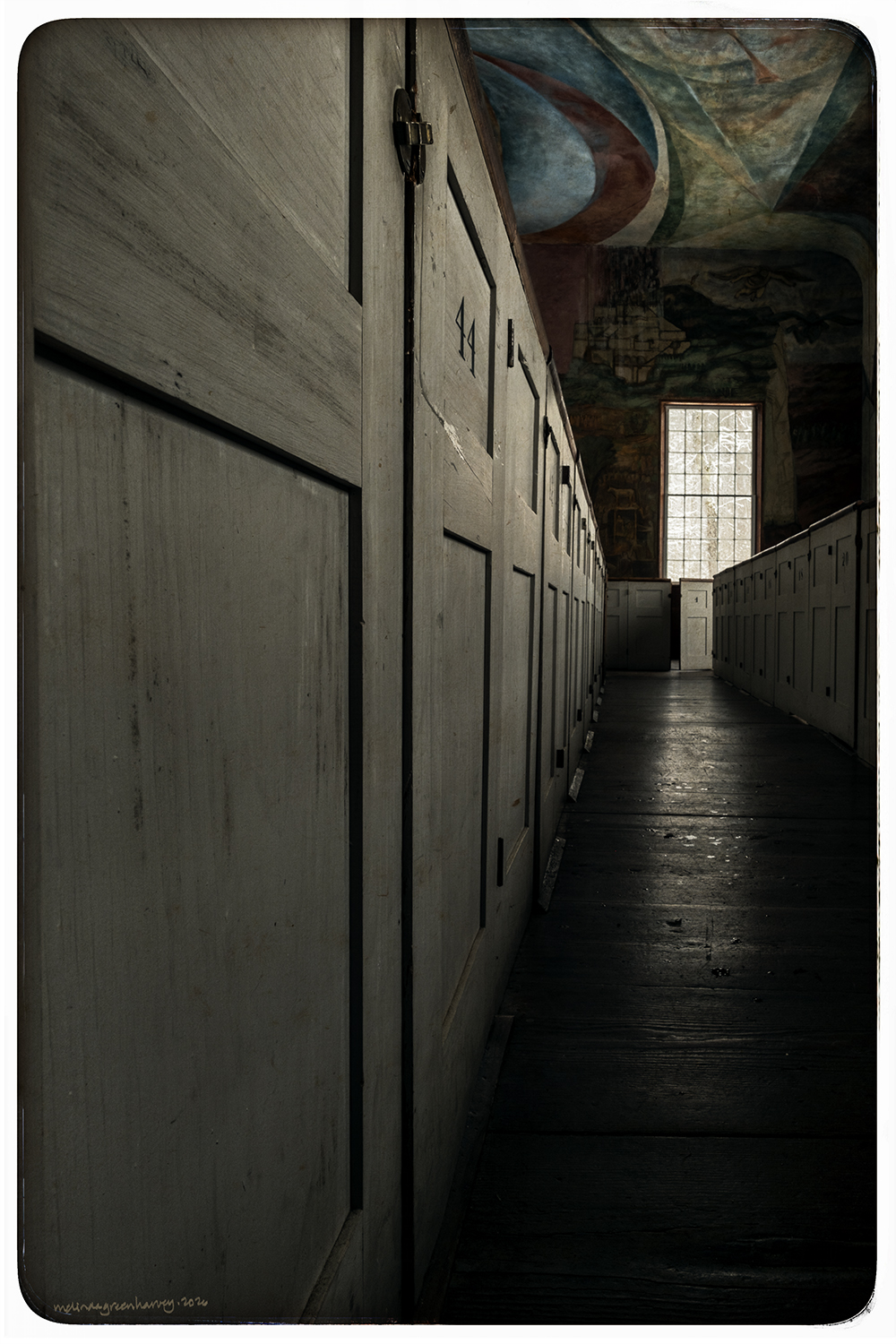
One of the contemplative things I did during our time here was to sit on the (cold) floor and look at views from a new, lower angle. This is something that I don’t do often enough but it proved to be the perfect place to settle in, to take long and careful looks around me. And to enjoy the way the light reflects on the old wood floor and bounces from the ceiling. And to think about the mystery of how perfect that all seems, how harmonious all the elements felt. And to wonder what makes current real life – away from meetinghouses – so clamorous and strident.
And, to reflect on how it’s up to each of us to find our sense of balance and harmony and to carry that with us when we go back home from the place where we found it.
South Solon Meetinghouse
Solon, Maine
photographed 3.19.2026
since happier light
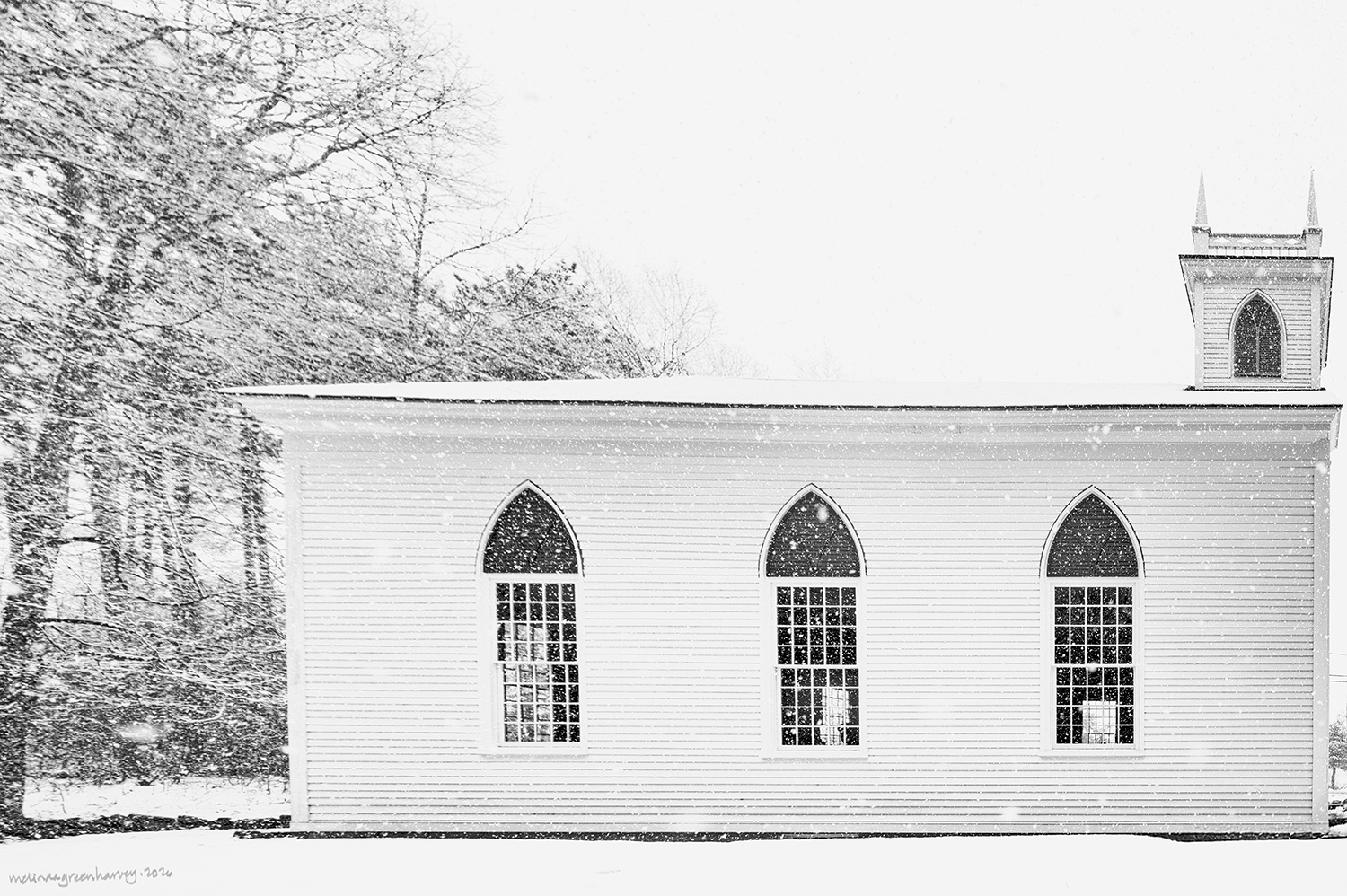
…and then it snowed. Soft, fluffy flakes. It was a delight. It was also plenty cold, and without any warm sun shining through the big windows of the meetinghouse, it was very nearly as cold inside as out.
Outside, the only sounds were the soft swishes of snow and it felt cleansing to stand outside and take it all in. The snow felt like a gift. (A gift that melted by the next afternoon, but you know what I mean – especially if you live in an arid place, like I do, where whatever snow we do get is much less fluffy and much more like annoying little ice pellets.)
South Solon Meetinghouse
Solon, Maine
photographed 3.19.2026


