Blog Archives
The very last time
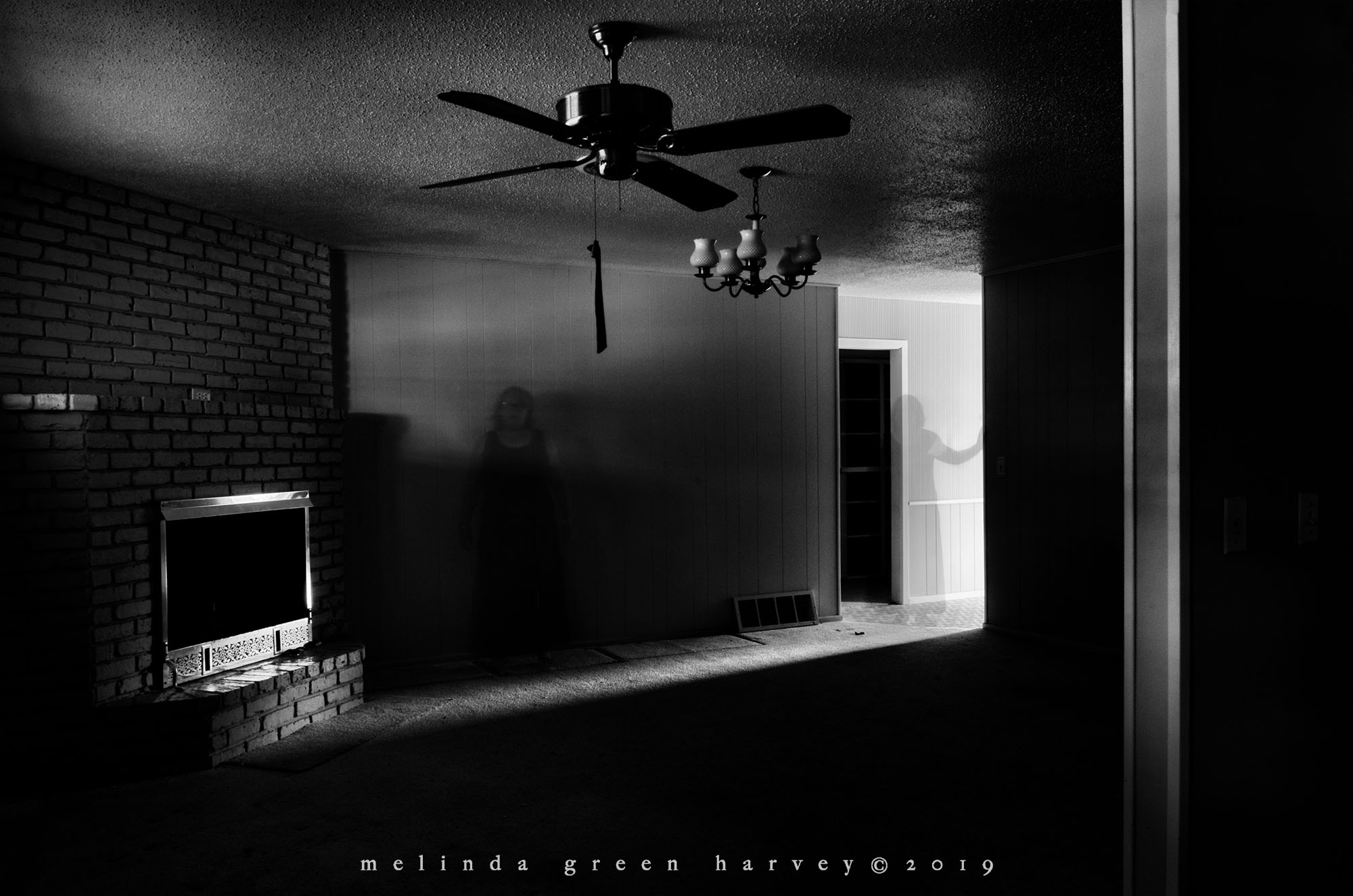
I was not in favor of the upcoming move, in the fall of my 4th grade year. I tried all kinds of clever schemes to change their minds, including an argument that the concrete slab floor would be too much on my flat feet. Yes! I really thought that would be a sound enough argument to have the whole thing halted. My dad would phone the realtor, saying, “Bob, I’ve got some bad news on that house over on Nashville. It’s, well, it’s my daughter’s feet…” and then Bob would say, “They’re flat, aren’t they? I understand. This isn’t the first time I’ve heard something like this. Now, as for that earnest money…” and we’d get to stay.
I liked the little house, the one we were leaving. The side yard on the west was nicely rugged; the back yard (even without my beloved willow tree, whose roots clogged the sewer one time too many) reminded me of fun: swimming in that small plastic pool, making hand-churned ice cream, finding the stray kitten we’d name Finnegan, the swing set, the playhouse. And the bedroom, shared with my sister, with its homemade bunk beds. The kitchen where I could remember my parents developing slide film late at night. The scratchy wool carpet in the living room, with the greasy stain where I’d spilled the Campho-Phenique when I was trying to doctor some itchy mosquito bites. And also in the living room, the fake fireplace that for some reason had shiny blue tiles. Even at a young age, I seemed to have a strong connection with the place.
Surprisingly, the flat-feet plan fell through, and the move was set for the day after Christmas, in 1964.
My sister changed schools, enrolling in second grade at the school two blocks away. I refused and finished out the year at my old school, which was seven miles away and which required my automobile-shy mother to drive over twice a day. I apparently was going all-in on my not moving platform: I stayed with the world’s worst 4th grade teacher, just to make a point.
There were changes to the house over time. Trees got planted in the front yard, to shade the house from the strong, hot afternoon sun. The tile in the den was replaced with carpet. My dad painted the wood panelling in the den, and later, the kitchen cabinets. The old Formica counters got replaced with new Formica counters. Over time, as money was there, my mom filled up the house with her beloved Ethan Allen furniture. It was generally cosmetic changes, not the large-scale renovations that I’ve done more than once as an adult.
As my parents got older, my mother would occasionally float the idea of moving to a senior-living place; my dad declined to even discuss it, refusing to leave his two pecan trees in the back yard and his turtles and (I’m guessing on this part) what he saw as the status associated with aging in his own place. The rate of house improvements slowed, then stopped. The rate of things in need of repair increased; generally speaking, if my dad couldn’t do the repairs, they went un-fixed. And his repairs were mostly of the half-assed variety. He was a brilliant civil engineer, and a haphazard repairer.
It got worse after my mom died; my dad retreated into a few square feet and left the rest of the house to literally gather dust. After his move to assisted living (which was most certainly not his idea, and he’d’ve been the first one to tell you that), the house sat there vacant. Upon advice from our insurance agent, we left the utilities on and kept the household items that didn’t go to assisted living, and eventually my dad decided it was time to sell the place.
The sale of the property and the estate sale of the stuff happened quickly, and one evening, I was there alone in an empty house. I was still second-guessing the decisions I’d made regarding my dad’s living arrangements and the disposal of the house and contents. I felt left in the shadows, felt split by the light of what I’d done, felt more melancholy than ever before in my life.
So I made a photograph.
Lubbock, Texas
photographed 10.9.2013
Somehow it had become an old man’s house
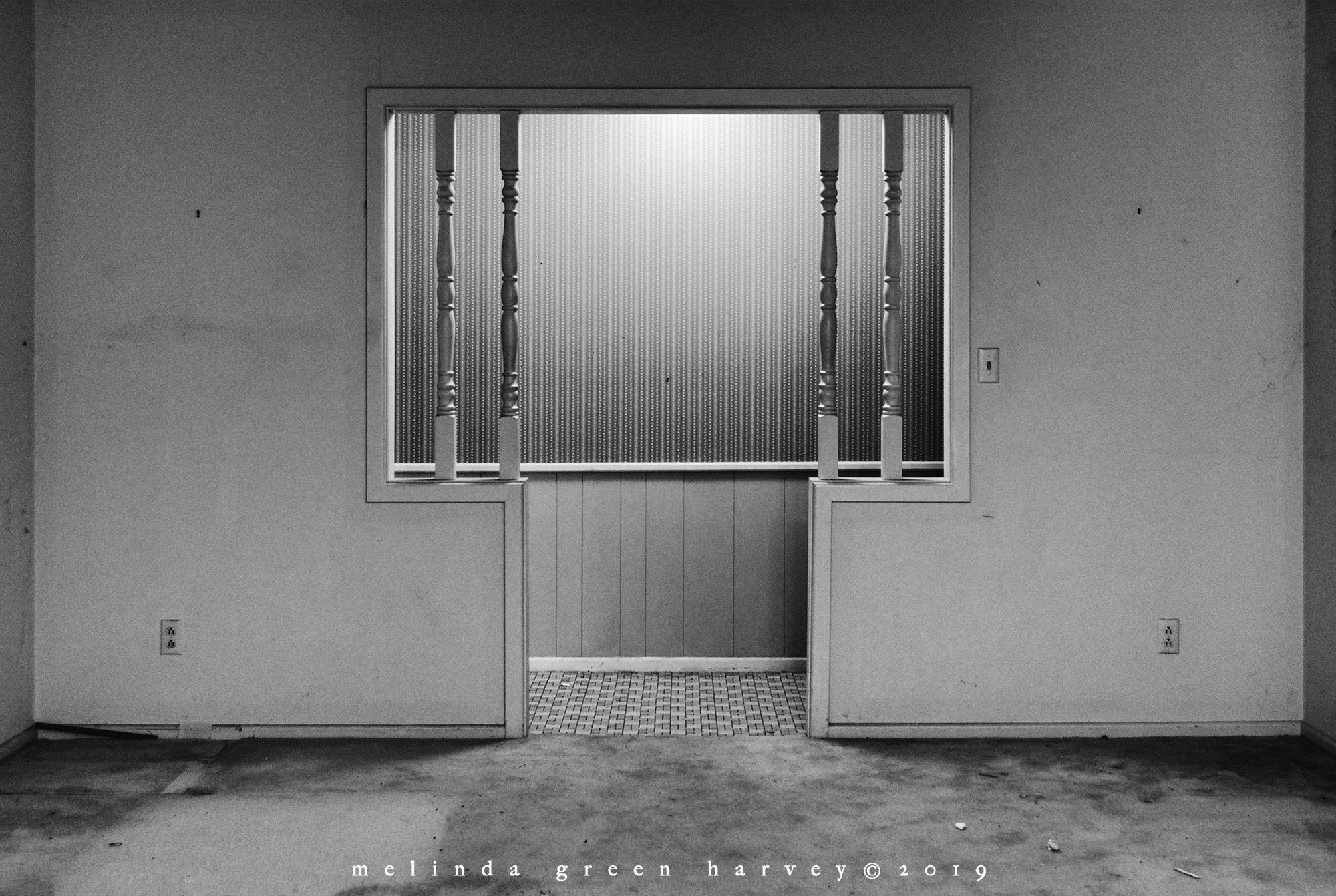
My mom died suddenly, leaving my dad alone in the house they’d lived in since 1964. By that time, the house was 40 years old and age was creeping up on it. Things needed repair, other things needed replacement, and the general condition could have been charitably described as “cluttered.”
Age was creeping up on my dad, too, and he was starting to need some repairs of his own. In the first six years after my mom died, he had a knee replaced, shoulder surgery, and prostate surgery that he described as a “ream job.” When he was in the hospital for the prostate surgery, the nurse cheerfully told me that in a week, I could remove his catheter. That was wrong on, well, every single level I could think of. My current self would have argued about it right there, but the person I was then accepted that ridiculous statement as The Way Things Are Going To Be Done. As that week limit crept up, though, I phoned the doctor’s office and made an appointment to get the catheter removed.
Even with the repairs, time was winning. My dad got less and less able to take care of the house. At the same time, he got more and more skilled at masking how bad things really were. If there was something that he just couldn’t figure out how to fix on his own (I should probably say “fix” on his own.) he’d call us in for help. On the Saturday morning of what turned out to be his very last week to live in the house, he reported that he’d been using an ice chest because the refrigerator had gone out. I took him to the store and we got a replacement; the exceedingly kind gentleman who waited on us (who surely had an elderly parent of his own) arranged for the new appliance to be delivered that very afternoon.
Then, on that Wednesday evening, my dad fell, spent the night on the floor, ended up in the hospital and rehab and the hospital and a different rehab, and eventually, into assisted living.
After my mom passed away, my dad and I would meet for lunch every Saturday at a place he called “the ham store,” where we’d split a ham sandwich. At one of those Saturday lunches, he told me, “I am going to count on you to tell me when I shouldn’t be living by myself any more.” I held tightly to that card he’d given me, knowing that I would have only one chance to use it.
Maybe knowing I just had one chance helped me to act more slowly than I ought to have: as we moved his belongings to assisted living, it became clear that I should have had That Talk with him much sooner. The place was a mess. It wasn’t clean. Things, a lot of things, didn’t work right. There were piles of stuff all over the place; not hoarder-level piles, but still. In retrospect, we ought to have noticed that he never exactly invited us over; and we’re a restrained family, so just stopping in for an unannounced visit would have been out of the question. That let a lot of things slide past where they should have been. In retrospect, again, I should have been smart enough to stop in anyway just to have a look around.
After about a year of paying utilities and insurance on his nearly-empty house, he directed me to call in my sister, sort through and divide up the contents, have an estate sale with what was left over, and put the place on the market.
The sorting-and-dividing was an ordeal, and I’ll just summarize that part of it by saying that my sister and I are no longer in contact.
The selling went quickly; I told the realtor that my only goal was to no longer own the house. I didn’t want to paint or put down new carpet or stage anything. I just wanted it gone. She came through for me, and within a week had sold it to a couple of women who flipped houses.
And then one day, what had first been the formal living room (which seems unbelievably quaint now) and then had been my dad’s home office was empty of the stuff. And it looked like this: dusty, dirty, forlorn. An old man’s house. And the old man and his house were both worse for wear.
Lubbock, Texas
photographed 10.16.2013
80% off really draws them in
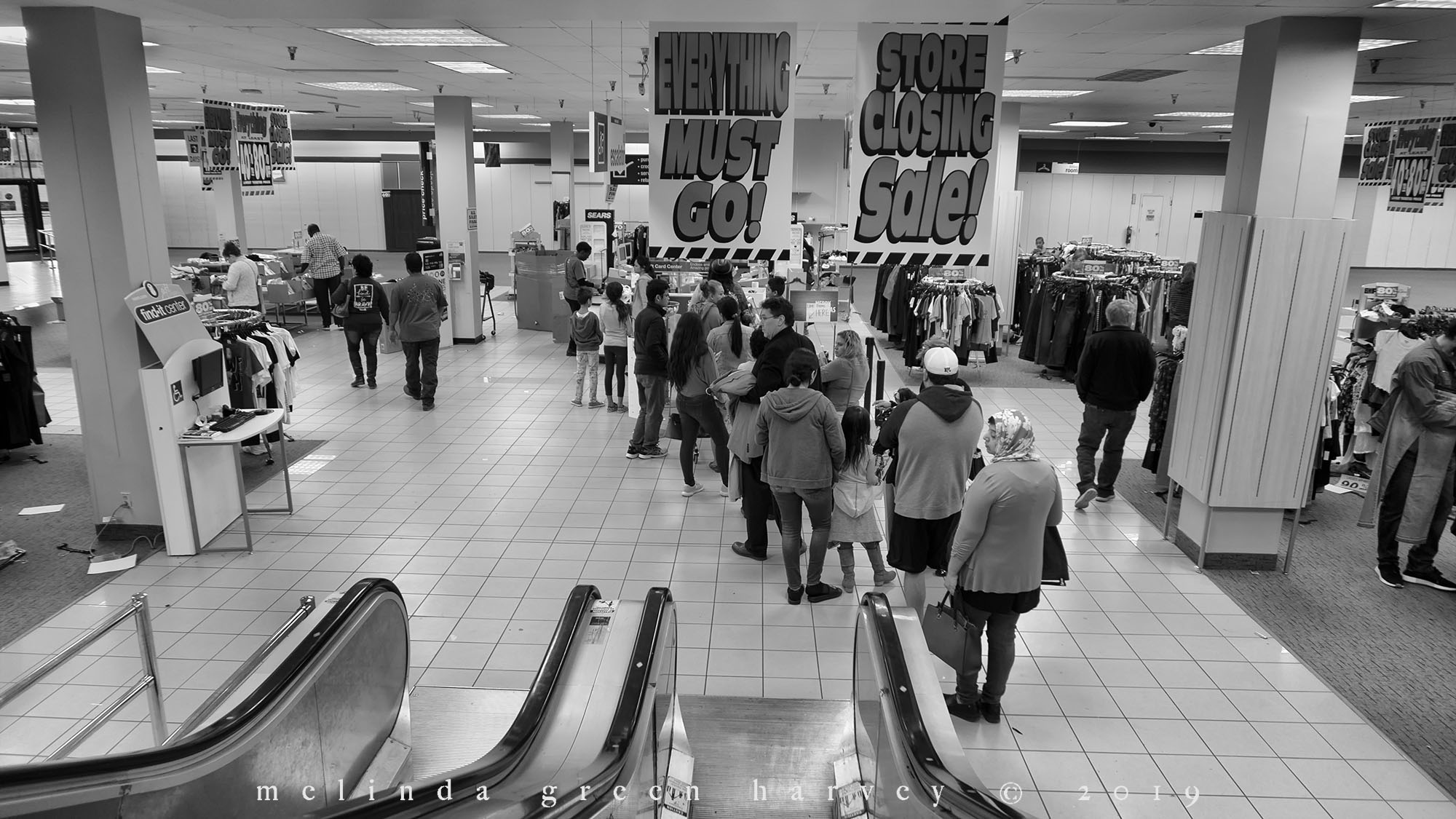
Sears was only open two more days after this. Those deep discounts meant the store was more crowded than it had been in recent memory.
Lubbock, Texas
photographed 1.5.2019
Another unnamed building
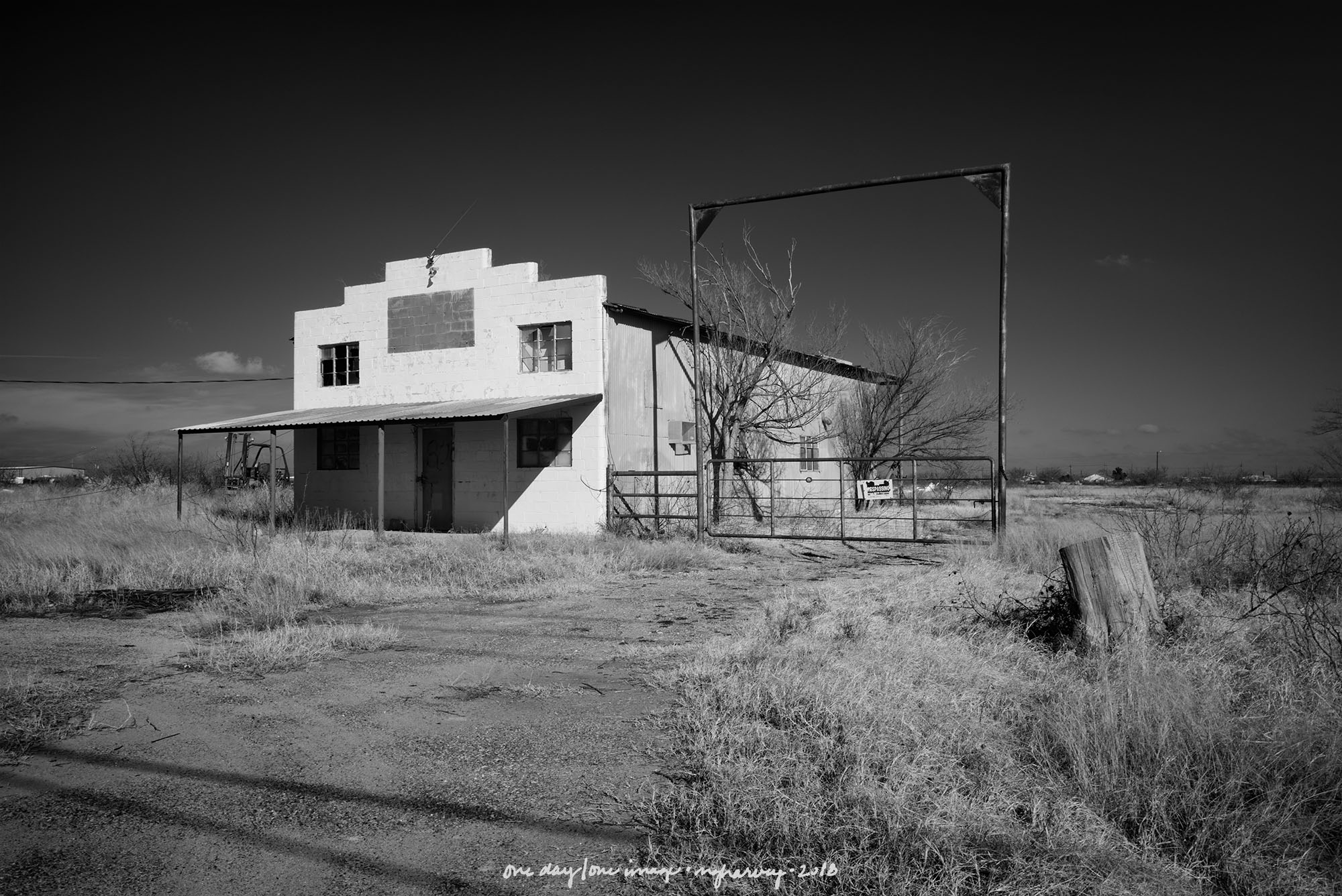
Here’s something to try for fun: first, let someone drive you around in an unfamiliar town, on a road that’s not really on a map. Then notice a building that you’d like to photograph. Make sure you’re in a situation where you can’t stop to get the shot. And, then, a few days later, try to find it again.There are bonus points if you can give your Patient Spouse (who is in an unfamiliar role as navigator) vague directions like “maybe the cross street is called Industrial?” or “there were some crosses by the railroad crossing.” And lots of bonus points if you get to town so late in the afternoon that it’s too dark anyway (because it’s solstice, after all). And then the regular number of points if you go back again on another day, have a bit of a “discussion” with the Patient Spouse about how to find the place, but since he’s driving and you’re navigating, then you eventually do locate it.
Just think of the fun!
Also, this: my first thought when we actually did locate the damn thing was that it wasn’t even worth the effort. But by then I was committed to getting the shot, whether or not it was worth it. I’m stubborn that way…
Midland, Texas
photographed 12.25.2018
(but attempted 12.17.2018 and 12.21.2018)
Night/Vision
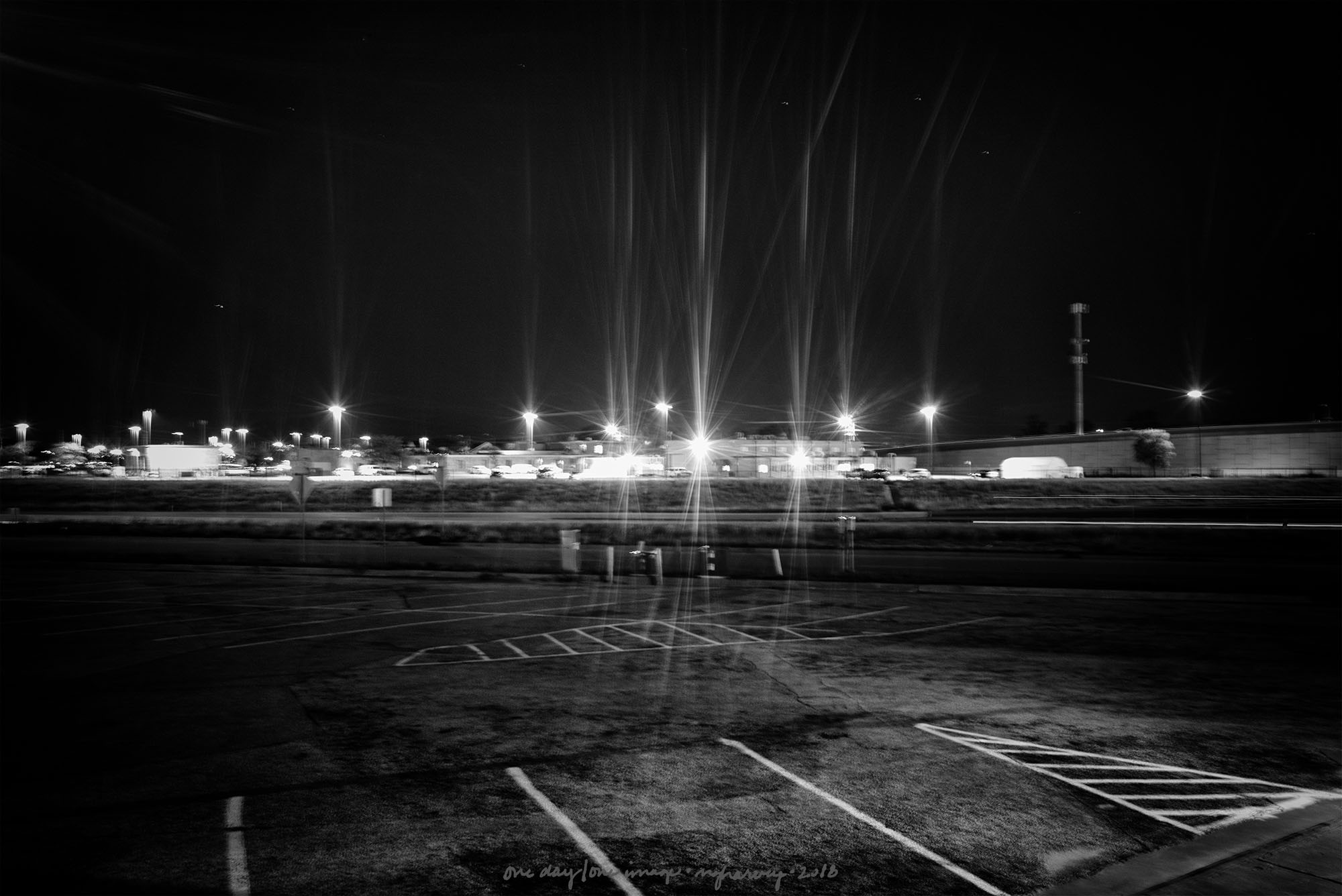
I’ve been working on a photography project for the past seven months that I haven’t posted here, for a complicated set of reasons. But here’s one image from the project, an outtake, if you will. I shot it through a dirty window, and rather liked the streaky result with the streetlights.
Don’t worry about the project; it’s still in progress, still without a name, but you’ll see it one of these days….
Lubbock, Texas
photographed 10.22.2018


 One Day | One Image