Blog Archives

Rooflines
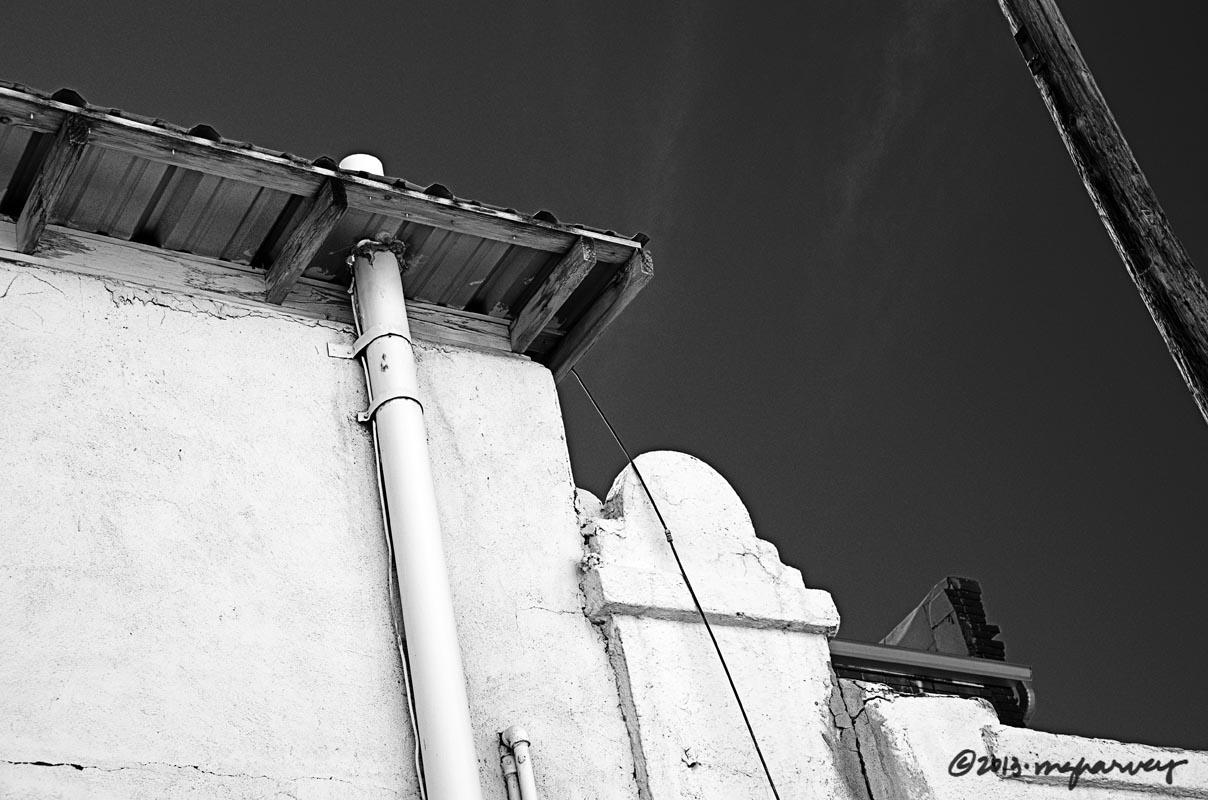
I guess that we all knew it was just a matter of time before I posted another shot taken in an alley.
This alley is just off the main street in Marfa; I took the photograph at the request of my traveling companion. I add that to try to show that I am NOT the only one walking around alleys. But my companion would probably not have been in the alley unless I’d turned down it first, so my position re. alleys remains a little weak.
Marfa, Texas
photographed 1.18.2013
Important Update/Rebuttal
The previously-mentioned traveling companion offers the following rebuttal re. alleys and my allegations regarding her use – or lack – of them. Also, her daughter’s name is Allison, which will make sense in a minute:
As a New Orleans native, I absolutely and without reservation argue that I discovered and appreciated alleys long before you, despite both your greater number of trips around the sun and your upbringing in the ever fascinating country of West Texas.
To wit: every space between the shotgun houses of my youth is an alley; I personally explored most of the ones between St. Charles and Magazine, Audubon Park and jJefferson Avenue in my first ten years and haven’t stopped loving that alley feeling since.
Alleys were for forts, hiding, eating candy from Mr. Landry’s so your mother wouldn’t take it away (and eat it herself!), games of little boys and girls, playing our own home grown version of tag called “infintrationality,” hiding, walking through to look for discarded stuff.
Alleys are literally cooler and I remember that physical sense of relief in getting out of the sun.
Also: I named my second child what?
I think she rests her case!

Not
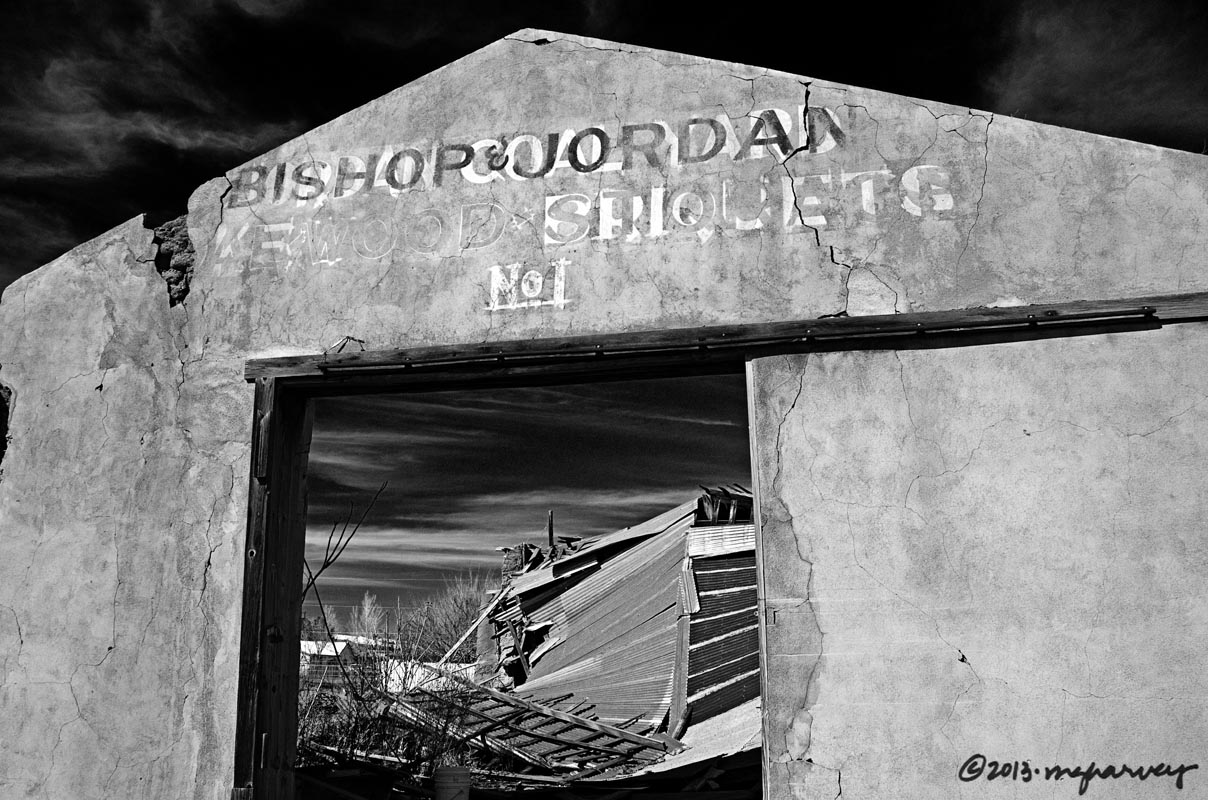
For someone like me, this building represented a Major Find: it was falling down, it was adobe, it was reasonably accessible, it was photogenic, and the sky was that shade of blue that looks particularly dramatic in black and white.
The sign above the doorway offers little in the way of coherent explanation of what might have gone on here, although it appears that Bishop & Jordan took over someone’s Coal Yard. Wood and/or briquettes may have been available. Unless they weren’t.
And that last line – does it say “not” or does it say “No. 1”? I am sure I can’t tell.
Marfa, Texas
photographed 1.18.2013

Star-shaped holes

The book Exploring the Big Bend Country (by Peter Koch and June Cooper Price) describes the cemetery in the border town of Lajitas as a “poor man’s cemetery.” The authors go on to state:
“The graves in the Lajitas cemetery are mostly simple mounds covered with a layer of heavy rocks. Here and there a wooden cross is held in place – almost – with blocks of heavy limestone.”
At this particular grave, the sun had baked the white stars completely out of what was left of the flag as it flutters itself into nothingness above the grave of one of the poor men of the border.
Lajitas, Texas
photographed 1.20.2013

Terlingua cross: back and front
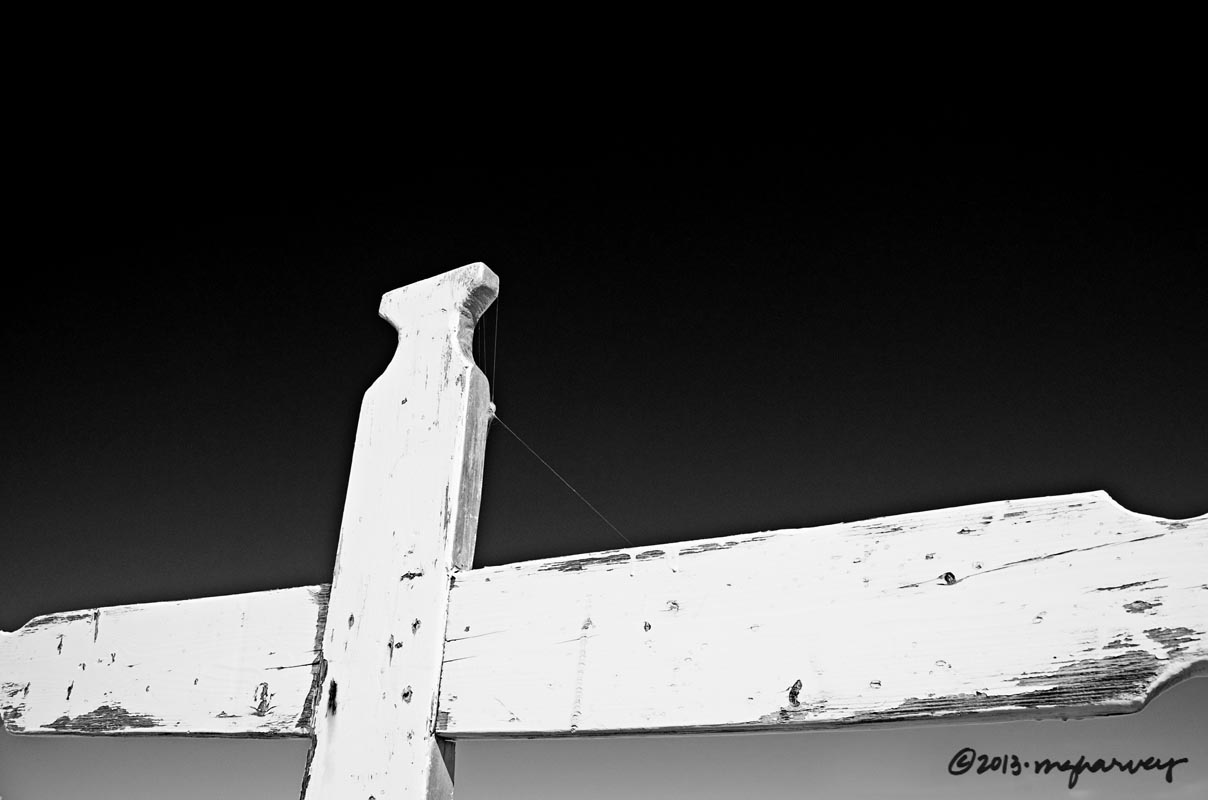
The back of a long-armed cross in another shot from the Terlingua cemetery.
And, because I think you want to know what the other side looks like:
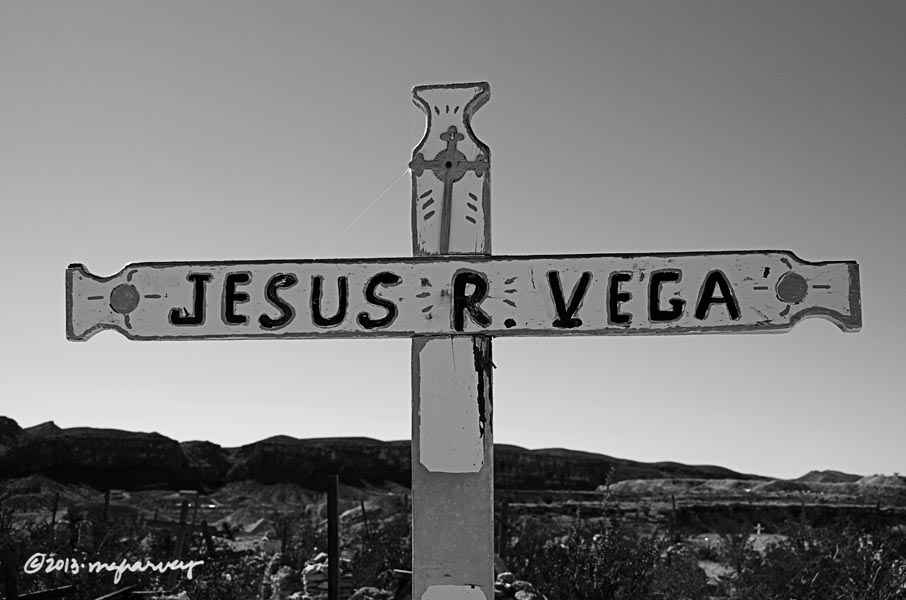
This might be a good time to mention that, in addition to looking in alleys for things to photograph, I also like to walk behind things, too. Many times, I like the backs better.
Terlingua, Texas
photographed 1.20.2013

Bookstore reflections (Marfa)

The low winter sun slants through the window at the Marfa Book Company, casting a shadow on the concrete floor.
Two things of note about the Marfa Book Company:
1. They have one of the best sections of architectural books I have ever seen.
2. And, once, when I was trying to find a copy of a book called The Ruins of Detroit, I ended up ordering it from Germany. Then, on my very next visit to Marfa, there it was, on a table waiting for someone like me to come along. Only, by then, I didn’t need it.
Marfa, Texas
photographed 1.18.2013


