Blog Archives
A transportation question
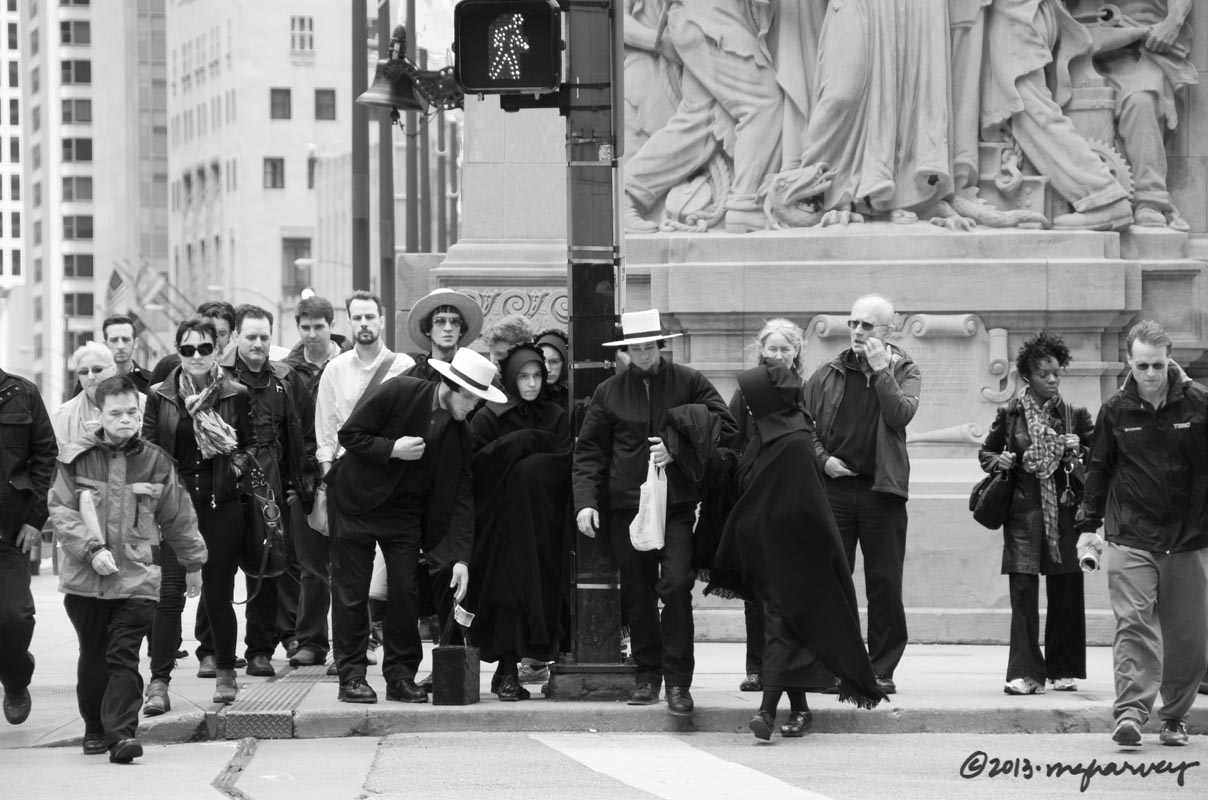
A group of pedestrians, just starting their crossing of East Wacker Drive, on the corner of Michigan Avenue. The half-dozen Amish folks crossed the street, then headed into Fanny May Candies.
It was only later that I wondered how, exactly, they traveled to the middle of Chicago. Perhaps someone could explain it to me?
Chicago, Illinois
photographed 4.14.2013
Stairs from the nameless street
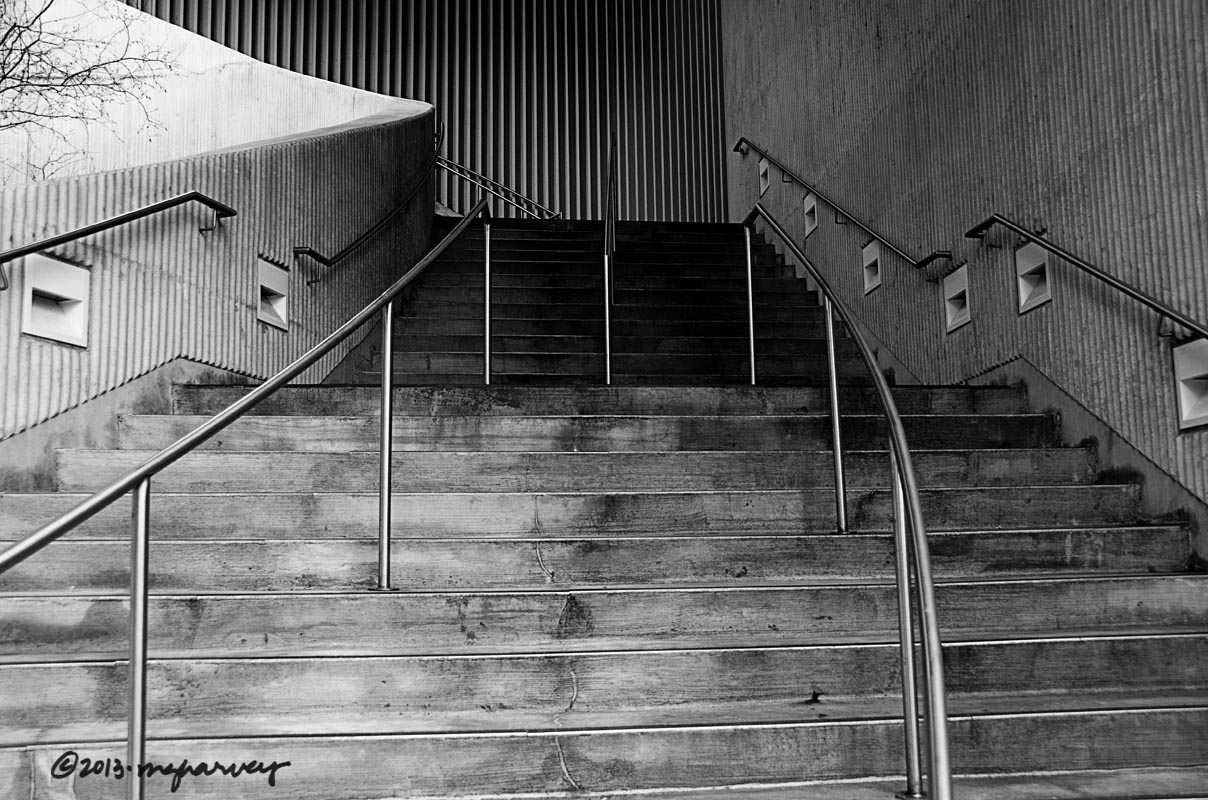
A curvy staircase going from one street (that Google maps just refuses to provide a name for) to the intersection of E. South Water Street and North Park Drive, and on to Lake Shore East Park.
I guess people in Chicago know this, but it came as news to me: those stainless steel handrails are cold, and when they get wet* they are very slippery.
downtown Chicago, Illinois
photographed 4.15.2013
*There was something called “rain” in Chicago. I’ve read about it, but we don’t get it in Texas. At least not in my part of the state.
Slowly, she dissolves

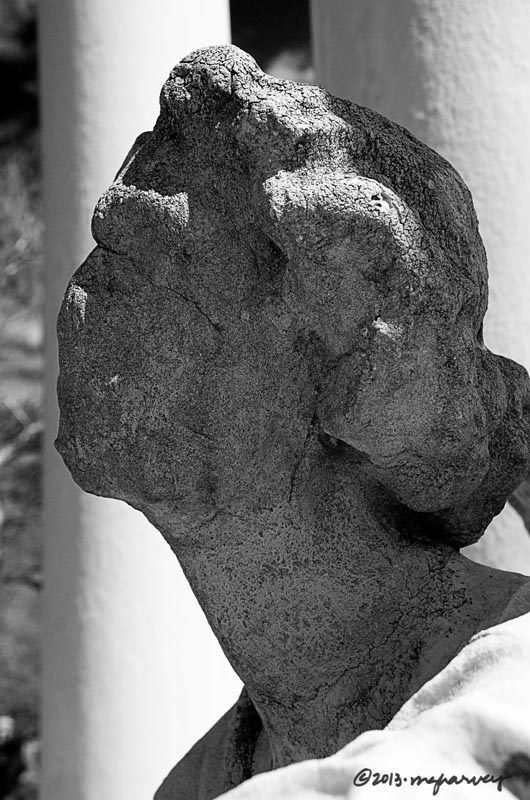
The carved angel at the Kimball grave holds her contemplative pose as she is slowly dissolved by acid rain.
According to Jonathan Appell of New England Cemetery Services, acid rain is the fastest growing destructive force affecting cemeteries today; when left unchecked, acid rain can completely destroy a gravestone.
Poor angel: her face is already gone.
Graceland Cemetery
Chicago, Illinois
photographed 4.16.2013
Madonna of the Sun
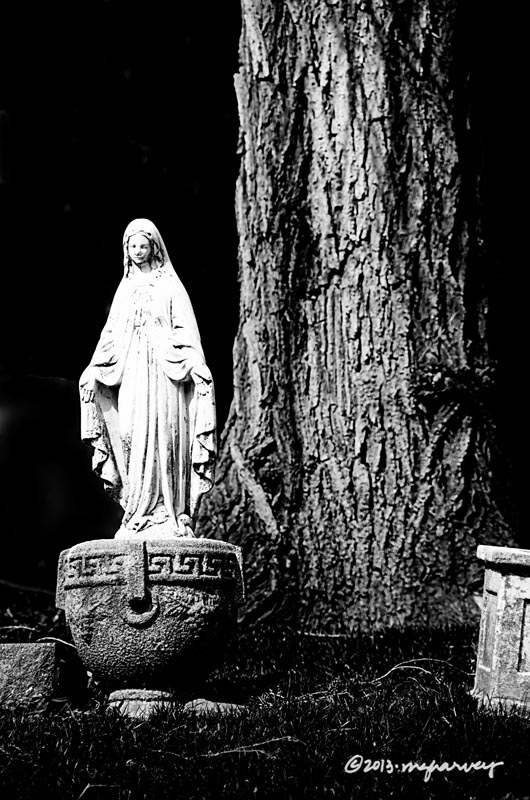
On that cold morning, the Madonna looked liked she’d climbed atop the urn to better catch a ray of sunlight, as she tried to warm her marble bones.
St. Thomas the Apostle Cemetery
Ann Arbor, Michigan
photographed 4.20.2013
Power plant door gleams in cold sunlight
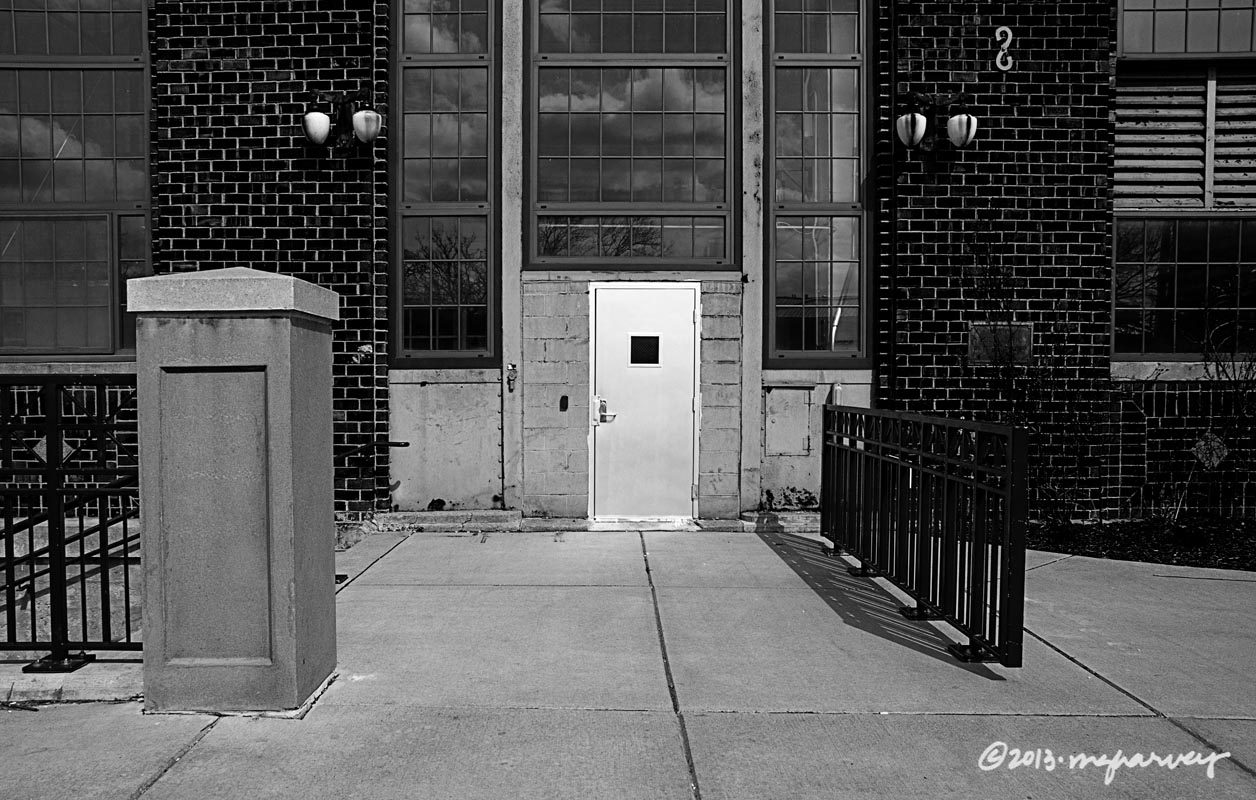
On the banks of the Huron River, in Ann Arbor, the wind felt like it was straight from the Arctic. The clouds that had followed us from Chicago were breaking up, but not until they’d dropped a bit of snow overnight.
The first mill on this part of the Huron River was built in 1833, and the adjacent millpond eventually served a flour mill, a woolen mill, a paper mill, and other industries. The “new” hydroelectric station, shown here, was constructed in 1914.
Ann Arbor, Michigan
photographed 4.20.2013


