Blog Archives
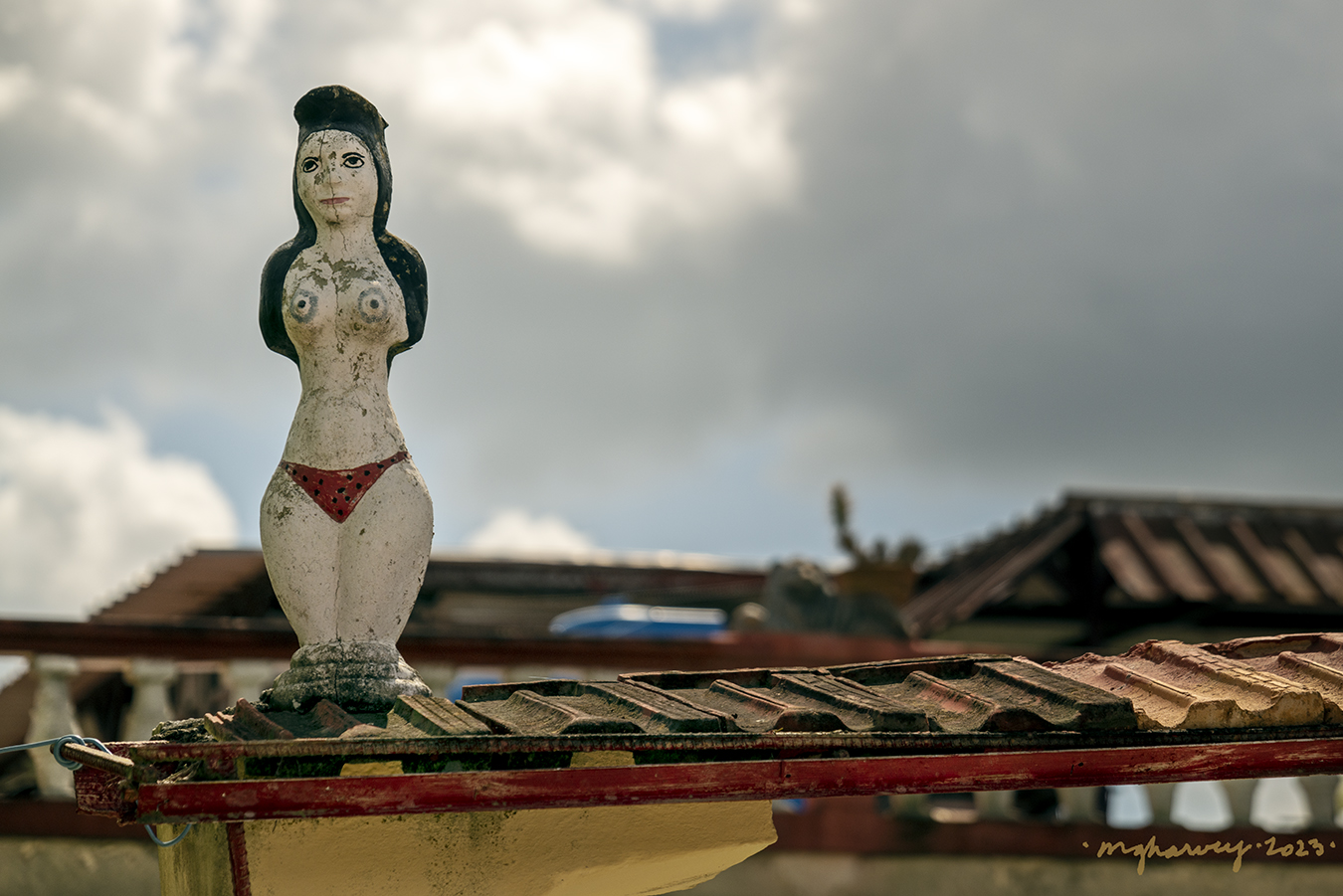
sidereal time
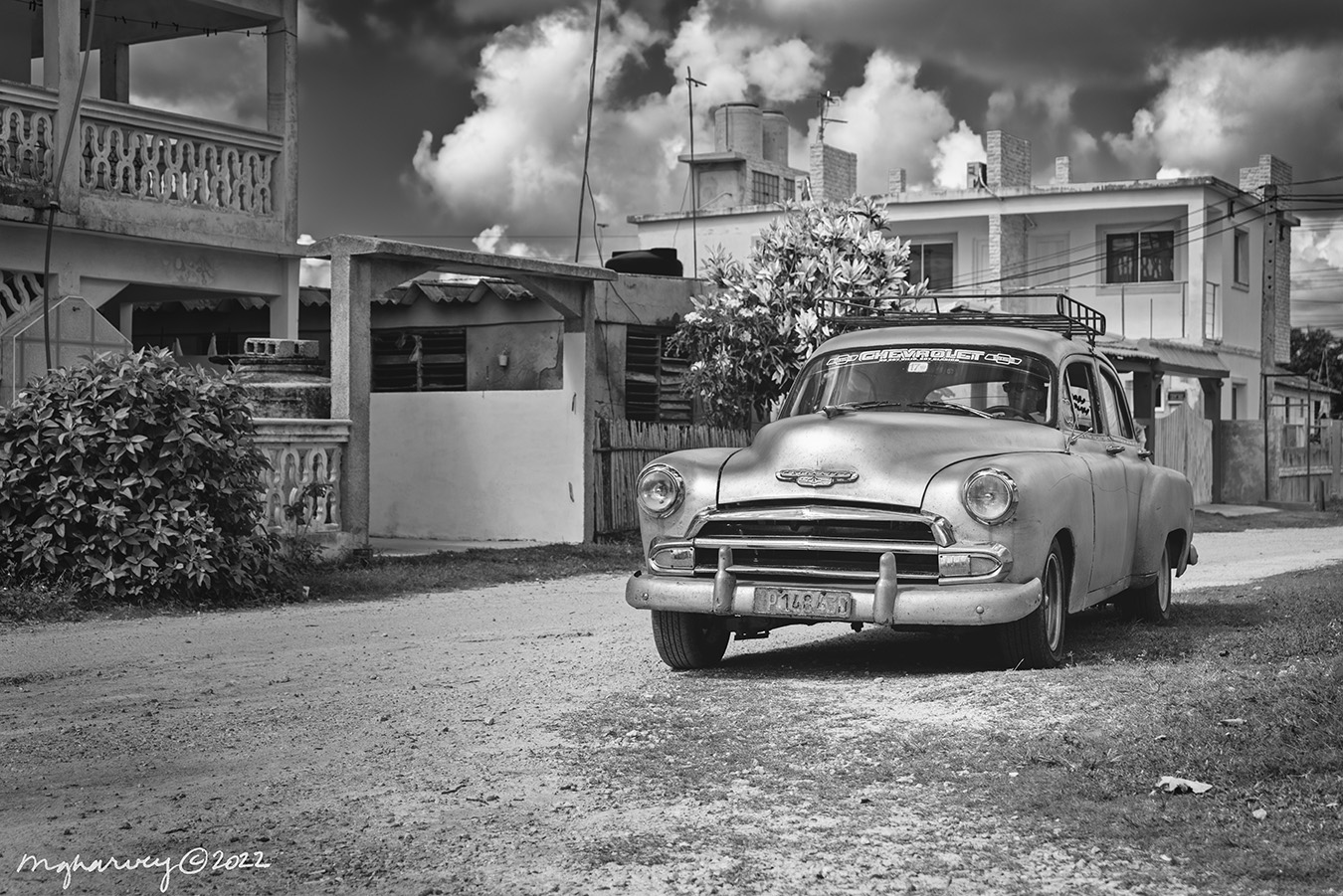
Many (most, even) people said to me the very second they heard I was going to Cuba, “Oh! Those classic cars.”
There ARE old cars. Quite a few of them. Some of them are really fixed up and are used to transport tourists around. Others of them may see intermittent taxi use (I sort of think the one in this photo may be one of those). And others of them are just…what people drive. It seems sort of quaint and romantic, maybe, at first
***
On our trip, we were transported around in a fleet of vintage cars. Here are some things about that:
- The cars were in top shape – clean and shiny.
- But they were fragile. We weren’t allowed to open or close the doors ourselves. The drivers did that for us. And some of the car doors had to be closed in a specific and delicate way just so they’d latch.
- When we were out of the cars making photos, the drivers would often park in the shade and shine up their vehicle while they waited for us.
- And after one of the rain showers we were in, the drivers used the time at the next stop to dry the cars.
- But, again, the cars were fragile. One of our cars had some transmission problems one day and the drivers stayed up well into the night to get it fixed for the next day’s travel.
- No seat belts. None of the cars had seat belts.
- The upholstery was covered with thick, clear plastic, to keep it protected.
- The cars had those after-market air conditioners installed under the dashboard. They also had USB ports so the drivers could keep their phones charged. And sometimes had LED headlights. It was incongruous.
- And, still, the cars were fragile. Yet it was these cars, these old and delicate cars, that enabled our drivers to make money to support themselves and their families.
***
The longer I was in Cuba, though, the more I thought about what it REALLY meant to not have a choice other than driving a car that’s 50 or 70 years old. In real life, what does that mean? It means the almost-impossible task of keeping the thing running, for one thing. It means a car that – while it’s quaint to look at – is probably a real pain in the ass to drive. For car owners who make a living from their car, it means that the tiniest thing going wrong at the exact wrong time could tank a family’s livelihood.
And it means not having a choice about what to drive. What if some of those car owners would like to have an option to have a newer, more reliable car? And what does it say about us – the tourists – who bemoan the disappearance of vintage cars and its impact on us or on our photographs? Does our nostalgia, our expectation of seeing these cars and bringing home Important Images of Vintage Cars, somehow put our desires above the real needs of the Cuban drivers? (I don’t know the answer: this is largely rhetorical. But that doesn’t mean I can stop thinking about it.)
Before the trip – way, way before the trip, thanks to two years of COVID-related delays – my friend Don told me the trip would “change my life.”
He was not wrong. But I am still sorting out all the ways it changed me and the way I think about things. If I ever get it figured out in a way that seems like it might be coherent, I will let you know.
Playa Larga, Cuba
photographed 11.10.2022
weathered
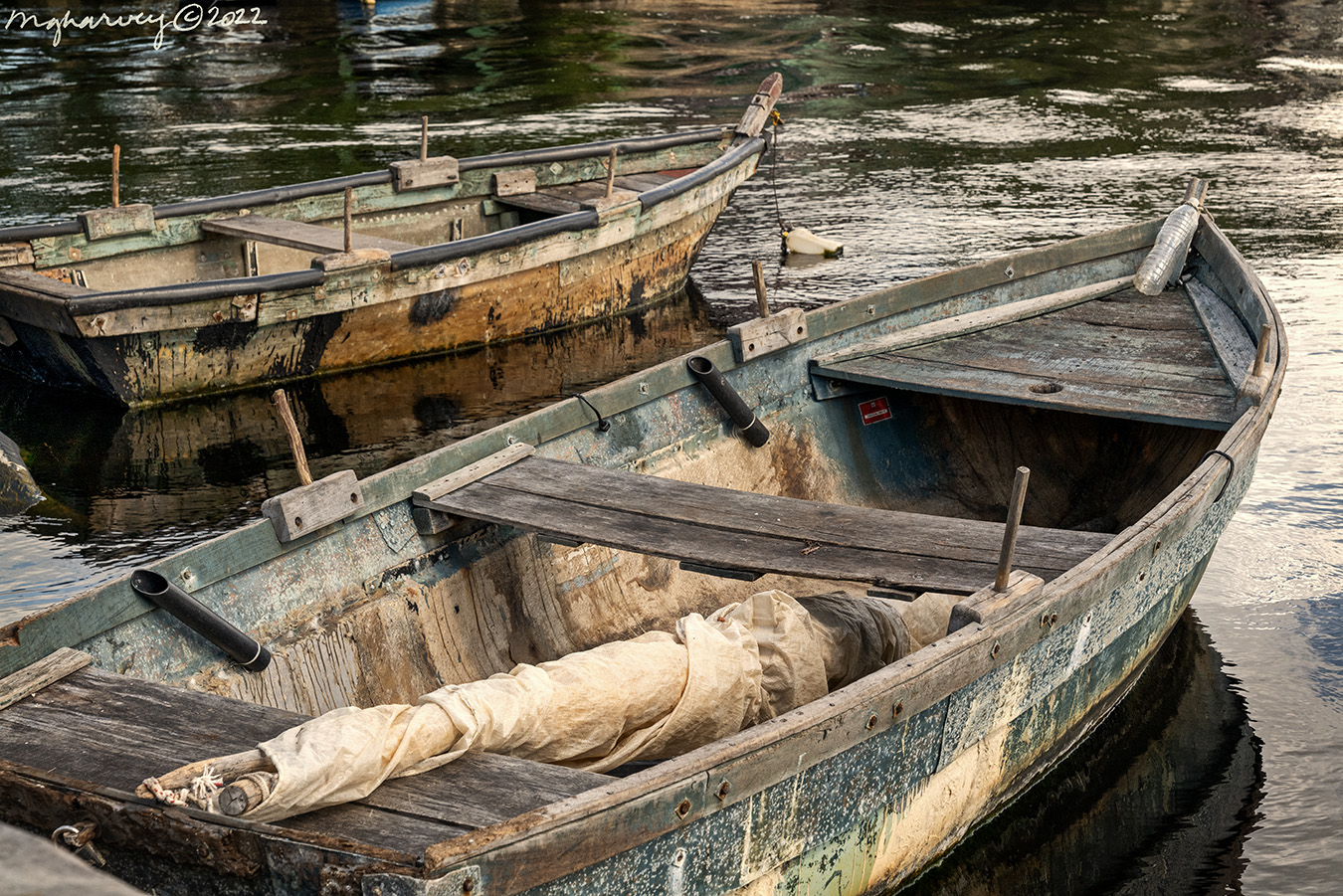
Some Cuban boats, somewhat worse for wear.
Side note: a New York Times article on December 10, 2022, was headlined “‘Cuba is Depopulating: Largest Exodus Yet Threatens Country’s Future.'” It mentioned a fishing village on the northern Cuban coast (the Florida side, if you will) that has seen a huge decrease in the numbers of boats anchored there; the most seaworthy of them have already been put into service for people who are attempting to flee Cuba.
So a couple of things: Playa Larga is on the southern coast, and it’s a long way to get anywhere that isn’t Cuba so probably these boats are less likely to end up carrying refugees someplace.
And how bad must things be when taking a boat like this on an open ocean becomes the preferred option?
Playa Larga, Cuba
photographed 11.10.2022
that one boat took on a lot of water
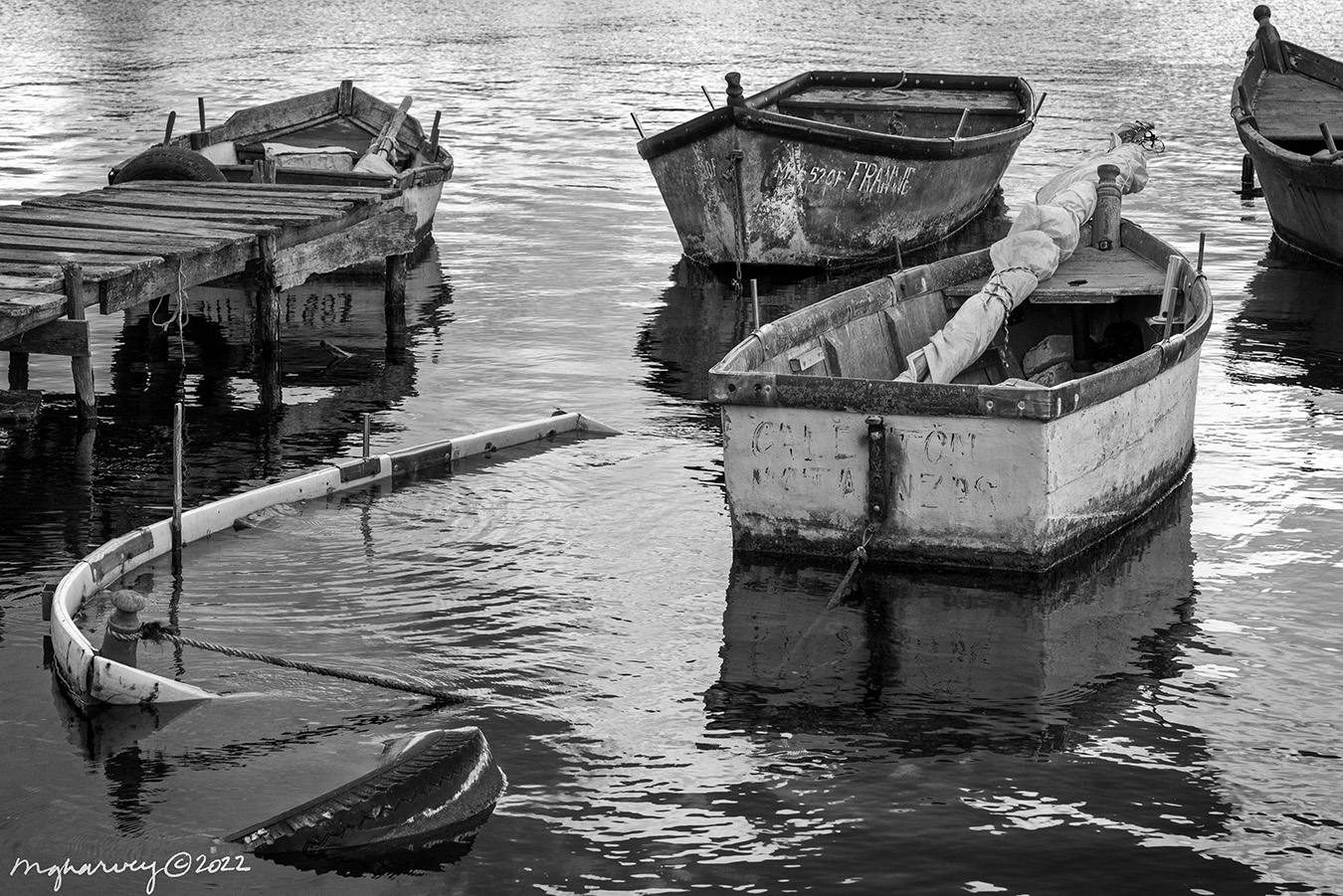
Playa Larga is at the top of the Bay of Pigs*, which is of course the location of the failed attack launched by the CIA in 1961 as an attempt to oust Cuban leader Fidel Castro. The actual invasion was about 45 km south, at the town of Playa Giron, so still pretty close to where I made this photo.
But anyway, I guess you can look at this waterlogged boat as a symbol of that ill-conceived invasion. Or, if you’d prefer, you can look on it as just a really old boat in a country with few resources to repair things like old boats, which will eventually take on water and sink.
Playa Larga, Cuba
photographed 11.10.2022
*I’d’ve used the Spanish name, only the Google map I was referencing, which named other Cuban bodies of water in Spanish, used English for the Bay of Pigs. Using Google Translate, though, I can say with a modest degree of certainty that in Spanish it would be la bahía de cochinos.
schoolgirl, at lunchtime
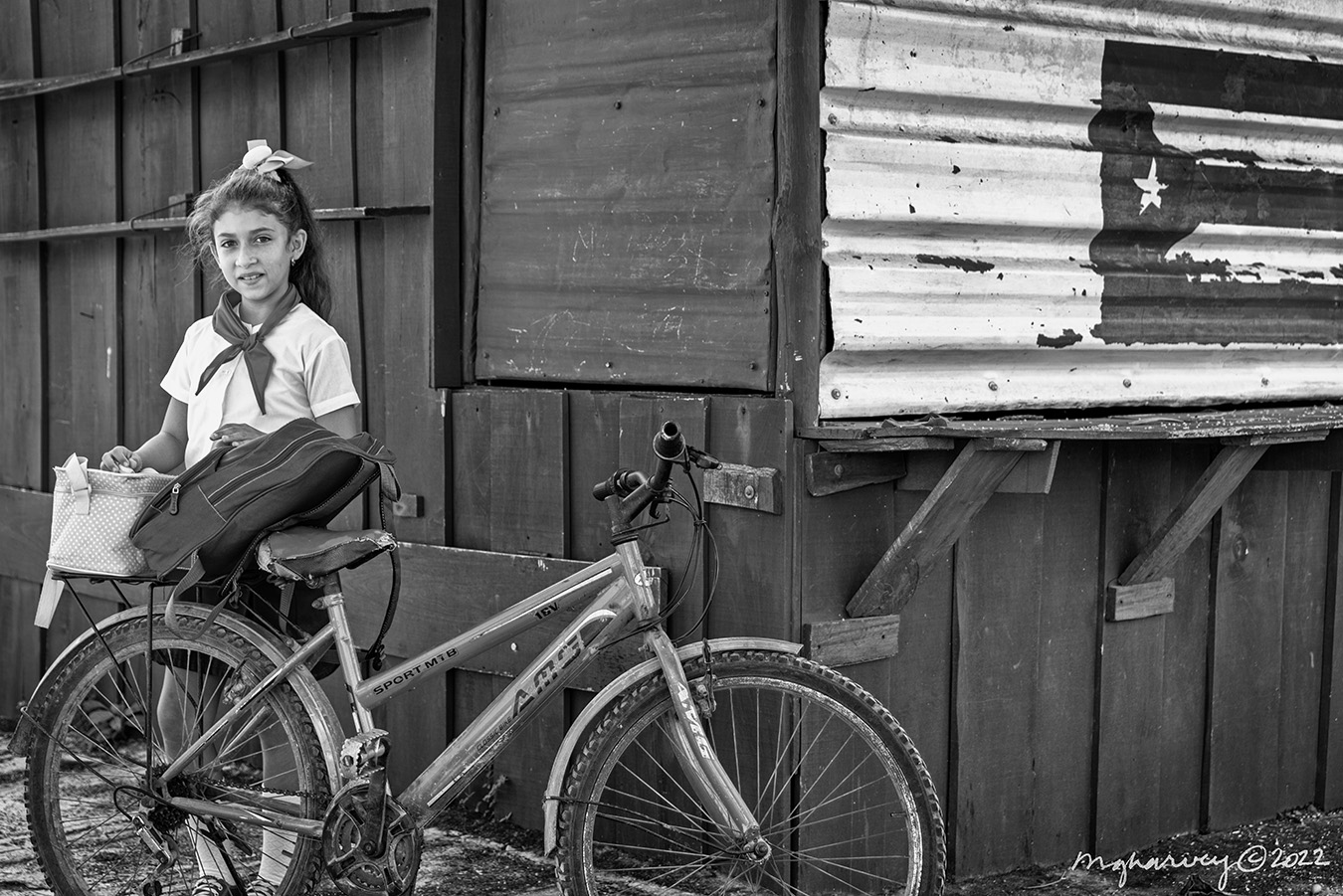
School attendance is mandatory in Cuba between the ages of 6 to 16. This girl’s uniform indicates that she’s in primary school. Cuban primary school curriculum includes dance and gardening, lessons on health and hygiene, and Cuban revolutionary history. All levels of curriculum focus on the principles of hard work, self-discipline, and love of country.”
Some students may go on to attend the University of Havana, which was founded in 1727. In case you were wondering about long-standing Cuban traditions of higher education.
Playa Larga, Cuba
photographed 11.10.2022


 One Day | One Image