Blog Archives
nine lots for sale
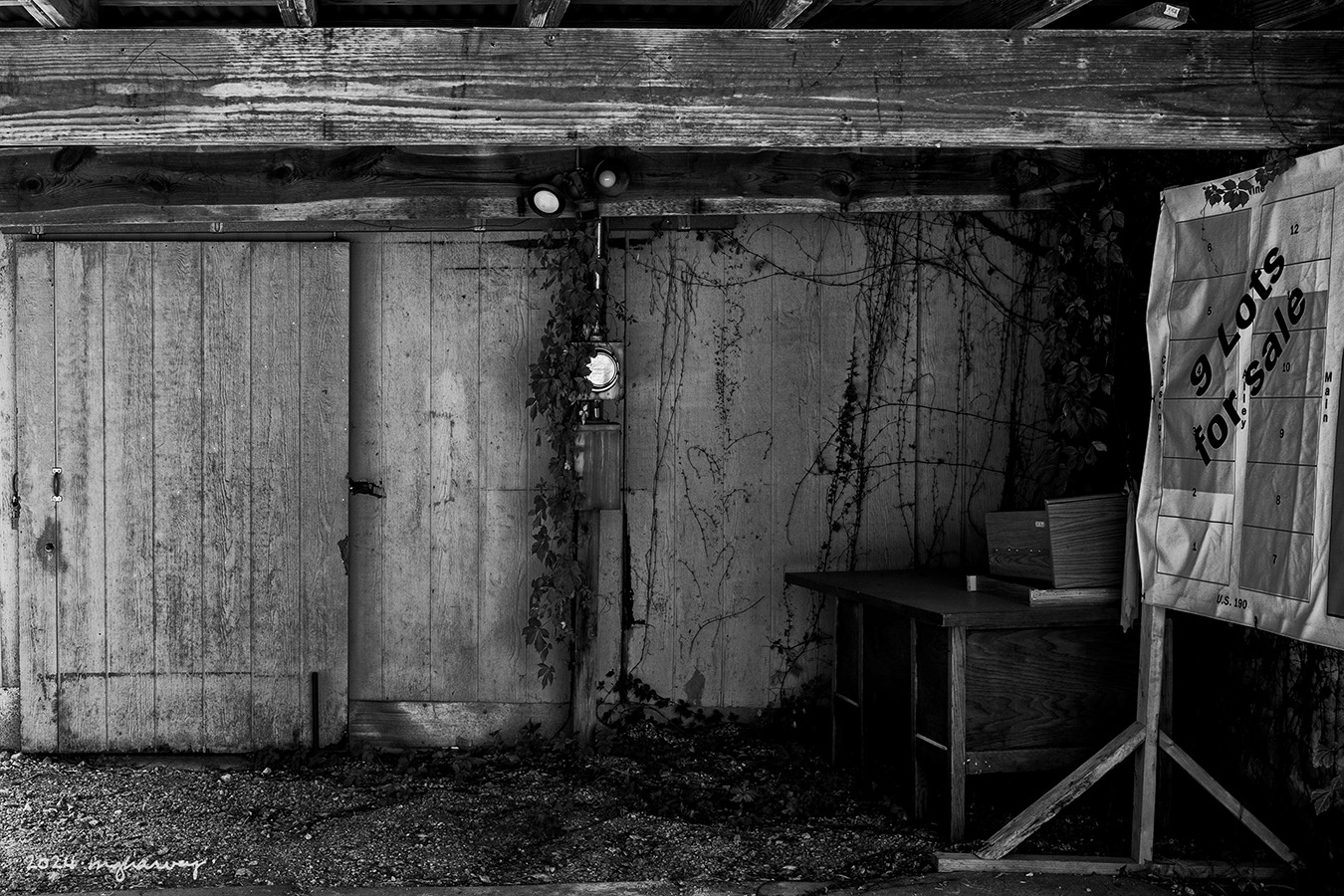
It was really hot the day I was in Lampasas, but the local museum was not only open but nicely air-conditioned. After I spent some time inside looking around, I went back out and walked down an alley, because of course alleys often have things in them that need to be photographed.
And that’s how I found this.
Now, I’m not a marketing person, but it does seem like in a shed off an alley may not be the best location to advertise those nine lots….
Lampasas, Texas
photographed 7.22.2023
bois d’arc series #3: half a hedge apple

Bois d’arc trees were named by French settlers, who observed native people using the wood for bows and war clubs.
A member of the mulberry family, bois d’arc tree is thought to have originated during the Oligocene epoch, approximately 30 million years ago. It is believed that the trees were distributed with the help of large herbivores, such as now-extinct sloths, mastodons, and mammoths.
I believe this half of the fruit was distributed to the concrete picnic table by a passing driver who pulled over to see what those things all over the ground were. He or she had a formidable knife if they were able to cut the thing in half: it’s as hard as a rock.
Hockley County, Texas
photographed 1.13.2024
(Thanks to this post for much useful information on this interesting tree.)
bois d’arc series #2: not mutant tennis balls

From the highway, the fallen fruit looked a bit like mutant tennis balls…
The fruit, the largest of any species native to North America, is hard and carries an unpleasant odor (although the day I made these images, the wind was pretty strong and I guess the stink blew away before I noticed it.) With the exception of squirrels, no native animal will eat them.
The trees and the fruit both ooze a sticky white sap. So probably these trees aren’t a good landscaping choice.
Hockley County, Texas
photographed 1.13.2024
bois d’arc series #1: “welcome”

I’m sort of right in the middle of an inadvertent series of botanical images. Somethings things just line up on their own…
Anyway, out on the highway between Levelland* and Whiteface* there’s a picnic area with a mile-long row of bois d’arc trees behind it. As far as I know, these are the only bois d’arc trees I’ve ever seen, but I’d read about them in the book PrairyErth: a deep map (William Least Heat-Moon) and recognized them from the description stored in my head.
Prior to the introduction of barbed wire, bois d’arcs were in common use along fencerows. As barbed wire become more common, this particular use of the tree declined. The Dust Bowl caused a resurgence in their use: beginning in 1934, the Works Progress Administration planted over 200 million trees on farmland to serve as windbreaks to prevent soil loss. My guess is that this particular row of trees was planted during that era.
The (inedible) fruit from these trees has several names, including Osage orange, horse apple, and hedge apple. The vernacular pronunciation is “bodark.”
Hockley County, Texas
photographed 1.13.2024
*Actual town names.
lamp/light
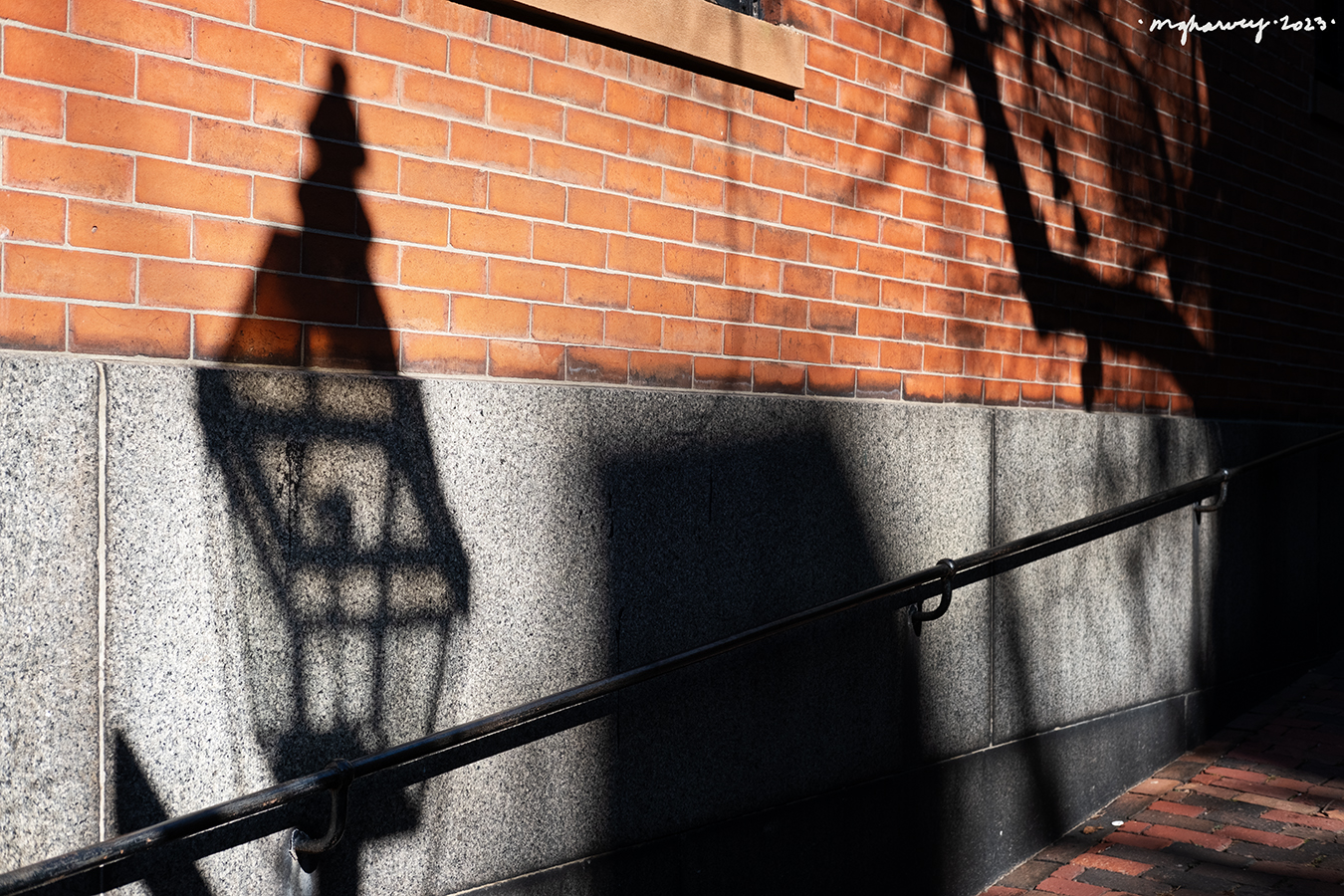
This? Oh just a fascinating shadow that I saw on the corner of Pickney and W. Cedar Streets. I’m going to pretend that I just knew the name of the intersection off the top of my head, but if you think it actually took me a few minutes just now on Google street view to figure it out, you would not be wrong.
Beacon Hill
Boston, Massachusetts
photographed 10.31.2023


