Blog Archives
pedestrian x-ing
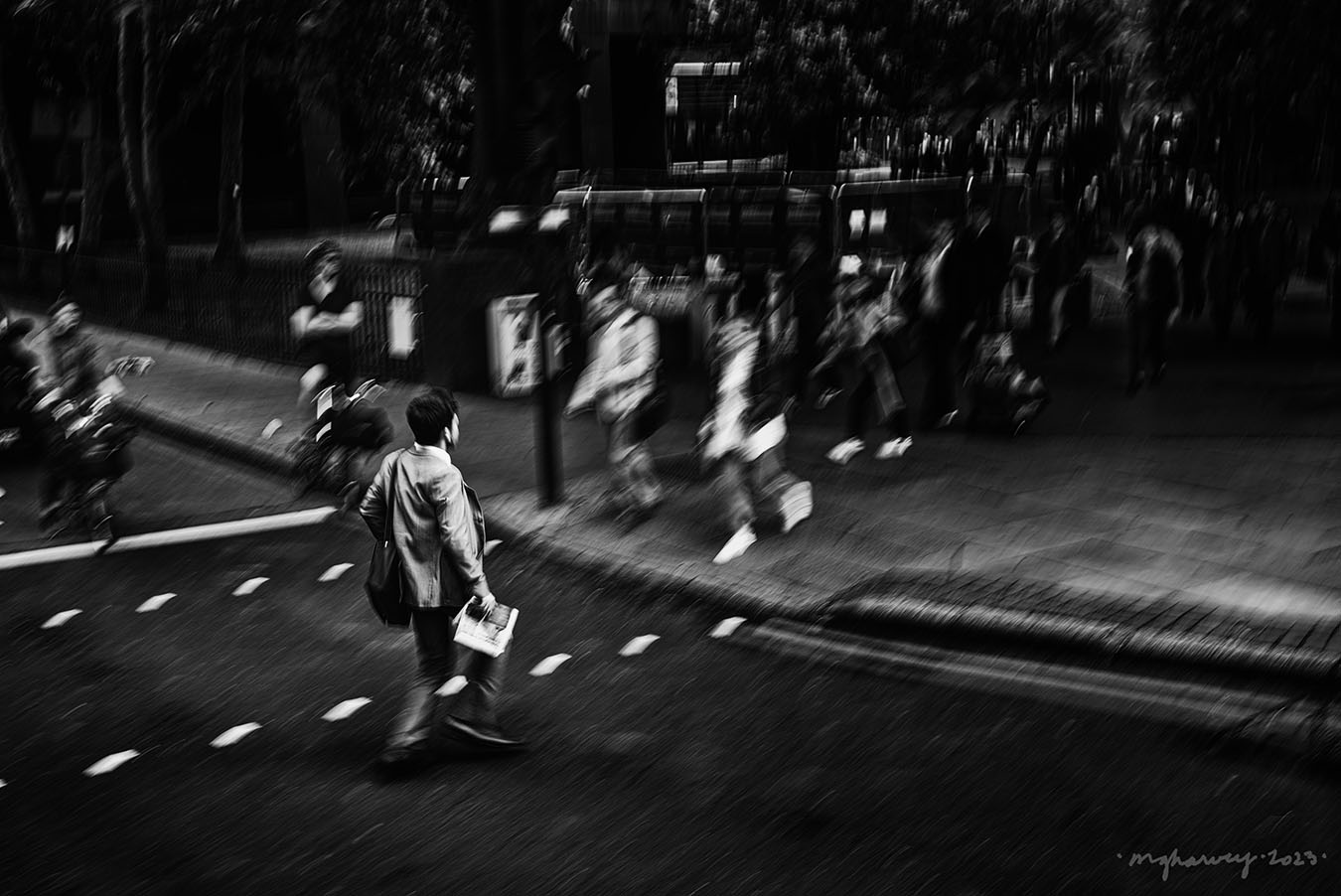
A wad of pedestrians, descending on a crossing, seemed to be in a hurry to get someplace.
London, England
photographed 6.8.2017
those old windows
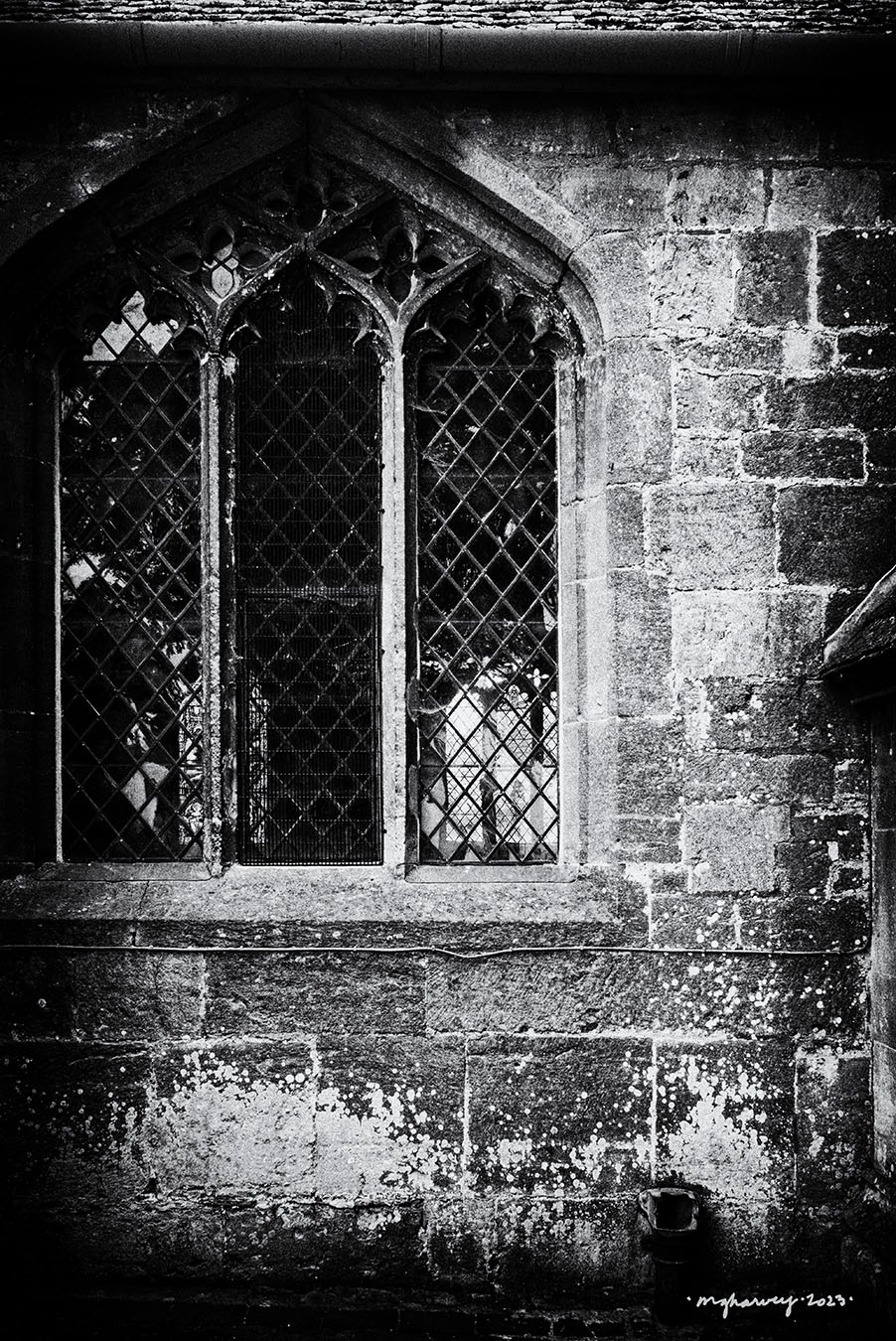
I’m a sucker for those tiny little diamond-shaped windows.
In case you were wondering, this church dates to the late 13th century and has both a resident organist AND a “band of bell ringers.” And that’s not all! The last village band in Worcestershire, the Bretforton Silver Band, has strong ties to the church and provides music for special services.
Church of St. Leonard
Bretforton, England
photographed 6.2.2017
shopping day
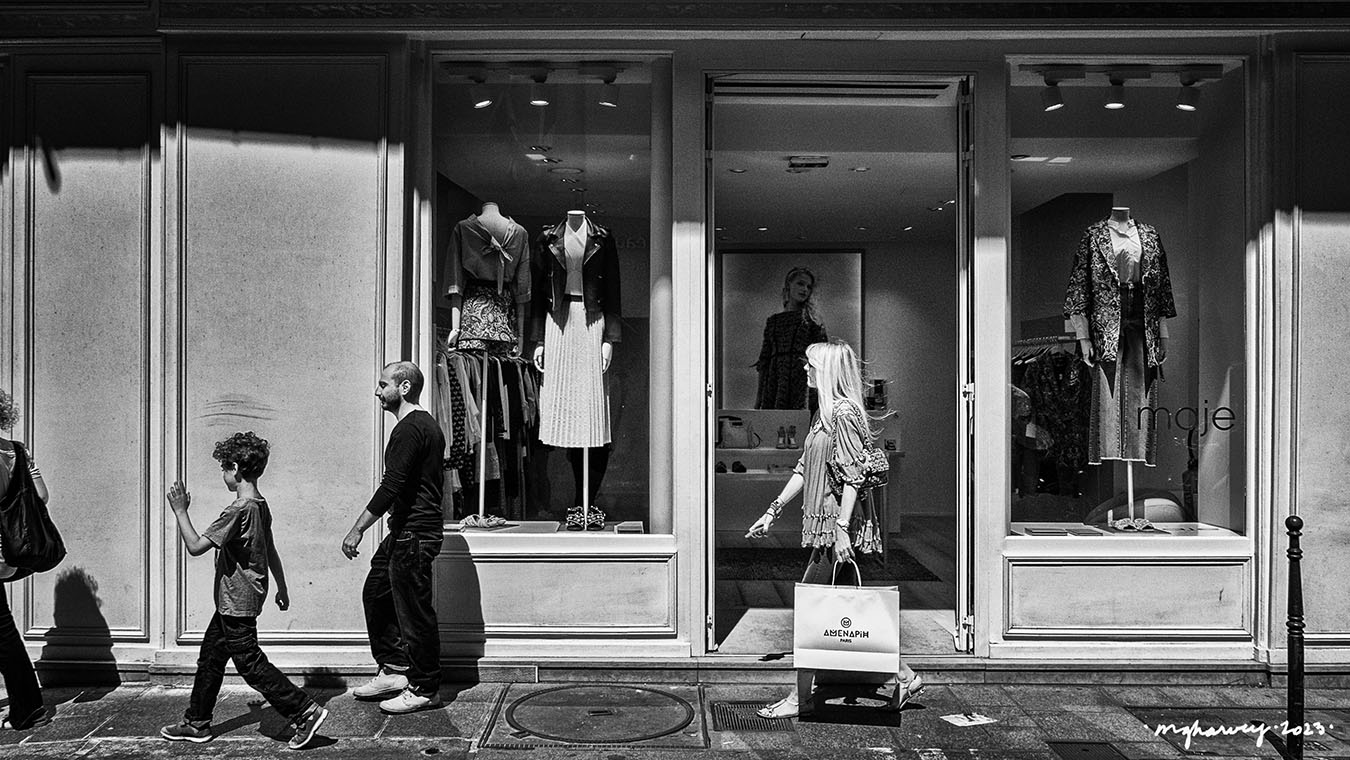
It was a sunny, summery day in Paris and the shops were open for business. And there I was, with a camera at the ready…
Paris, France
photographed 6.9.2017
sometimes repairs seem pointless

I don’t want to disparage what these workers are doing, but given the number of holes in the roof and the way that far wall seems sort of frail makes me wonder if there’s any real need to focus on whatever’s going on in that pit.
New Orleans, Louisiana
photographed 4.12.2023
night windows
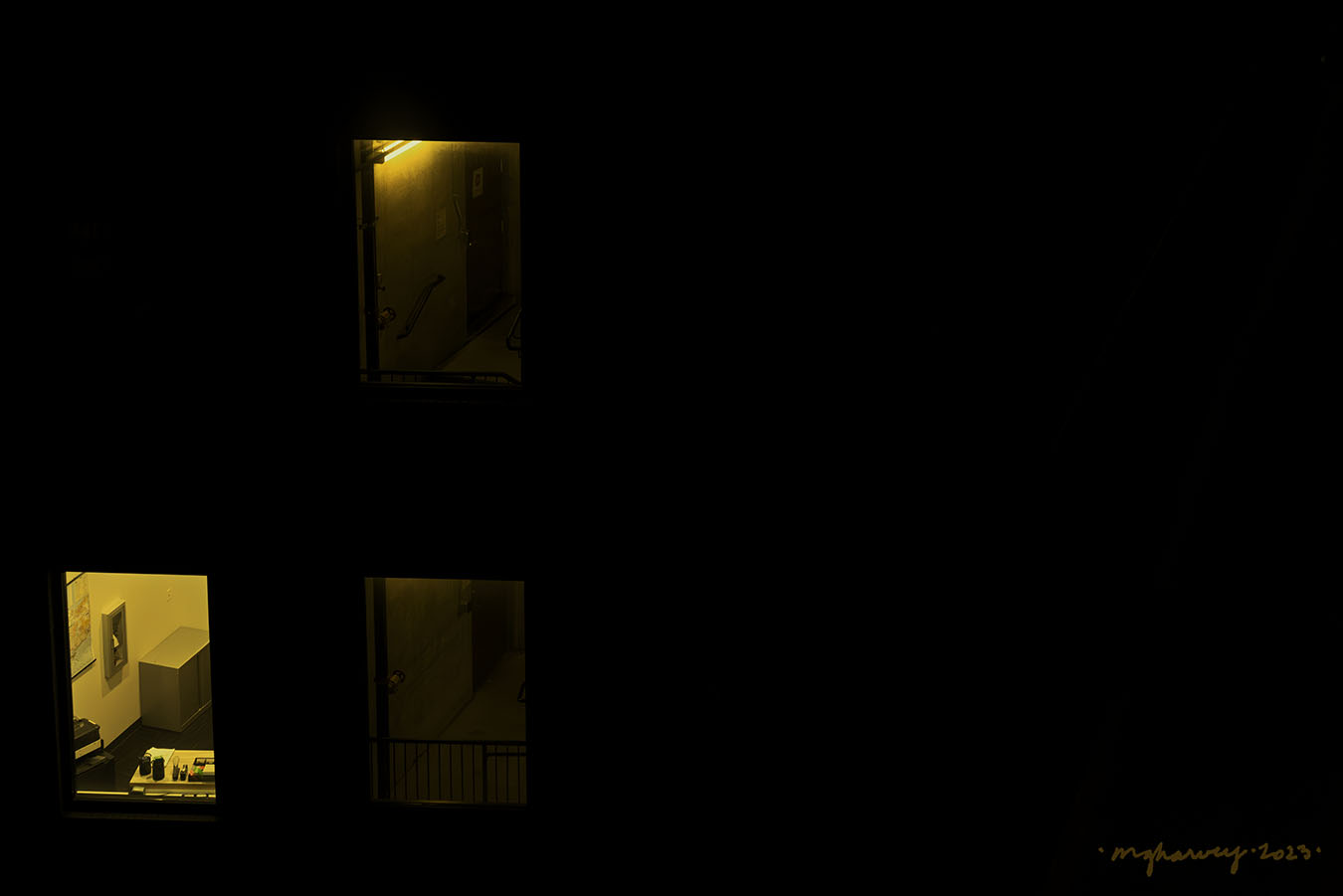
I guess I ought to have wished for a room with a more traditionally scenic view – maybe the river or downtown or whatever. But on the other hand: while this isn’t “scenic” in the traditional sense, I was very fond of the three lighted windows in an otherwise dark building across the street.
New Orleans, Louisiana
photographed 4.12.2023


 One Day | One Image