Blog Archives
weathered
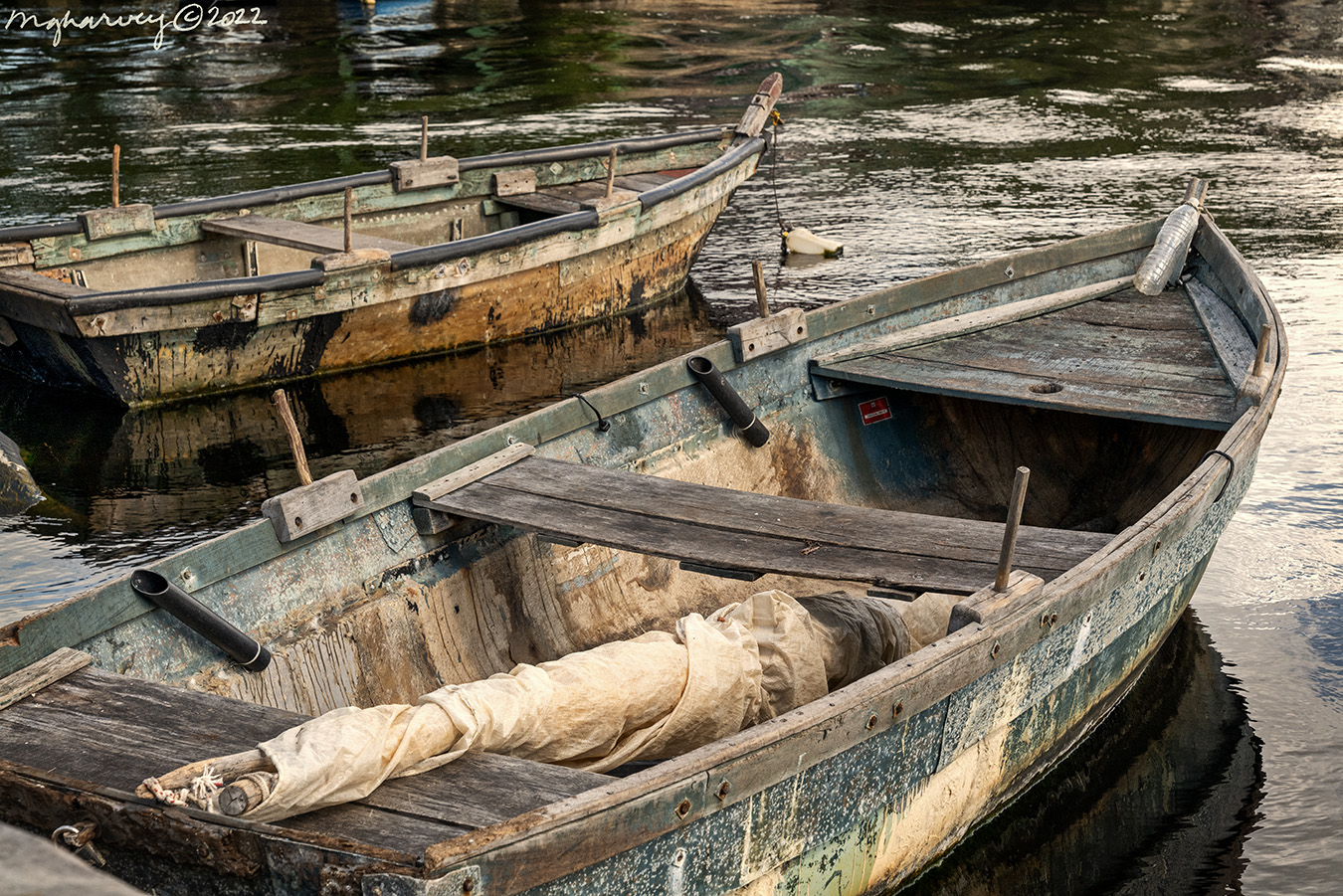
Some Cuban boats, somewhat worse for wear.
Side note: a New York Times article on December 10, 2022, was headlined “‘Cuba is Depopulating: Largest Exodus Yet Threatens Country’s Future.'” It mentioned a fishing village on the northern Cuban coast (the Florida side, if you will) that has seen a huge decrease in the numbers of boats anchored there; the most seaworthy of them have already been put into service for people who are attempting to flee Cuba.
So a couple of things: Playa Larga is on the southern coast, and it’s a long way to get anywhere that isn’t Cuba so probably these boats are less likely to end up carrying refugees someplace.
And how bad must things be when taking a boat like this on an open ocean becomes the preferred option?
Playa Larga, Cuba
photographed 11.10.2022
everything but the kitchen sink
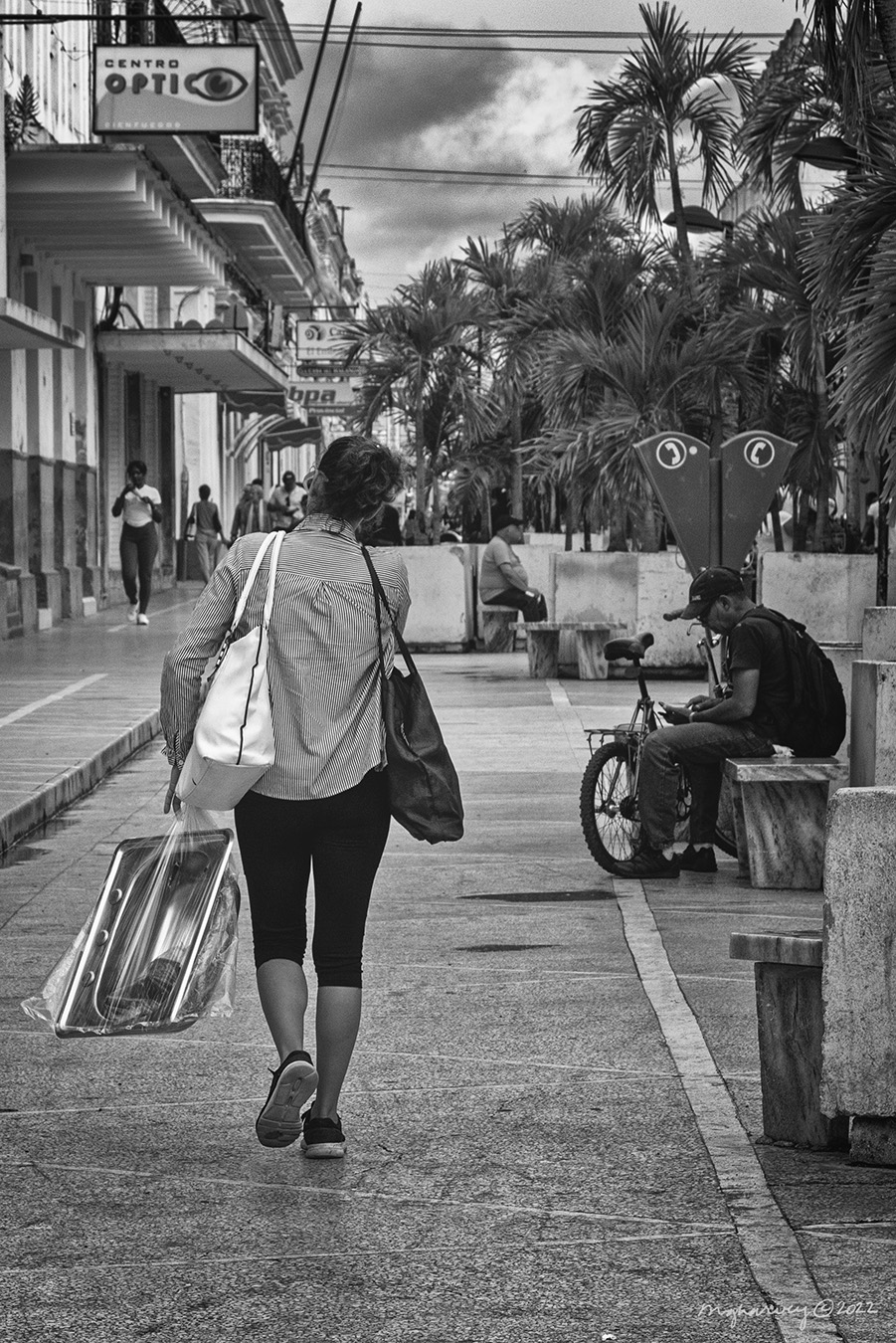
I *may* have followed this woman for a few blocks trying to get a shot of her new sink. I wish I’d seen the place where she purchased it – I did go into one store that was nearby and saw their section titled “quincalla” (hardware) but never made it to the section for “fregaderos de cocina” (kitchen sinks).
Cienfuegos, Cuba
photographed 11.19.2022
exhausting
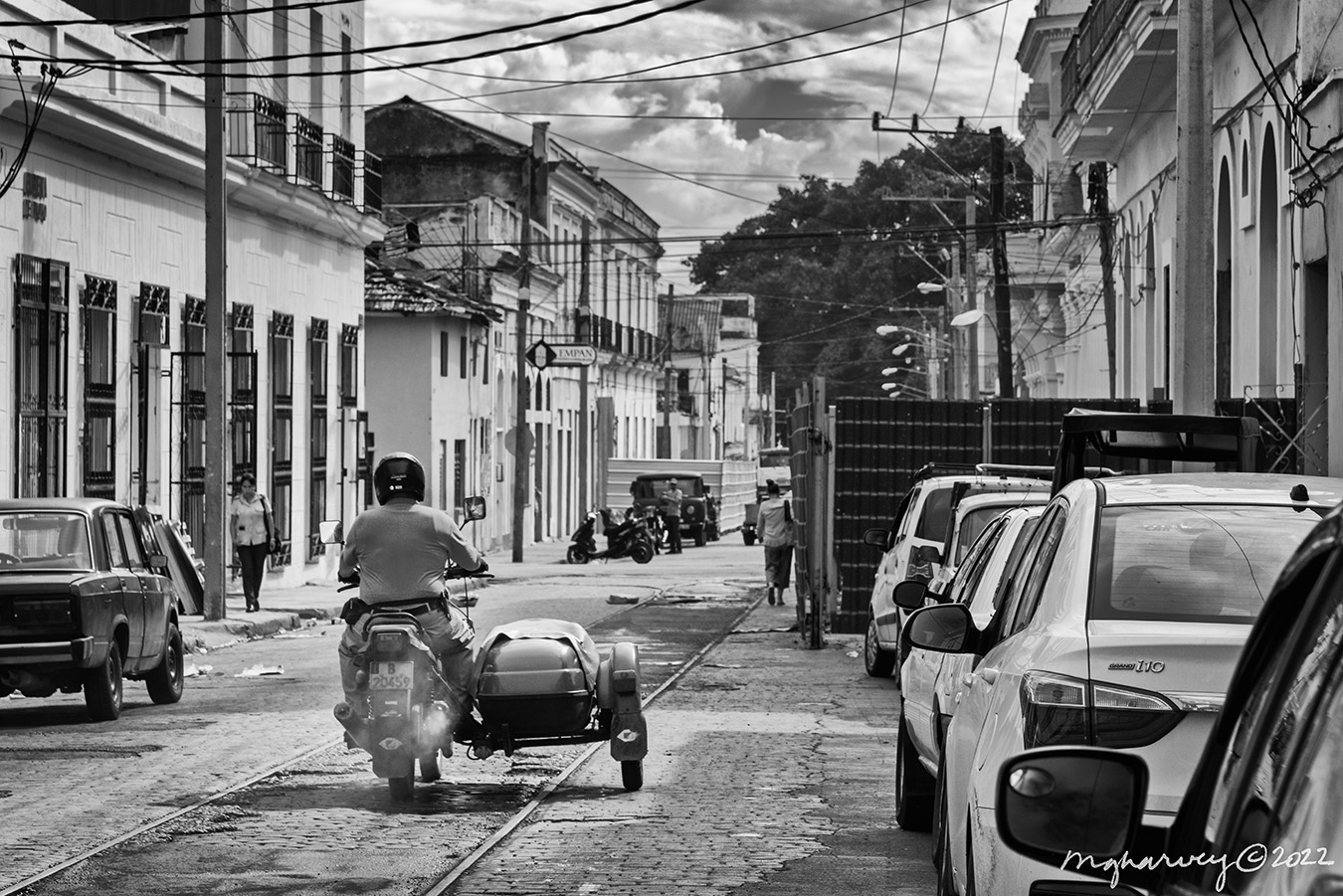
This is an extremely typical street scene, with a tight mix of cars and people and streetcar tracks and motorcycles. And cobblestones and asphalt and potholes and puddles. Oh, and some exhaust fumes, too.
Calle d’Clouet
Cienfuegos, Cuba
photographed 11.9.2022
love + mosaic
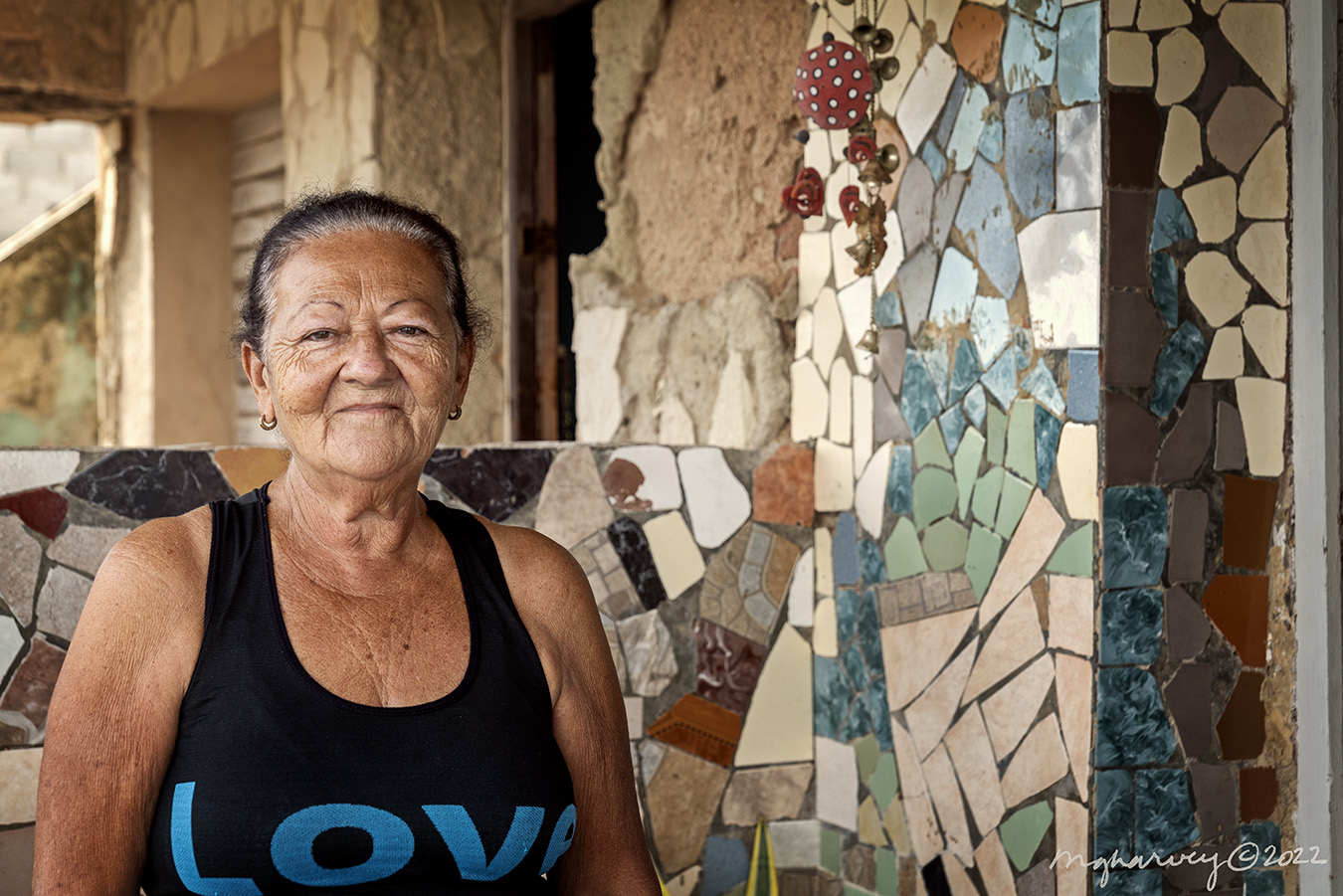
We spent the first morning in Cuba wandering the streets of Cojímar, a town near Havana. The place is considered to be an inspiration for The Old Man and the Sea and there’s a monument to Ernest Hemingway. In the 1940s, what may or may not have been the largest whale shark ever was caught nearby; there is – according to Wikipedia – “considerable controversy” over the accuracy of the measurements.
In modern times, actor William Gutiérrez-Levy and singer-songwriter Camila Cabello are both from Cojímar.
The woman in the photo is not Hemingway, Guitêrrez-Levy, or Cabello.
But probably you figured that out. Especially the part about how she’s not Hemingway.
Cojímar, Cuba
photographed 11.6.2022
pray to god
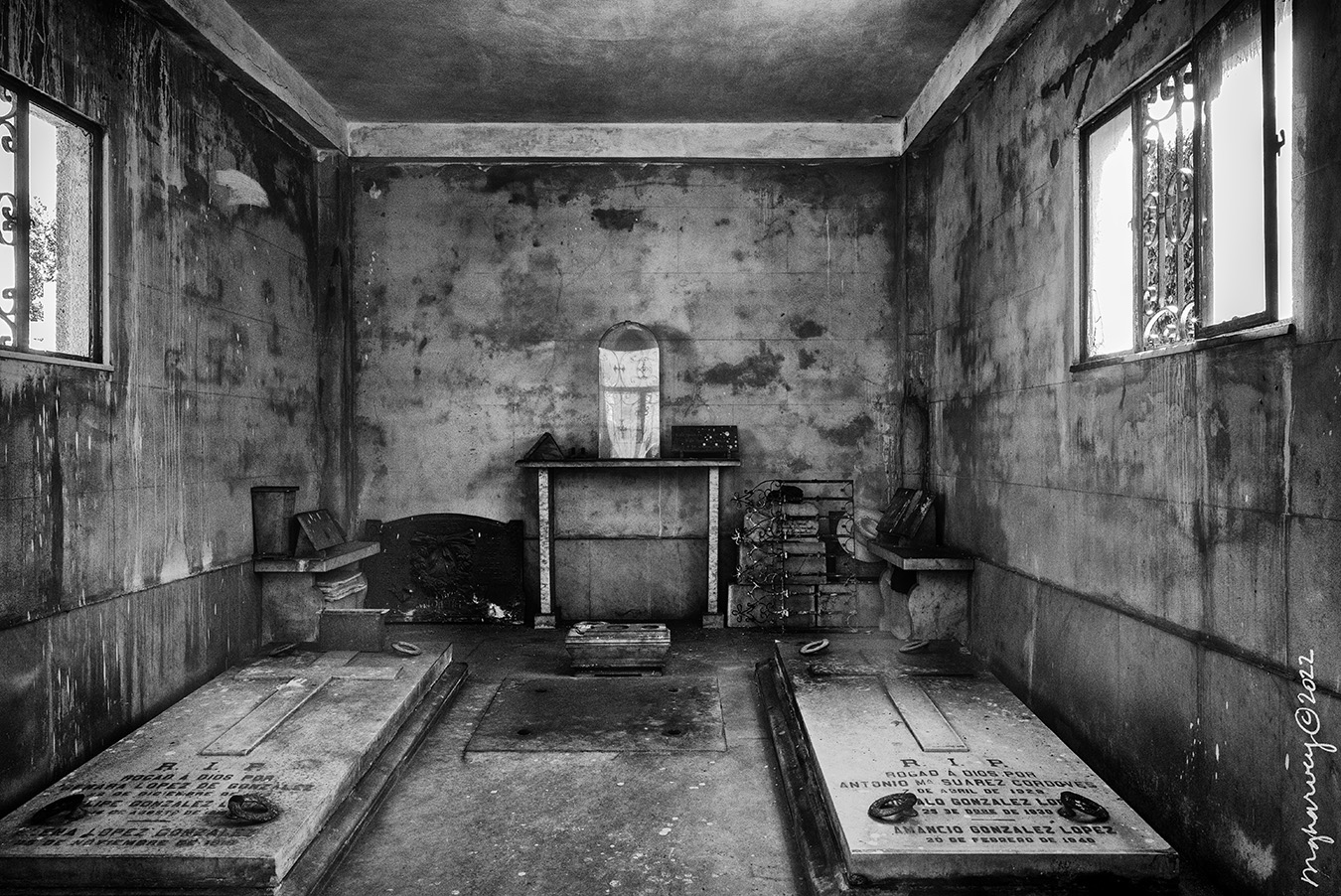
An interior view of a mostly-vacant tomb at the gigantic cemetery in Havana. Both of the tombstones say “rogao a dios” – I pray to God.
Here’s the thing I’m wondering about: why do you suppose the tombstones are in Spanish, except for the “R.I.P.” on each of them? Because that’s an English term that translates into Spanish as “que descanse en paz.” Has “R.I.P.” transcended its English words and become a commonly understood shorthand?
Necrópolis Cristóbal Colón
Havana, Cuba
photographed 11.11.2022


 One Day | One Image