Blog Archives
the world as we knew it, 5
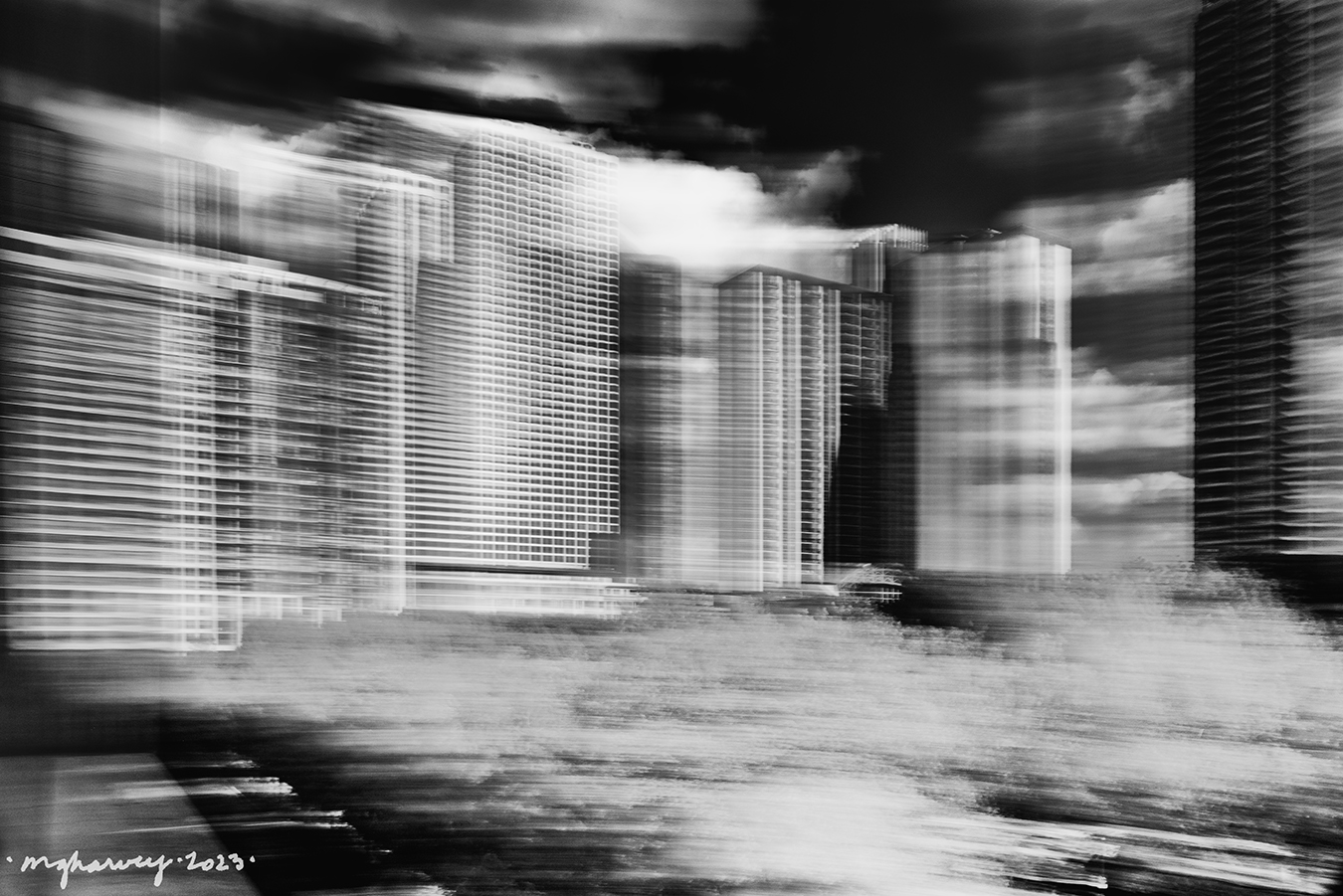
Here’s the latest of my sporadic series of ICM images. This one was made last summer in Chicago, in the Lakeshore East Park.
Chicago, Illinois
photographed 6.28.2022
251 Post
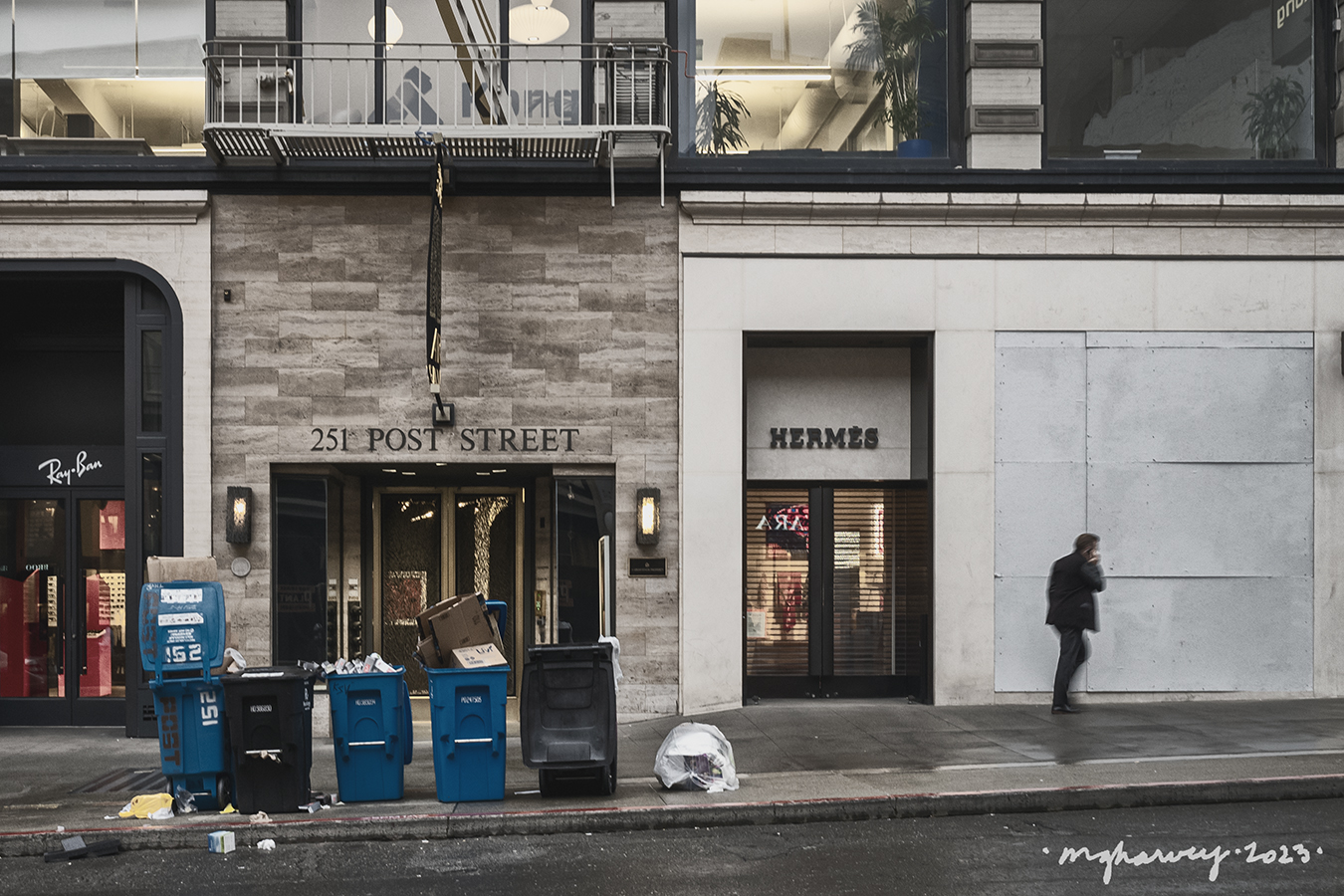
I took myself on a little Lightroom-based trip through some older photos the other day, which is how I found this image, made on a dampish day the last time I was in San Francisco.
San Francisco, California
photographed 4.16.2019
in-person retail fades away (goodbye, sears)
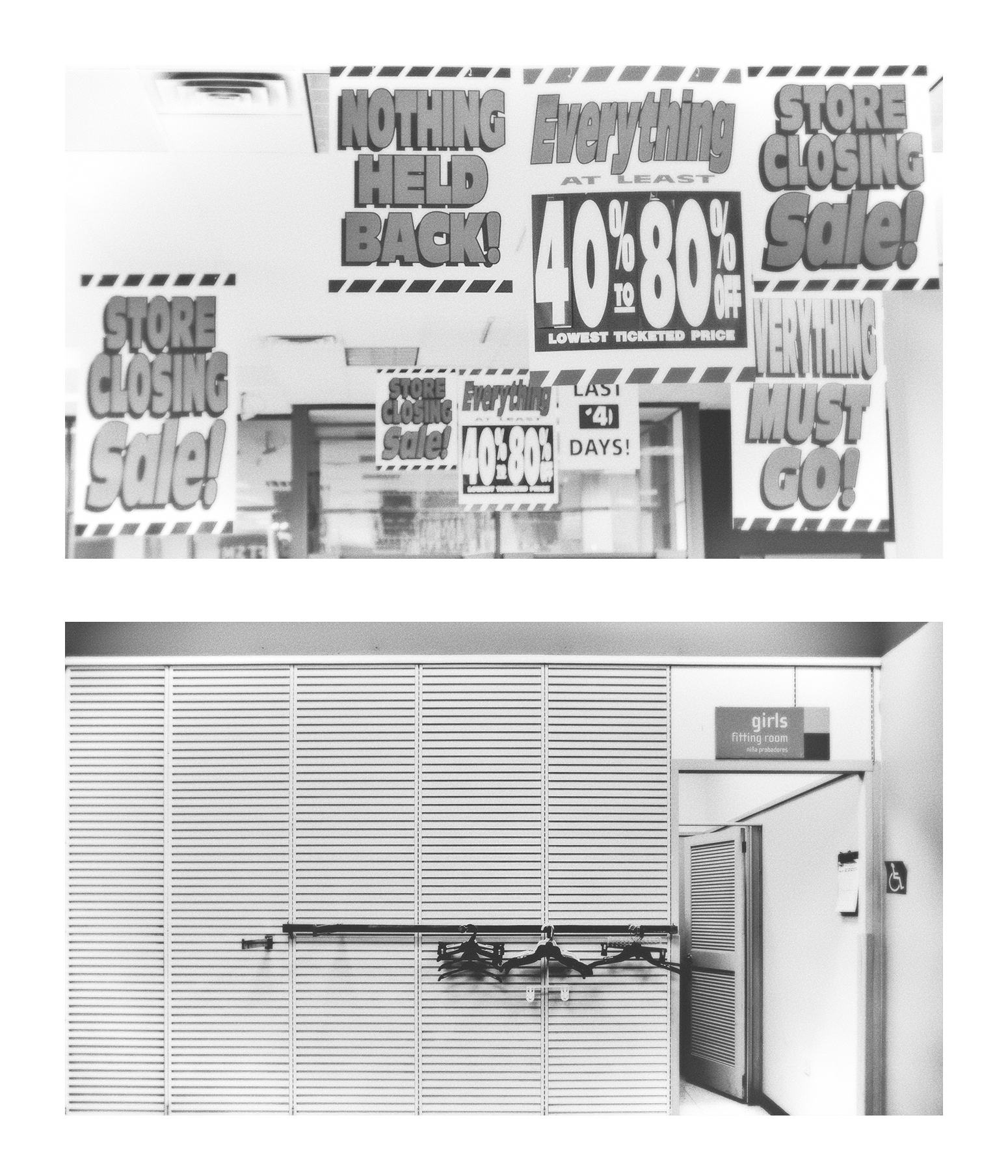
The Sears store in my local mall has been torn down. It’s been vacant for four years.
In the last few weeks the store was open I went up there almost every day to photograph the way a former retail giant looked as it died. At first I was worried that employees might challenge me and/or ask me to leave. But as it turns out, employees who only have that job for another paycheck or two don’t really care all that much.
And so, here are a couple of versions about what the death of Sears looked like.
Lubbock, Texas
photographed 12.26.2018 and 1.3.2019
ahead 150 ft
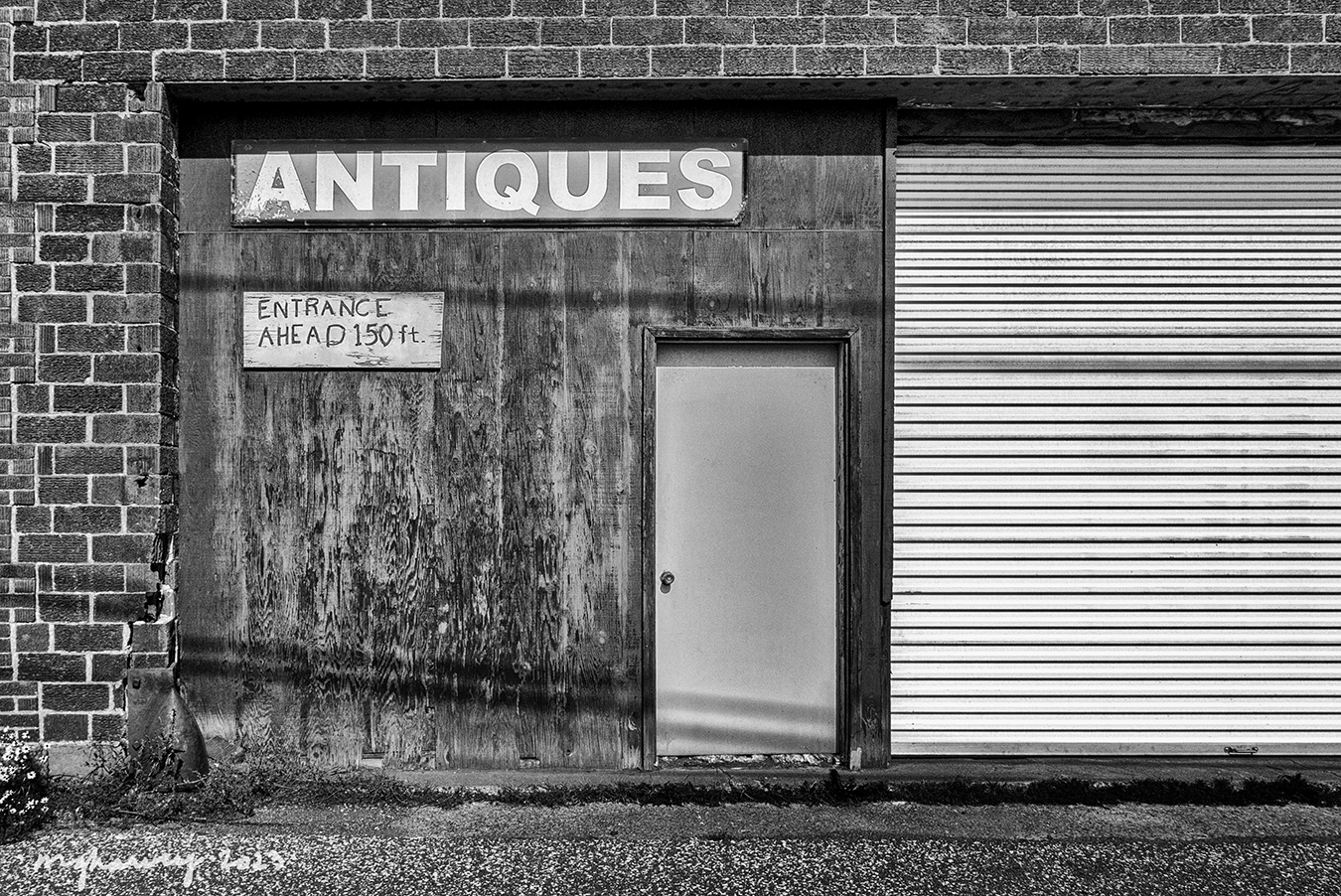
When I was in architecture school, I learned that it was important that buildings had a “sense of entry” – an obvious, easily recognized entrance so visitors are not left to wonder where they are supposed to go; it also serves as a way to define people’s impression of the building and their orientation to it. There are cultural elements to consider. There are psychological elements that make a difference. The way the building faces matters. The weather is important. How people with disabilities find their way is a critical consideration. The time of day, the numbers of people who will arrive at one time, the aesthetics of the building and its immediate environment, the building materials and colors all play a part in setting the sense of entry.
Failing that, of course, a sign painted on a hunk of wood and then stuck on a wall will suffice.
Two Harbors, Minnesota
photographed 9.23.2019
covering all the (merchandising) bases
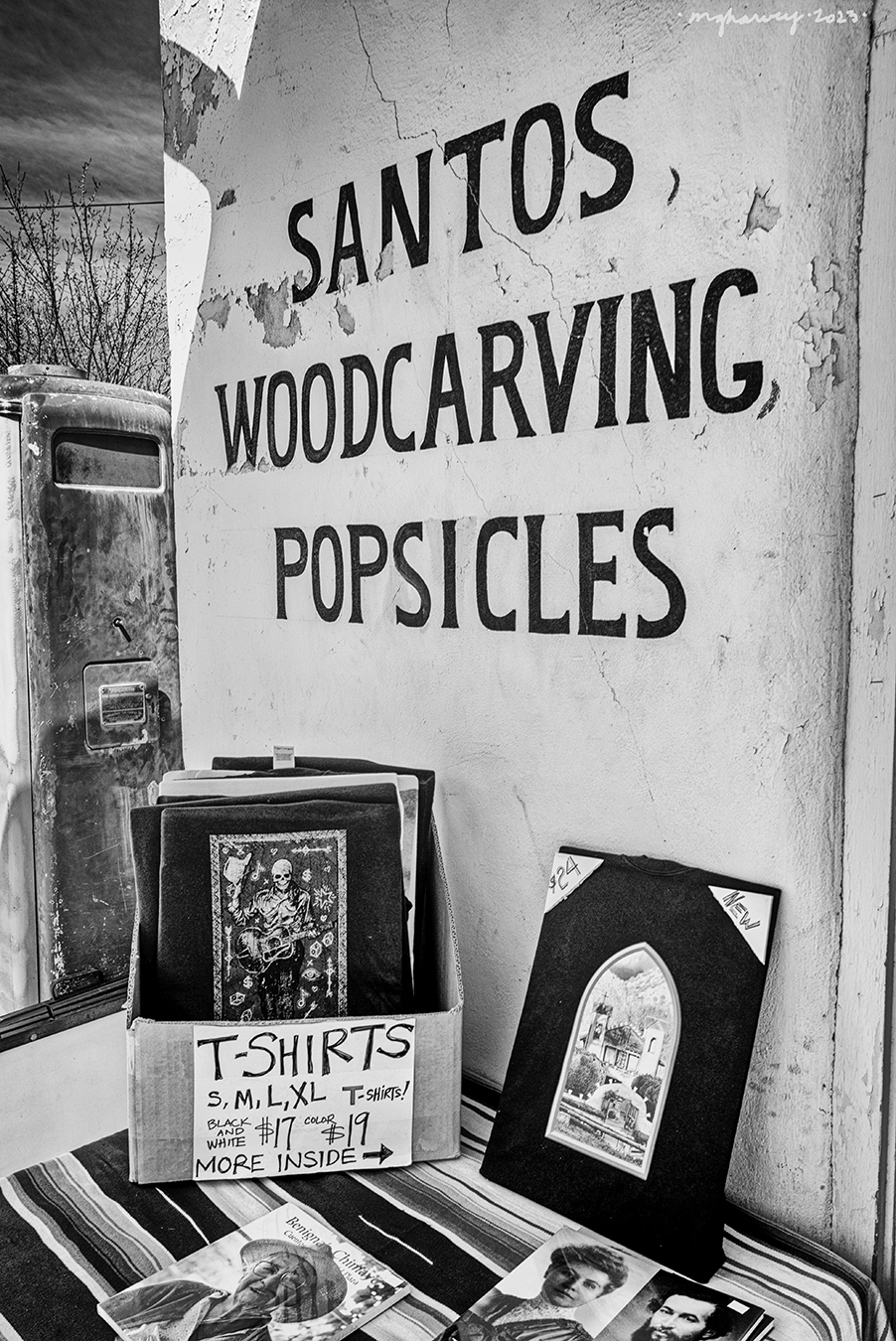
What a place! It’s like the WalMart of Chimayó, practically, with the availability of santos, woodcarvings, popsicles, t-shirts, art, books. I mean, what else could you possibly need?
Also, don’t those commas on the stucco wall look like they were added by some kind of ad hoc sign-corrector person?*
Chimayó, New Mexico
photographed 3.16.2019
*It wasn’t me. It was that way when I got there. I promise.


 One Day | One Image